State Department hosted talks between Israel and Lebanon were once again cheered by the State Department today as “productive and positive,” which might explain why the US has cheerfully hosted no less than six rounds worth of such talks despite very little of consequence ever coming out of them.
A deal was reached, naturally, though the indications are that the pilot zone framework agreed upon was the exact thing Israel had agreed to three weeks ago in the last deal and postponed immediately thereafter. There is once again, Israeli officials say, no timetable for actually starting the zones.
The pilot zones were initially presented as “symbolic,” and primarily something the Lebanese government could use to defend the increasingly unpopular deals, and Israeli officials could present as proof they’re giving Lebanon something in these talks. Two zones were initially announced in the previous deal, though it was postponed, according to Israeli PM Benjamin Netanyahu, because the US and Lebanon weren’t meeting unspecified obligations from a “secret annex” of the deal.
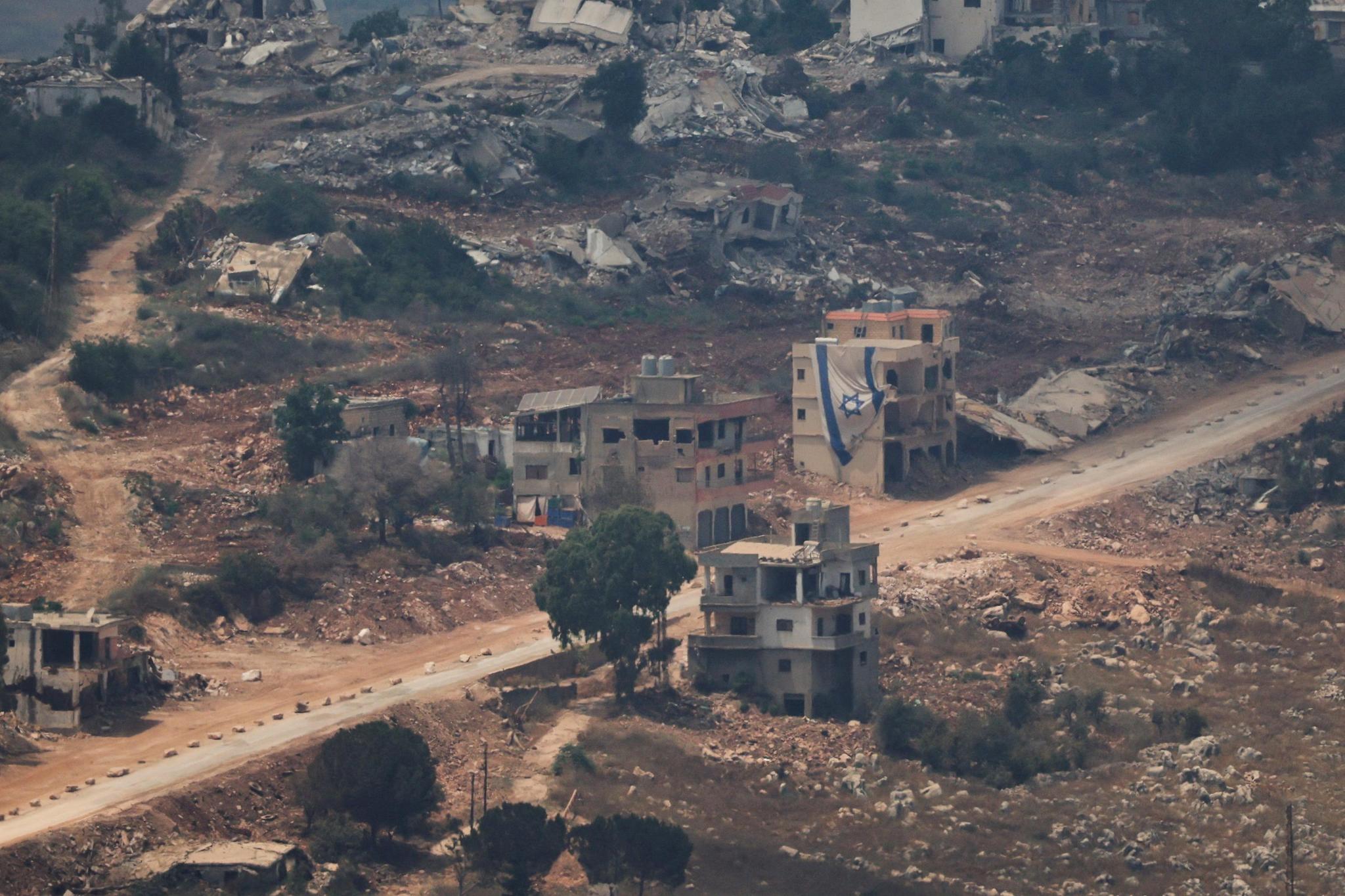
An Israeli flag hangs from a building in Lebanon as seen from the Israeli side of the Israel-Lebanon border, in northern Israel, July 5, 2026 REUTERS
The pilot zones were never meant to be functionally relevant, but they’ve become narratively so. The Rome Embassy talks were indeed entirely about the pilot zones, with Israel initially trying to shrink the two zones into just one. In the end, the two zones remained, though reportedly only one of the zones is one that Israel is actually currently occupying, with the other “pilot zone” simply one that’s sort of adjacent to Israeli-occupied parts of Lebanon.
So those talks ended with basically the same “deal” the last talks did with respect to the pilot zones, and while some officials are suggesting something unspecified could happen with respect to them in a matter of days, the focus seems to be demolition in the far south.
Blasts continued to rock down in Marjayoun District, while more explosions were reported in and around Bint Jbeil. Near Majdal Zoun, Israeli troops opened fire on civilians attempting to reach their groves which are on the town’s outskirts, and roads were reportedly being bulldozed across the area.
While Israeli officials are continuing to frame themselves as having no territorial ambitions on southern Lebanon and trying to sell this deployment as temporary. IDF veterans, however, who served in the last protracted occupation of southern Lebanon, see this as a remarkably familiar situation.
Gil Shely was one of several veterans quoted by Reuters, who said that occupation, which spanned 1982-2000, was also presented as necessary to protect northern Israel. “Looking back, it was all fairy tales,” Shely noted.
More talks are expected between Israel and Lebanon, but there’s as yet no sign any of them will involve meaningful timetables for Israel to withdraw from southern Lebanon. Given what the last six deals have produced, that should come as no surprise.