As the seventh round of US-brokered Israel-Lebanon talks gets underway, Israeli newspaper Haaretz has a new overview of the extent of the Israeli military occupation of southern Lebanon, and details suggesting that the occupation could be a lot longer than anyone realizes.
Israel presently occupies roughly 600 square kilometers of Lebanese territory, spanning the southern Lebanese border with parts of Syria all the way to the Mediterranean Sea. There are a substantial number of towns and villages within that area, or at least their were before the invasion.
Israel has been very publicly wiping out entire towns and villages along the frontier. Defense Minister Israel Katz said just over a month ago that certain Shi’ite villages within Lebanon would need to “disappear” during the war.
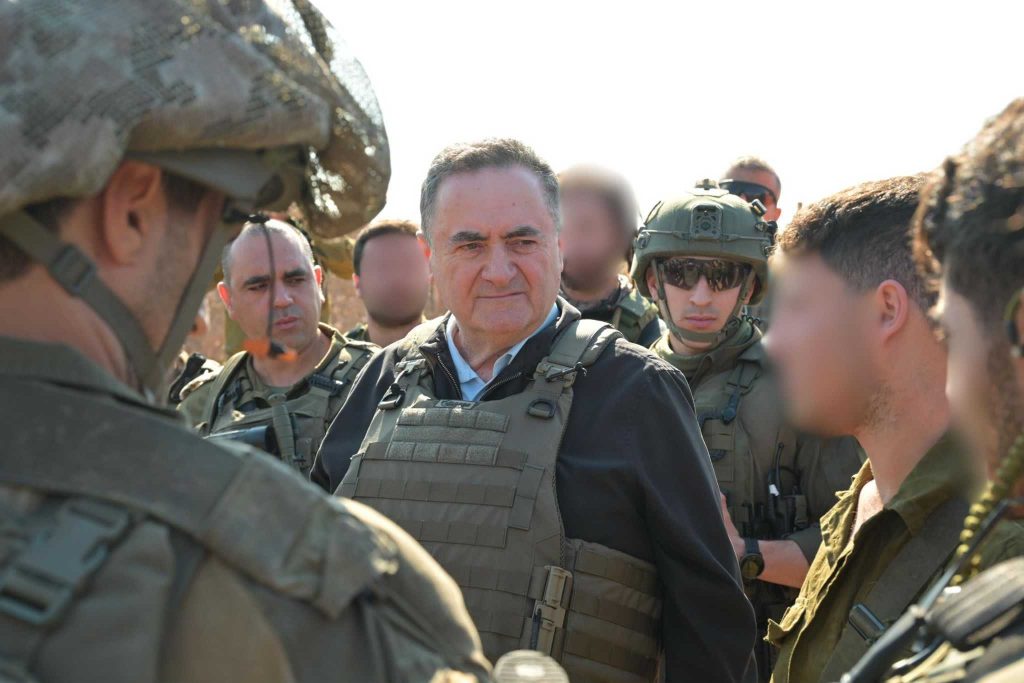
Israeli Defense Minister Israel Katz visits southern Lebanon
Haaretz noted that destruction has happened in a big way, quoting Katz again saying “We destroyed all the buildings, not house by house, no incrimination. All these villages have been completely destroyed, 15,000-20,000 homes.” The villages aren’t just being destroyed, but are being replaced with Israeli military bases, and they don’t appear to be temporary ones.
The November 2024 ceasefire saw Israel commit to withdraw its forces from Lebanon, but they never actually did, instead building multiple permanent military posts inside Lebanon and ruling out withdrawing from them. This war has seen those posts expanded, and yet more bases being cobbled together.
Israeli Army officials told Haaretz that they were ordered to prepare to stay in Lebanon for at least a year. The effort to wipe out populated areas and create occupation infrastructure, however, could portend them staying far longer than that.
The repeated talks with Lebanon suggest that as well, as Israeli negotiators have consistently had two red lines, they won’t agree to a timeline for withdrawal and they won’t agree to stop attacking Lebanese territory. That is a big part of why these talks have amounted to say many deals, but so little consequence.
As talks get underway Tuesday, Israel is continuing to strike southern Lebanon, showing no signs of slowing operations and once again expecting very little for discussions that are meant to center on demands for Hezbollah, who is not a party to the talks, to cede more territory to Israel.
This has led Hezbollah to criticize the talks as amounting to “nothing but successive concessions” by Lebanon to the Israeli forces, and called on Lebanese negotiators to prioritize national sovereignty.