Over the course of Israeli attacks on Wednesday, the Lebanese Health Ministry reported at least 22 people killed, including eight children. That’s particularly relevant, because Thursday talks were scheduled in DC between Israeli and Lebanese officials regarding extending the current “ceasefire” that expires this weekend.
Israeli officials seem to be going into the talks particularly upbeat, saying they’re certain they and Lebanon share the same goal of destroying Hezbollah. That may be the case, but the road from A to B seems to involve a lot more dead Lebanese children than Lebanon would prefer.
While a ceasefire is indeed still considered desirable, at least in theory, in Lebanon, the goal in these talks is to actually get Israel to agree to a ceasefire that functions in such a way that Israel will stop attacking Lebanon and killing dozens of people pretty much daily.
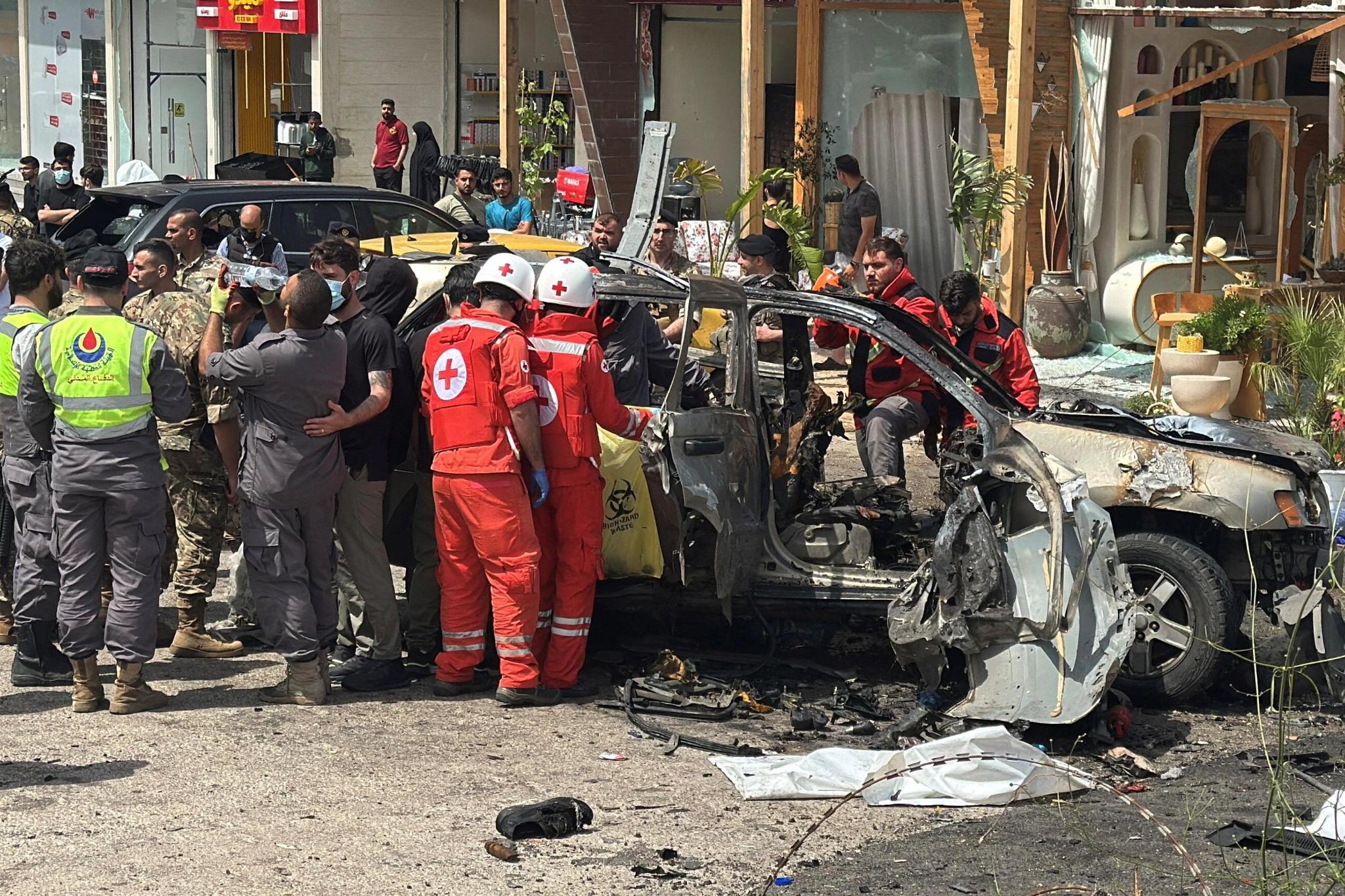
Rescuers inspect a car hit in an Israeli strike in Jiyeh area south of Beirut, Lebanon May 13, 2026. Picture taken with a mobile phone. REUTERS/Ali Hankir
That’s a tall order, because Israel appears to view the extent ceasefire, where no fire is actually ceased, as right in their wheelhouse, and the goals in the extension talks for them seem to center on the idea of extending how much of Lebanon they’re actively occupying.
Israeli officials aren’t even attempting to provide the illusion that the present ceasefire is working for Lebanon. Overnight on the eve of the talks airstrikes in Nabatieh killed 10 people, including multiple children. When Hezbollah says its their view there’s no ceasefire in place at all, it’s increasingly difficult to dispute that point.
UNICEF has estimated at least 200 children were killed so far in the Israeli war on Lebanon, and another 800 wounded. This includes 59 casualties just in the past week, during the much-vaunted ceasefire.
The expectation is that some ceasefire of sorts will be announced after the two-day talks, but whether it actually ceases any fire is the real question, and history isn’t on their side in that regard, with Israel’s preference not to be limited in their firing, and Lebanese officials likely still seeing a toothless, do-nothing ceasefire as preferable to no ceasefire at all, even if the distinction, from a casualty perspective, is entirely theoretical.