On Wednesday, Rep. Marlin Stutzman (R-IN) introduced a bill in the House calling for a change in the US-Israel relationship that’s based on a plan put forward by Israeli Prime Minister Benjamin Netanyahu.
Amid growing skepticism among Americans about the US-Israel relationship, Netanyahu has suggested that the US could eventually end its military aid to Israel and transition the relationship to a more partnership-based model that would further intertwine the US and Israeli militaries, making the special relationship even harder to unravel.
Stutzman’s bill praises Netanyahu for coming up with the idea and calls for the US and Israel to form a new Memorandum of Understanding to “replace traditional military assistance with a framework of joint defense codevelopment, coproduction, and mutual investment that will strengthen both nations’ defense industries and military readiness.”
Under the current US-Israeli MOU, Israel receives at least $3.8 billion in military aid from the US each year, though it has received much more since October 7, 2023. The purpose of Netanyahu’s plan is to remove public-facing military aid to reduce criticism of the US-Israel relationship and to make whatever aid and support Israel receives from the US under the new arrangement much less transparent.
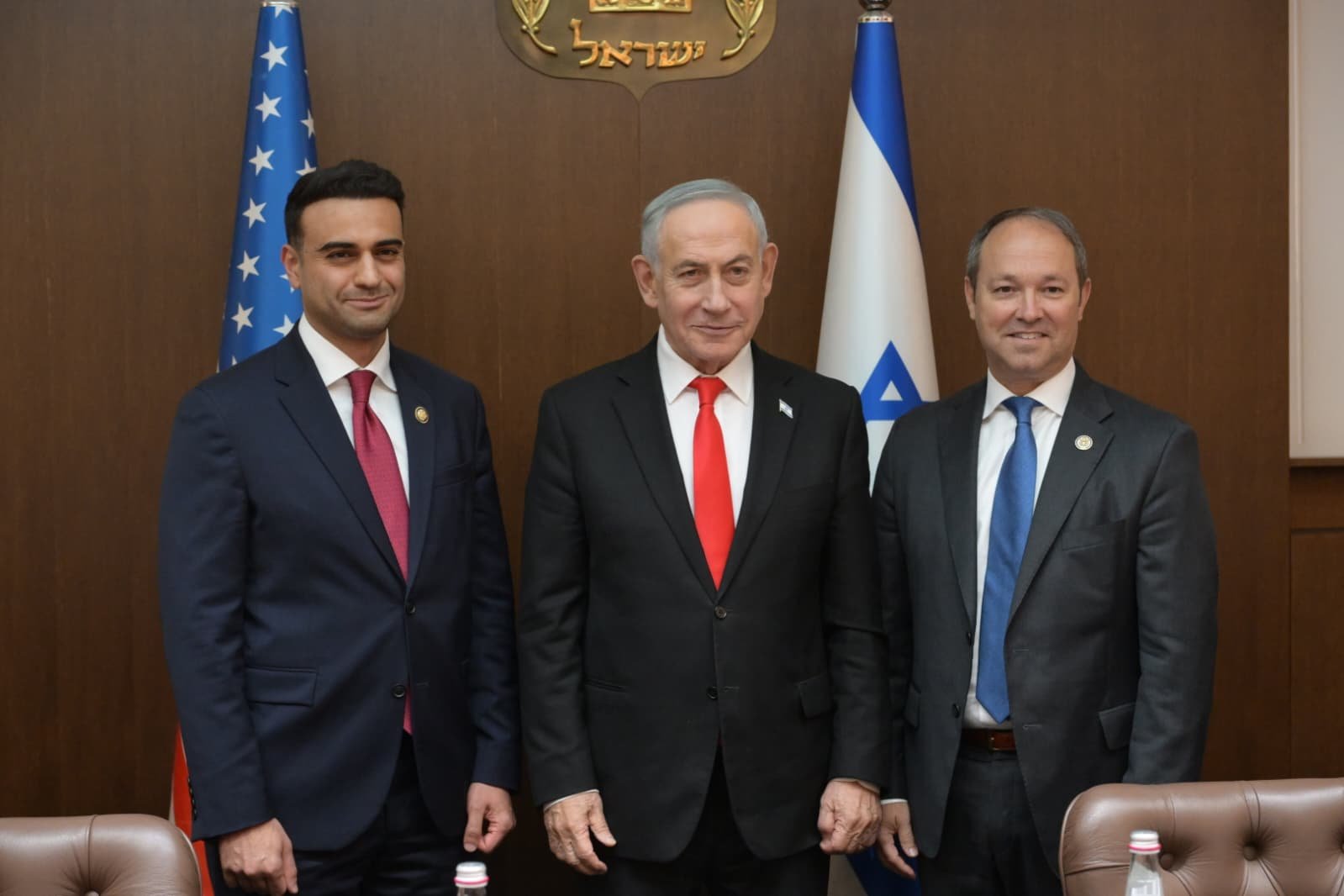
Stutzman introduced the bill one week after meeting with Netanyahu in Jerusalem and also shared a letter the Israeli leader wrote to him endorsing the legislation. “I was glad to receive your proposed Congressional resolution endorsing my plan to shift the framework for US-Israel defense cooperation from aid to partnership,” Netanyahu wrote.
While Stutzman’s bill is largely symbolic, Congress is advancing other legislation to further integrate the US and Israeli militaries. Buried inside the House’s version of the 2027 National Defense Authorization Act (NDAA) is Section 224, entitled the “United States-Israel Defense Technology Cooperation Initiative,” which, according to Ben Freeman of the Quincy Institute, would “arguably do more to intertwine the US military with the Israeli military than the more than $200 billion (inflation adjusted) in military assistance Israel has received from the US since its founding in 1948.”
Summarizing what Section 224 aims to achieve, A New Policy, a lobby group founded by Josh Paul, who resigned from the State Department during the Biden administration over US support for Israel’s genocidal war in Gaza, said that as “political pressure builds to reduce US military assistance to Israel, Section 224 provides the framework for continuing – and expanding – US-Israel military ties by entrenching Israeli technology within the US defense supply chain in a way that would shield it from the annual appropriations process.”
Paul told The Washington Post that Netanyahu is “reading the room, seeing the very clear direction that American politics are going and asking how can Israel maintain the military-to-military relationship and the security cooperation relationship, but do so in a way that is sheltered from American politics — whether that’s Congress, or American public sentiment writ large.”
Section 224 has caught the eye of some US lawmakers, who will attempt to strip it from the NDAA. “If the provision in the NDAA to integrate/synchronize the US and Israeli militaries (section 224) makes it out of committee, I’ll offer an amendment to strip it from the bill on the floor,” Rep. Thomas Massie (R-KY) wrote on X. “We are a sovereign country.”