The 10-day ceasefire between Israel and Lebanon has been extended for another three weeks, according to President Trump who said high-profile meetings in the Oval Office went “very well” and ended with a plan for Israeli Prime Minister Benjamin Netanyahu and Lebanese President Joseph Aoun to meet in the coming weeks.
Israeli FM Gideon Saar insisted Israel and Lebanon have no “serious disagreements,” and it is only the existence of Hezbollah that remains an obstacle to normalized relations. He urged Lebanon to cooperate with Israel on disarming Hezbollah.
In the meantime, Israel will continue its occupation of southern Lebanon, and its systematic destruction of dozens of towns and villages south of the Yellow Line which Israel established at the beginning of the previous ceasefire.
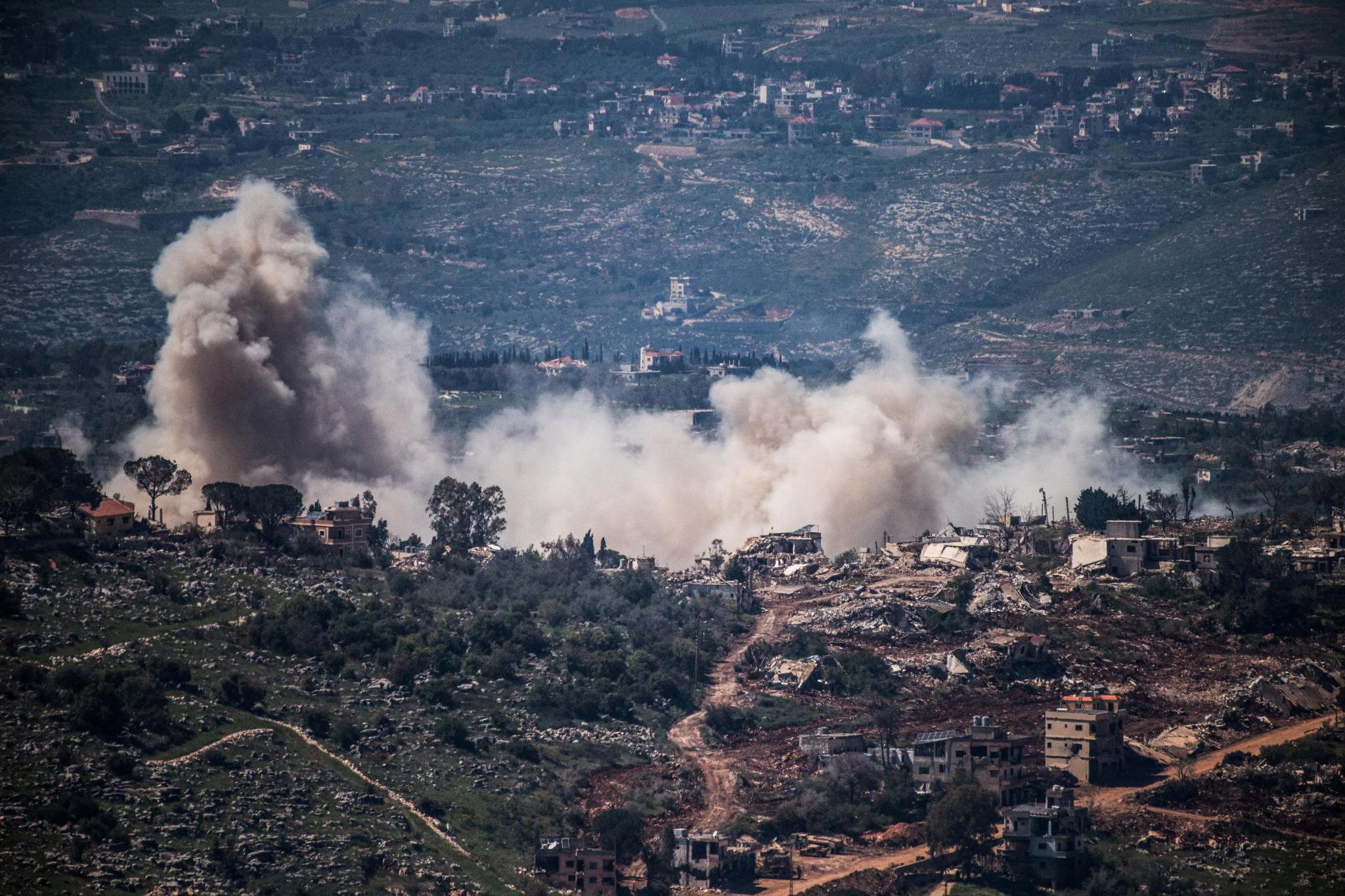
Smoke rises from a village in southern Lebanon as the Israeli army operates in it as seen from the Israeli side of the border, April 23, 2026 REUTERS/Gil Eliyahu
Over the course of the 10-day ceasefire that this new deal extends, Israel continues to conduct offensive operations, and indeed today they once again killed three people in airstrikes against the southern village of Yater. Two others were also wounded, including a child.
The IDF claimed all three of the slain were “Hezbollah operatives” and that they were trying to shoot down the drone, before the drone ended up killing the whole group of them. They provided no evidence to support that claim, however, and none of the slain have yet been identified.
Lebanese officials have yet to address the ceasefire extension nor comment on the planned Aoun-Netanyahu meeting, President Trump suggested his intention was to “work with Lebanon” to help them against Hezbollah, however.
That once again suggests this “ceasefire” isn’t actually intended to cease any fire. Hezbollah, who was not included in the talks and did not endorse the ceasefire, is going to continue to be targeted by a growing number of belligerent factions. Increasingly, however, targeting Hezbollah has meant targeting Lebanon’s broader Shi’ite population, particularly in the south where they’ve been broadly expelled from their homes, which are in the process of being destroyed by Israel on “national security” grounds.
For the 20% of Lebanon’s population presently displaced by the war, it is unlikely that this latest extension will change much, and so far the general recommendation from all participants in the talks is that they hold off on returning to their homes for the time being, irrespective of if those homes still exist or are in the process of being leveled.