Thursday’s announcement of the ceasefire in Lebanon brought some relief to the 20% of Lebanon’s population that is currently displaced by the conflict. Whether or not they’ll actually be able to return home is another matter entirely.
In the hours leading up to President Trump’s declaring a ceasefire would start at 5 pm EST on Thursday, Israeli strikes destroyed the last of the bridges spanning the Litani River, completing a project of bridge destruction that began early in the conflict, when Israel first ordered the evacuation of the entire population south of the river to the north, later announcing their intention to occupy the entire region militarily.
The ceasefire may come into effect, but Israeli officials say the occupying troops aren’t going anywhere, and Lebanese Parliament Speaker Nabih Berri is urging people not to try to return home until the situation becomes clearer, a recognition of how often these announced ceasefires don’t pan out.
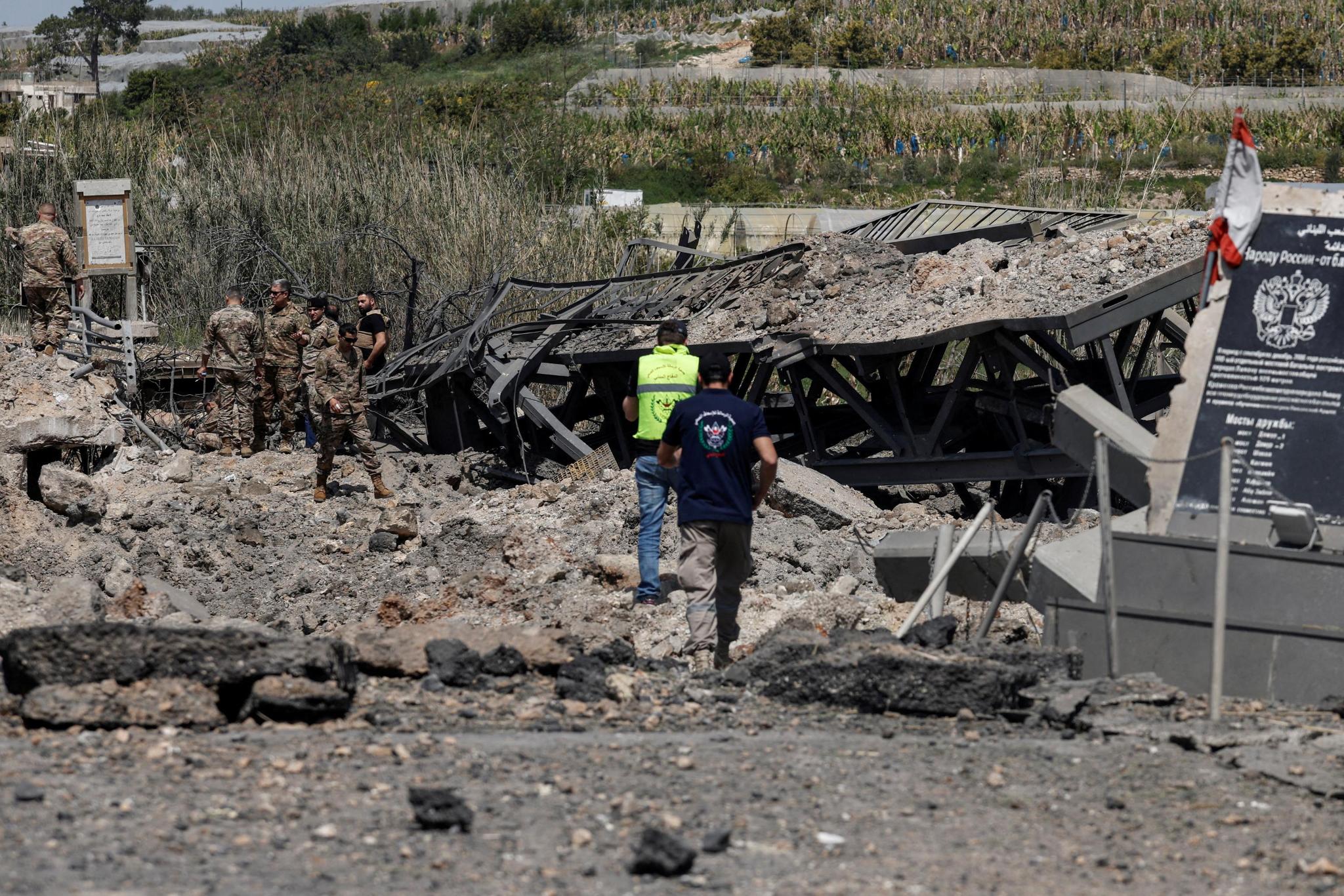
Members of the Lebanese army work at the site after an Israeli strike severed the last remaining bridge linking southern Lebanon to the rest of the country, in Qasmiyeh, Lebanon April 16, 2026. REUTERS/Louisa Gouliamaki
Even if the ceasefire does hold, however, it’s not clear how easily the hundreds of thousands of people who fled north will actually be able to physically get back to southern Lebanon without bridges across the river, let alone whether their homes in the south will still be there after systematic demolition of villages by the Israeli military.
Israel’s stated policy of occupation, destruction, and not allowing at least the Shi’ite residents of the south to return home has been advanced in a month and a half of aggressive warfare, but where it stands is an open question. Much destruction has been done, some of the occupation has already happened, but whether Israel intends to limit returnees during the ceasefire, and if those returnees are even possible without bridges, remains unclear.
What is clear is that in the days to come, Lebanon’s focus will be on picking up the pieces after nationwide attacks that left over 2,100 people dead, many thousand more wounded, and well over a million people displaced, with only some notion that some of them might be able to return home soon.