Israeli officials have been saying they intended to apply a Gaza Strip model to the invasion of Lebanon, but the extent of the destruction inflicted on the southern part of Lebanon in the first month and a half of the war is even bigger than initially feared.
New reports from the BBC are that they’ve visually confirmed more than 1,400 buildings destroyed in the course of the Israeli offensive using satellite imagery and that, given the limited access on the ground, the true number is potentially far higher.
Images show that villages like Taybeh have been effectively erased, and while it’s being done concurrently with an invasion and occupation, much of the actual destruction is being inflicted by Israeli military bulldozers and demolition crews, explicitly destroying the buildings.
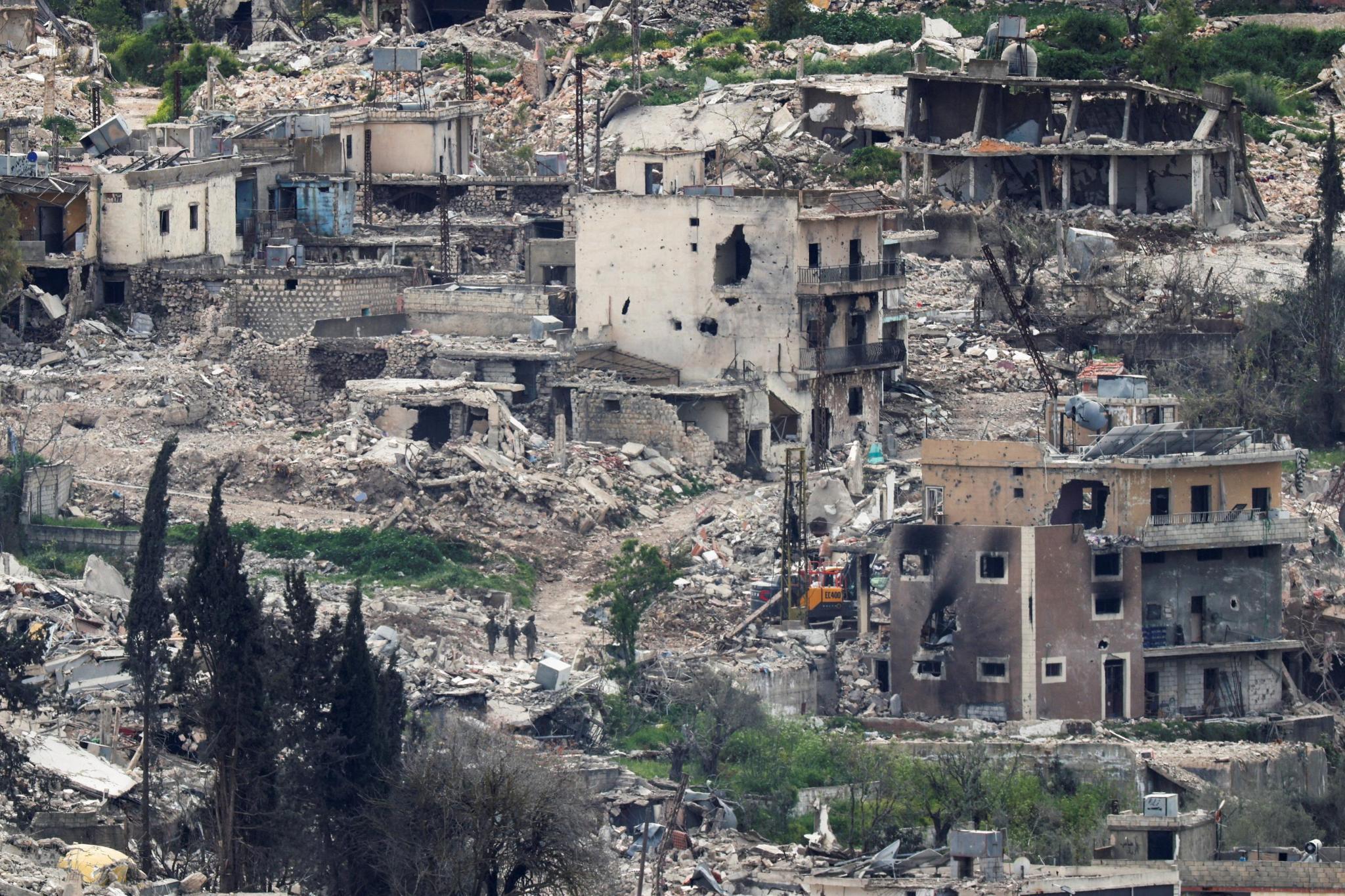
Israeli soldiers stand among destroyed buildings in southern Lebanon, near the Israel-Lebanon border, as seen from the Israeli side of the border in northern Israel, April 14, 2026. REUTERS/Florion Goga
That’s illegal under international law, though the IDF maintains they do “not allow the destruction of property unless there is an imperative military necessity.” In as much as Israel is wiping entire villages off the map systematically and demolishing civilian residences, it would be a real legal challenge to argue that was actually a military necessity above and beyond territorial ambitions on the Israeli far-right.
It’s not only the villages. Part of a UNESCO-listed historical site in Shamaa, the shrine of Prophet Shimon al-Safa, was bulldozed by Israeli forces before its ruins were further leveled by artillery fire. It’s a religious site that includes a Shi’ite mosque.
Here again, the destruction of a shrine with aspects dating back to the 11th century is going to fuel long-term resentment about the Israeli offensive, but importantly, it would also be difficult to argue that such an ancient shrine had any specific, immediate military requirement to be destroyed.
Israel’s promise of Gaza tactics seems definitely to have come to pass, but beyond Israeli military intentions to install more permanent military bases on Lebanese soil, practical policy has been forced mass displacement and systematic destruction of civilian infrastructure, both war crimes under international law.