The most recent round of trilateral talks between the US, Israel and Lebanon ended inconclusively, with no date even set for the next attempt at negotiations. Given how little the past “deals” actually accomplished for Lebanon, the lack of progress didn’t seem that relevant, but the election results in Israel and the US may have made them so.
There is some hope that the Israel election, which seems poised to install Gadi Eisenkot, will mean a government more inclined to end the occupation. At the same time, a new round of talks seems substantially less likely until the fallout from the votes resolves, and even then, it’s not clear anyone will immediately be more inclined for a deal-making.
The Israeli military, for its part, seems to be anticipating yet further escalation, building up Northern Command and expanding infantry brigades along the Lebanon frontier. Israeli media reported that the IDF was also preparing for an October 7-style attack from Hezbollah.
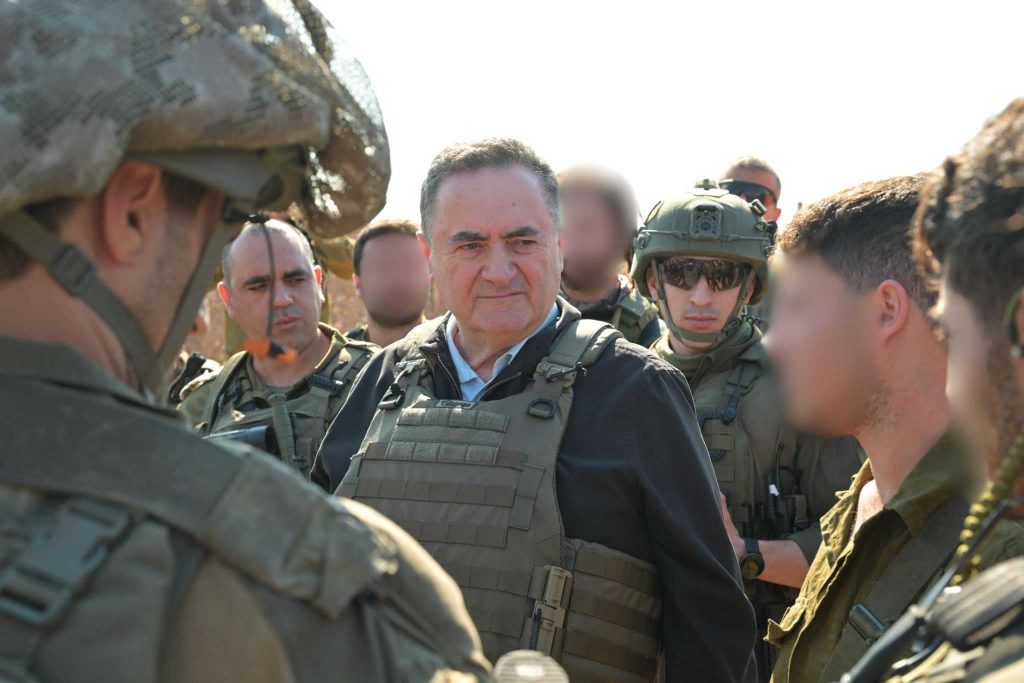
Israeli Defense Minister Israel Katz visits southern Lebanon
This talk of a “new” Lebanon war has been going on for awhile, framed as an extension of a potential new round of aggression against Iran. The assumption seems to be, as Israel launched the Lebanon war in March almost immediately following the joint US-Israeli attacks on Iran, another new round of fighting in Iran would naturally extend to Lebanon.
The attempts to sell these as “new” wars makes little sense in the context of Lebanon, as the March war never really ended, and Israel continues to occupy a substantial portion of southern Lebanon.
Defense Minister Israel Katz has threatened to seize more territory and to see Lebanon’s Shi’ite population “annihilated” if Hezbollah attacks them, though again, given the active occupation what Hezbollah perceives as “resistance” could easily be seen as an attack by Israeli officials, who are presenting southern Lebanon’s occupation as the establishment of a “permanent” security zone.
Past negotiations have attempted to reach deals in which Lebanon agreed that Hezbollah doesn’t have a right to resist the occupation, but since Hezbollah was never a party to the talks, they’ve been rather public about not considering themselves obliged to comply with those deals, and have consistently argued that the talks make no sense without a commitment to end the war or the occupation.