As has often been the case lately, this weekend saw the Israeli military escalate the rate and intensity of strikes against southern Lebanon, punctuated by heavy artillery strikes and airstrikes against Kfar Tebnit.
Direct bombardment of multiple towns has been the defining feature of recent Israeli operations in Lebanon. The government has made much of having destroyed over 60 municipalities in Lebanon since the March invasion, and adding to that count seems to be the near-term goal.
Trilateral negotiations between the US State Department and the Israeli and Lebanese states have resulted in multiple deals, none of which obliges Israel to withdraw from Lebanon or even stop attacking Lebanese territory.
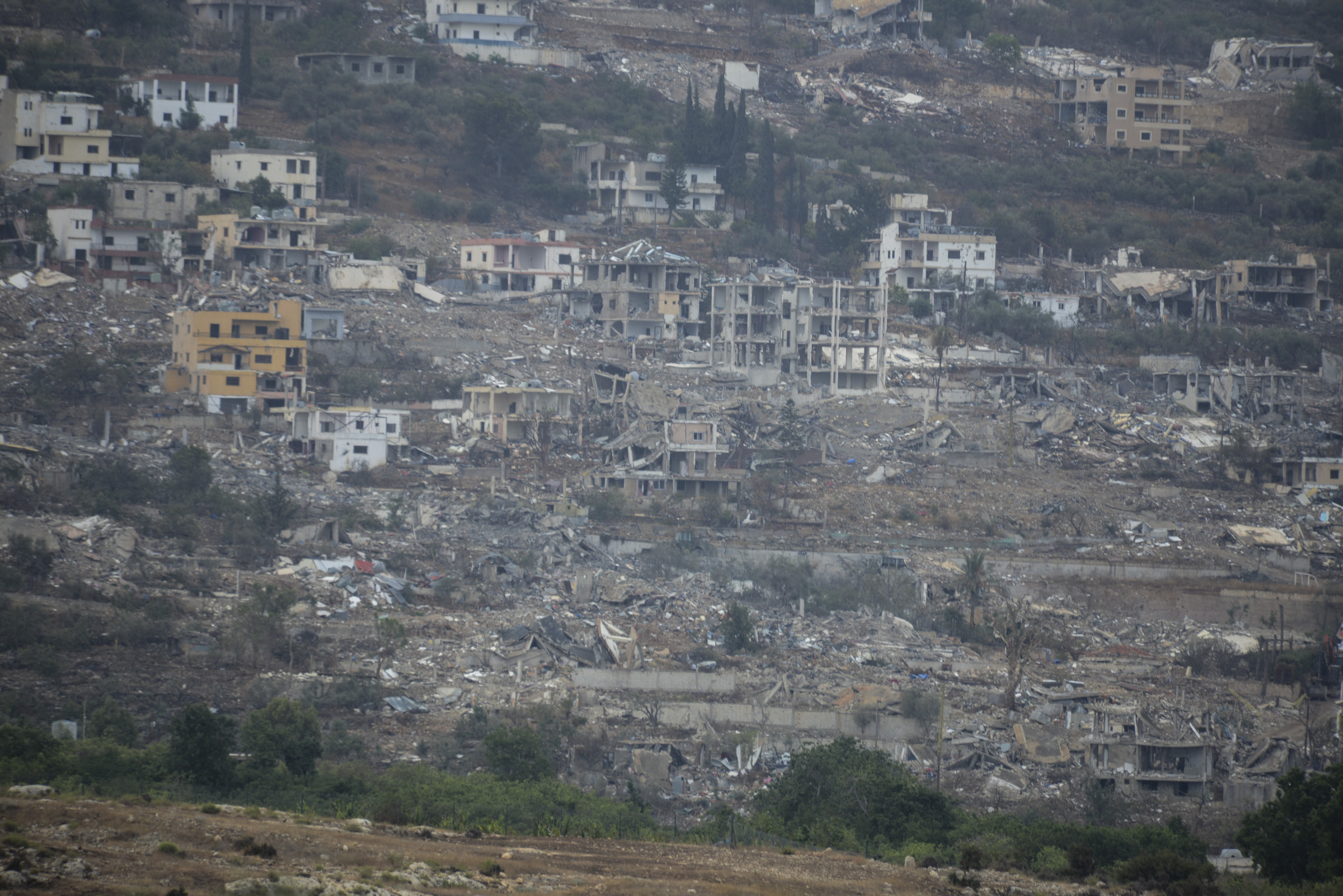
Demolished houses are seen in the town of Al-Mansouri in the Tyre district of southern Lebanon, on September 19, 2026. The structures were demolished by the Israeli army following a ceasefire and framework agreement. (Photo by Fadel Itani/NurPhoto)
Lebanon’s best hope for a policy change may be a new Israeli government. After last month’s election, retired general Gadi Eisenkot has been charged to try to assemble the next coalition government. Israeli radio reports suggest Eisenkot is keen to withdraw occupation troops from Lebanon.
It’s not clear if that’s an accurate assessment of what will happen, as Eisenkot was notably rather evasive about his foreign policy intentions, and other coalition partners will likely play a role in making such decisions. Even if he’s inclined to do something different, he was the originator of the Dahiya Doctrine of mass destruction in the first place, so there’s no guarantee he’d be inclined to shift dramatically from a mass destruction war that’s effectively a continuation of that doctrine. At any rate, many believe there is more of a chance for a policy change than another term for Netanyahu and Defense Minister Israel Katz.
For now though, the strikes continue to scale up, adding to the destruction across Lebanon’s south that, even if it finally comes to an end soon, could take years for the reconstruction to return the region to anything resembling normalcy.