It has been reported that Lebanese President Joseph Aoun received assurances from the United States that Israel does not intend to carry out any new strikes beyond the yellow line assuming Hezbollah doesn’t attack. The report was followed with suggestions that Lebanon’s goal, then, was to convince Hezbollah to stop resisting.
Israel, for its part, was continuing to carry out strikes across southern Lebanon on Thursday and in spite of the US assurances, some of those strikes were in Mayfadoun, which according to various maps is either directly along the yellow line or just beyond it.
In addition to the daily artillery shelling, Israeli warplanes have reportedly also been releasing incendiary balloons over southern Lebanon. The Lebanese Army has warned locals against approaching or touching them because they are meant to explode on contact.
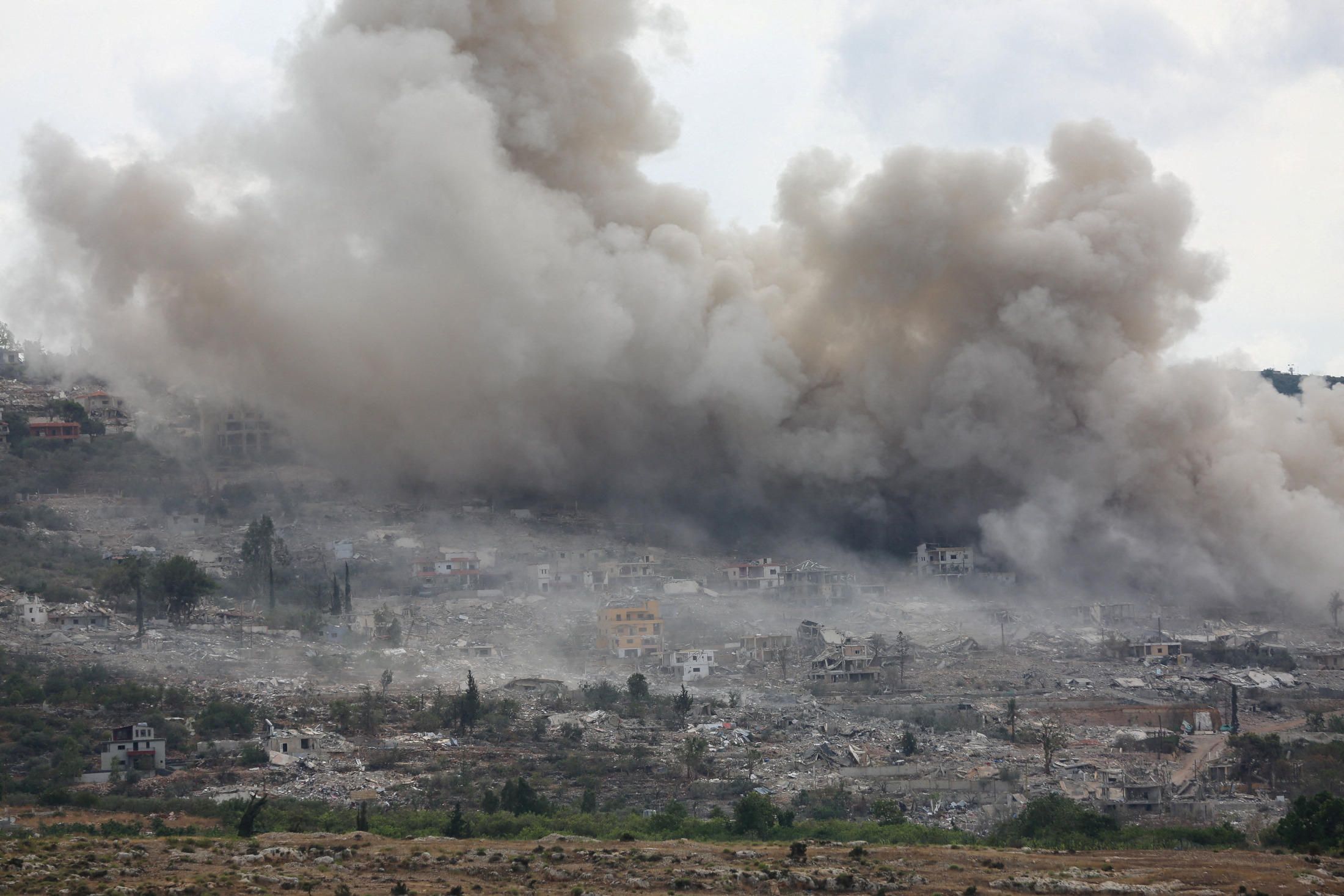
Smoke rises in Mansouri following Israeli explosions reported by Lebanon’s state news agency NNA as seen from Hinniyeh, southern Lebanon, September 28, 2026. REUTERS/Stringer TPX IMAGES OF THE DAY
Israel invaded southern Lebanon in early March, and has occupied territory across the yellow line zone, including some territory further north than that. Over 60 villages have been destroyed and Israel has repeatedly refused to commit to any timetable for ever withdrawing from what it now calls a “permanent security zone.”
President Trump has reportedly floated a promise that he can convince Israel to withdraw from Lebanon, but only if Lebanon signs the Abraham Accords first. That proposal was first reported by a Lebanese newspaper, citing Gulf diplomatic sources.
Since US-brokered tripartite deals involving Israel and Lebanon have so far exclusively involved Lebanon agreeing that everything in Hezbollah’s fault, Israel refusing to commit to any cessation of hostilities, and the US praising both for their commitment to the process, it’s not clear how attractive or credible the proposal would be.
Even if there’s a belief President Trump might deliver on this promise, normalizing ties with Israel would be highly controversial after generations of wars and with Israel actively occupying Lebanese territory militarily. Signing off on such a deal immediately in the wake to another war in which Israel is openly destroying Lebanese municipalities en masse would similarly be a difficult sell to the public.