The Israel-Lebanon talks in Rome wrapped up Wednesday with claims of substantial progress made, and as has often been the case after such talks, it gave way to a Thursday in which Israel substantially escalated their strikes.
Airstrikes centered around Nabatieh al-Fawqa, particularly the al-Deir neighborhood. At least two people were confirmed killed in the airstrikes. Some 4,324 people have been killed in Lebanon since Israel invaded in early March.
Artillery strikes were reported elsewhere against southern Lebanon, and there are some as-yet-unconfirmed reports of new strikes using white phosphorus shells against the towns of Kounine and Beit Yahoun.
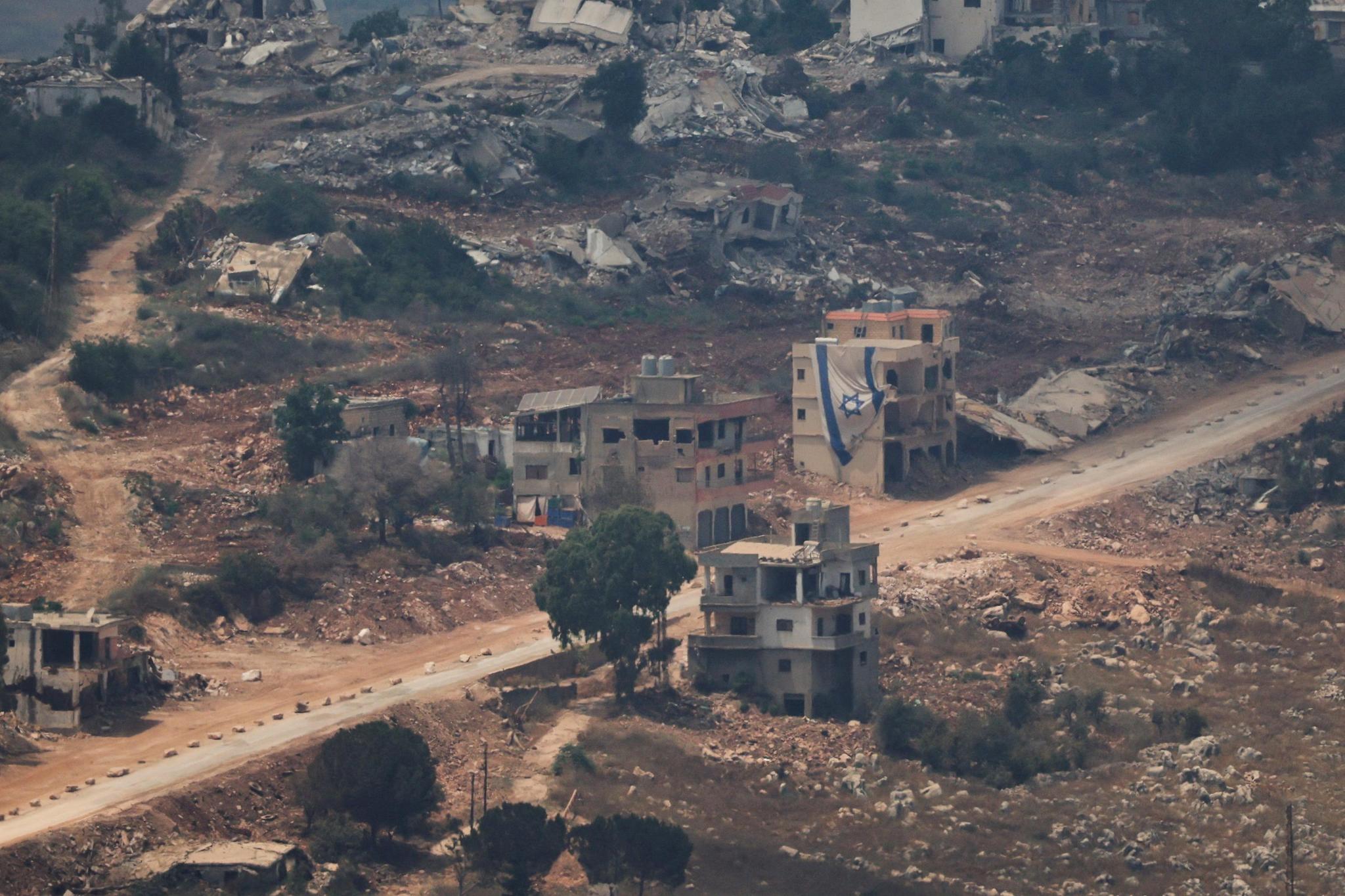
An Israeli flag hangs from a building in Lebanon as seen from the Israeli side of the Israel-Lebanon border, in northern Israel, July 5, 2026 REUTERS
Various deals between the Israel and Lebanese government have come and gone, and very little of consequence has resulted on the ground, as some of the hundreds of thousands of civilians displaced by the war try to return home, they face an uncertain future, and widespread destruction that didn’t end when they fled.
The Rome talks centered on the “pilot zones” in southern Lebanon from which Israel is meant to initially withdraw. No timetable was agreed upon, and it was reported yesterday that one of the two zones isn’t one where Israeli troops are present in the first place.
The Lebanese Army elaborated on that, saying Israel never invaded that zone, and they never left. The deal, in that zone, effectively involves the army increasing the number of patrols and Israel announcing a withdrawal form that area, though as the army pointed out, that announcement won’t be meaningful because “they’re not even there.”