Before the Israeli invasion of Lebanon in March, they were still attacking Lebanon on an almost daily basis at any rate. Starting in late January, some of those attacks involved the spraying of concentrated herbicide on Lebanese farmland and other agricultural lands. Those operations continued to be reported intermittently after, but were mostly overshadowed by the invasion and the thousands of people killed directly by Israeli attacks.
Lebanon, however, has finally gotten its investigation to the point where they could formally complain to the UN Secretary-General and the Security Council that Israel is using herbicide as a weapon. They cited studies conducted by labs that found the concentration “greatly exceeded” the levels found in the soil even after it was regularly used by farmers for ordinary weed control.
Glyphosate, the herbicide in question, has a controversial history the world over, though it is still used, with caution, in a lot of the developed world as an effective herbicide. Exposure has been linked to cancer, and that’s not considering concentrations 20 to 30 times normal usage like is being seen across border villages and farmland.
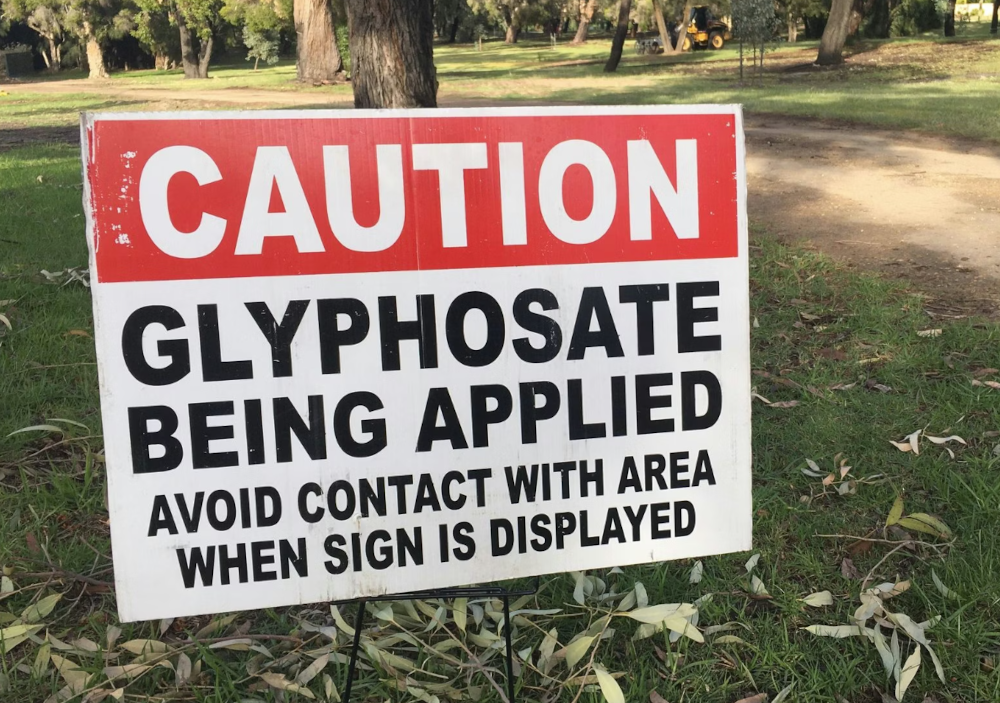
The strikes are part of an Israeli campaign that has done massive damage to Lebanese farmland, particularly in the southernmost parts of the country, that Israel has had designs on forcibly depopulating outright.
Though Israel has maintained in communications with the UNIFIL peacekeepers in Lebanon that the deployment of glyphosate was itself just “non-toxic” chemicals, they also admonished those same peacekeepers to take cover when they were being used in the area. Israel has similarly been deploying those chemicals off and on in the border areas of southwest Syria.
Though deployment of herbicides in a warzone isn’t automatically a violation of international law in and of itself, it likely does when the chemicals are of dubious safety at such high concentrations, and when their use against farmland threatens the long-term survival of the population.
It was also presumably violate the Environmental Modification Convention, an international treaty meant to prevent the use of defoliants and other modification techniques that would have long-term impact on the targeted nation. Israel, however, is not a signatory to that convention.