A flurry of Israeli airstrikes against southern Lebanon early on Saturday killed at least 11 people and wounded 19 others. This is the most substantial escalation since mid-June, and the deadliest attack since the June 20 agreement went into effect.
The Israeli presented the raids as targeting “Hezbollah terror infrastructure” and retaliation for Hezbollah resistance against Israeli occupation further south in Lebanon. The details of the strikes, however, tell a dramatically different story.
The largest number of deaths was in an Israeli airstrike against a house full of civilians in the village of Ansar. The attack killed seven people, including two women and three children. Subsequent strikes against the village of Deir al-Zahrani killed four more people and wounded at least 17 others.
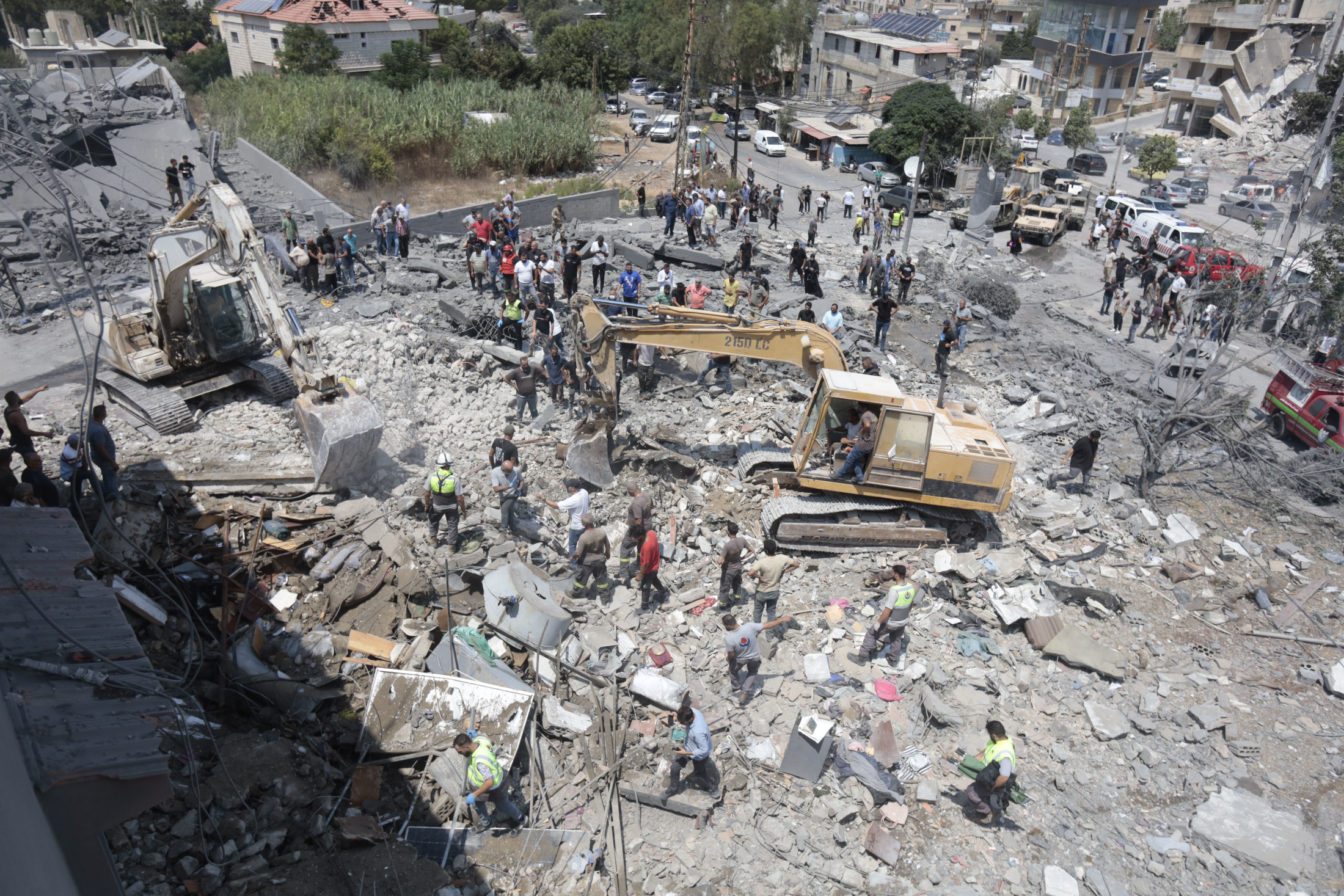
Nabatieh District, South Lebanon: An Israeli warplane carried out a heavy airstrike on the outskirts of Deir al-Zahrani in southern Lebanon, reportedly targeting a two-story building. August 15, 2026 | Abdul Kader Al Bay/ZUMA Press Wire
Israel’s Prime Minister Office cited an instance in which three Israeli soldiers were “seriously injured” by a Hezbollah attack as the reason for the strikes. The house full of children in Ansar was framed as “Central Hezbollah headquarters,” and suggested that a top leader of the Radwan Forces had put the civilians there deliberately to put them in harm’s way, and that they had no idea the civilians were there. They maintained, however, that their killings by Israel were all “lawful” under international law, because the notional Radwan leader was allegedly there. Hezbollah has not commented on the allegations.
Ansar and Deir al-Zahrani are in Nabatieh Governorate between Tyre and Sidon. Deir al-Zahrani is further inland while Ansar is closer to the Mediterranean coast. Neither municipality was particularly close to the site of the Israeli casualties, though, and both are outside of the “security zone” Israel has declared during the occupation.
Israel is framing today’s incidents wholly as Hezbollah violating the ceasefire, despite the only deaths coming from Israeli attacks on what, by all appearances, were civilian targets. The concern is obviously that, after relatively low death tolls in recent weeks, this much larger incident portends yet further Israeli escalation.
This narrative of “Hezbollah targets” has persisted throughout the Israeli invasion and occupation of southern Lebanon, where ex post facto justifications for particularly large scale deaths of civilians are offered, but suggest that the “elite Radwan Force,” supposedly a small but important faction within Hezbollah, are apparently so numerous that Israel can’t hit a random house anywhere in southern Lebanon without getting a battalion commander from that elite faction.