Tuesday’s direct talks between Israel and Lebanon were held with a lot more fanfare than they had consequence, and ended without a meaningful deal being agreed, and with Israel not even really slowing their attacks while the conversations were ongoing, let alone after.
Continuing Israeli attacks deep into Lebanese territory, inflicting civilian casualties, are fueling a lot of resentment among the Lebanese population, and while officials seemingly hoped that anger would be directed at Hezbollah, who is participating in the war albeit not the talks, many are angry at the government itself for engaging in talks with another nation that is directly attacking them without getting them to cease fire first, or indeed at all.
Which isn’t to say that there’s no hope for cessation of hostilities in Lebanon. There’s a report circulating that Iran is pressing for a ceasefire, and that it could have be declared sometime Wednesday night. Whether Israel actually respects that ceasefire, however, is an open question.
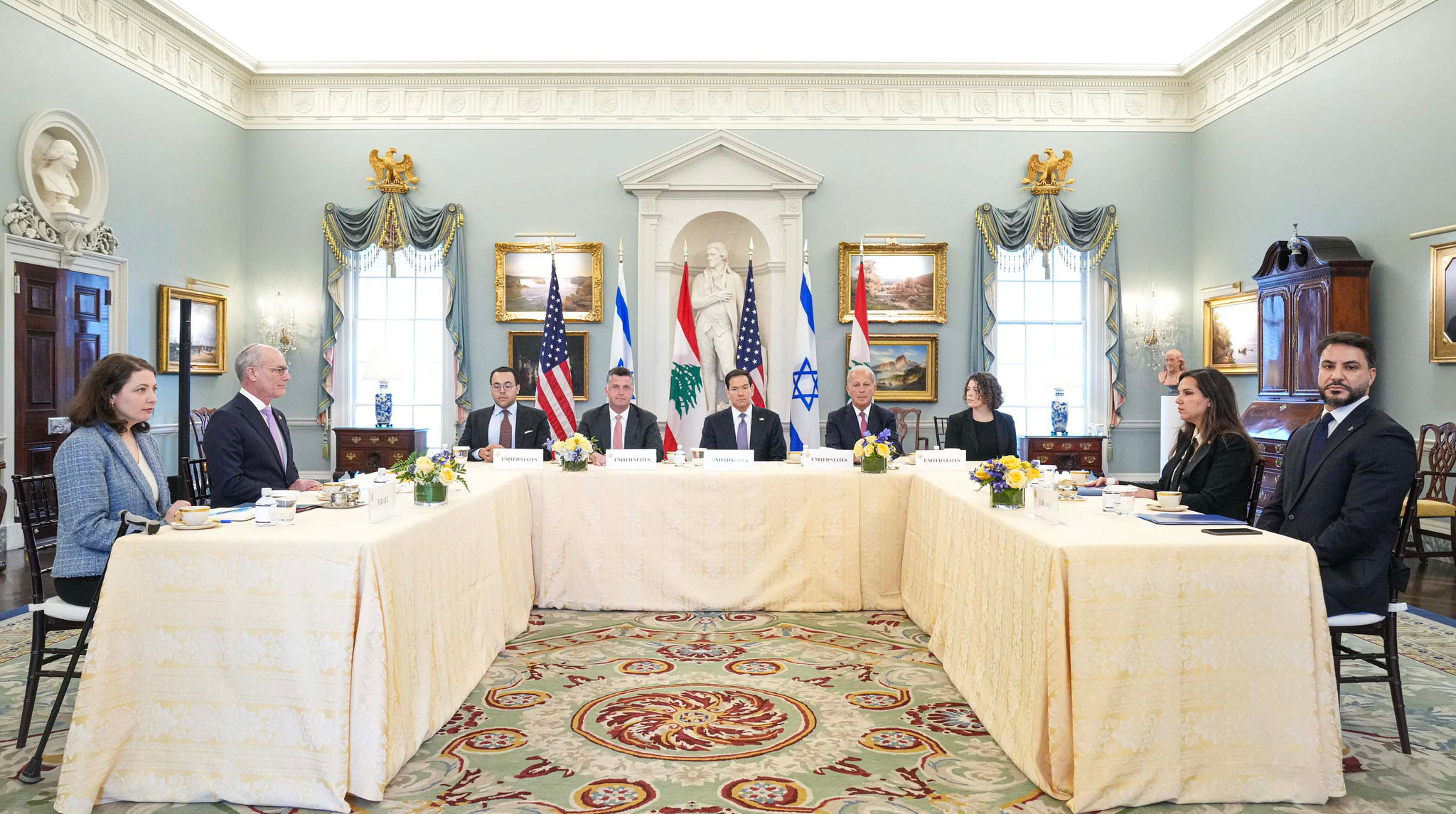
Talks held Tuesday in Washington D.C. | Image from State Dept.
Israeli officials have told the media that a ceasefire is at least going to be discussed by the Israeli Security Cabinet, which is scheduled to meet this evening as well. Reportedly, the US had been pressuring them to agree to this, but it’s not clear if the cabinet is supportive of that idea.
IDF Chief of Staff Eyal Zamir, by contrast, suggests that the plan is to continue pressing forward with the war, saying plans have been approved for both continuing the Lebanon and the Iran wars, and that southern Lebanon south of the Litani River will become a “killing zone” for Hezbollah.
Though Lt. Gen. Zamir’s plans could theoretically be subject to the security cabinet changing its mind, but recent polls have suggested the Israeli public broadly opposes the idea of not attacking Lebanon, so international pressure may still be a tough sell politically for the cabinet.