The Lebanese Health Ministry has reported this weekend that the death toll in the escalation of Israel’s war on Lebanon has passed 2,000 killed. The latest figure was that the war has killed 2,020 Lebanese, including 248 women, 165 children, and at least 85 civilian medical personnel. 6,436 others were documented as wounded in the attacks.
These tolls are huge for a country the size of Lebanon, and it mustn’t be forgotten that the toll only spans around 40 days of war, which began in early March when Israel extended the US-Israel war on Iran into an attack on Lebanon as well.
The single deadliest day was Wednesday of last week, the first day of the US-Iran ceasefire, when Israel announced that the ceasefire “didn’t include Lebanon” and subsequently launched massive attacks, killing over 250 people, and by some estimates over 300, in a single day.
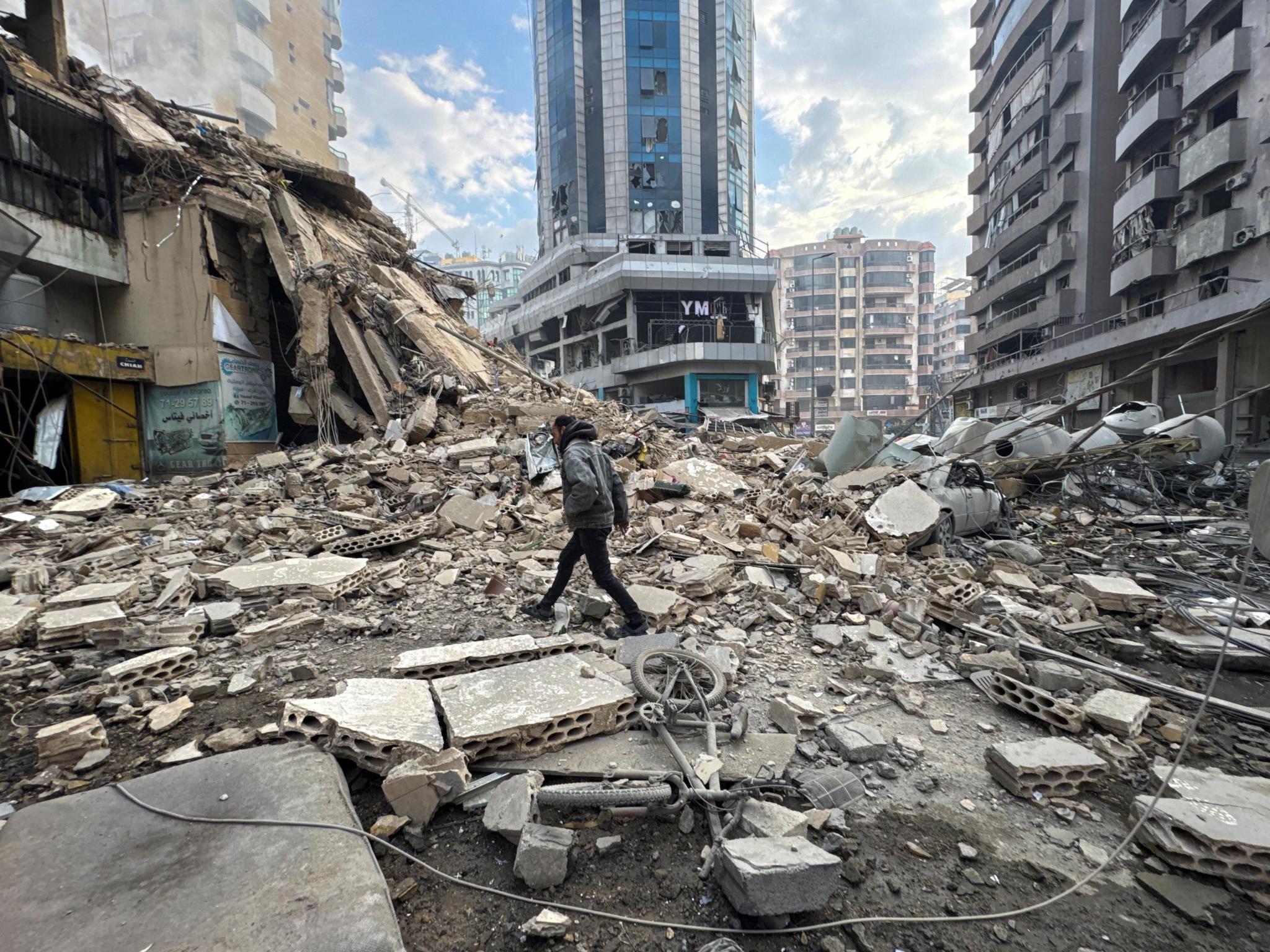
A man inspects damage buildings after an Israeli strike on Beirut’s southern suburbs, following an escalation between Hezbollah and Israel amid the U.S.-Israeli conflict with Iran, Lebanon, March 7, 2026. Picture taken with a mobile phone. REUTERS/Stringer
There are plans for “peace talks” this week brokered by the US, but once again, Israeli officials insist that the talks don’t mean a cessation of fire on Lebanon, and more people continue to be killed in Israeli strikes.
Israel’s narrative doesn’t suggest that there’s a serious consideration to end the fighting here, as Prime Minister Benjamin Netanyahu visits troops in southern Lebanon and talks up the idea they’re fighting an “axis of evil” that is “fighting for their own survival.”
The crisis within Lebanon is likely to get a lot worse going forward, according to the World Food Program (WFP), which noted over the weekend that there is a growing food crisis across different areas of Lebanon, where the war has led to rising prices and collapsing markets.
The crisis is drastically worse for the internally displaced population, which, as Israeli evacuation orders continue to expand, amounts to an estimated fifth of the entire population of Lebanon, who have lost their homes, their income, and their general sense of security.
From a food perspective, that displacement makes matters much worse, not just for the displaced, but for everyone, because Lebanon’s main agricultural region, the south of the country, is now occupied militarily by Israel, and effectively everyone in that region is now displaced, with Israeli officials bragging that the Lebanese won’t be allowed to return to the area.
Food insecurity and mass displacement have been among the defining crises in the Gaza Strip in recent years, and Israeli officials are notably citing Gaza as a model for their ongoing invasion of Lebanon.