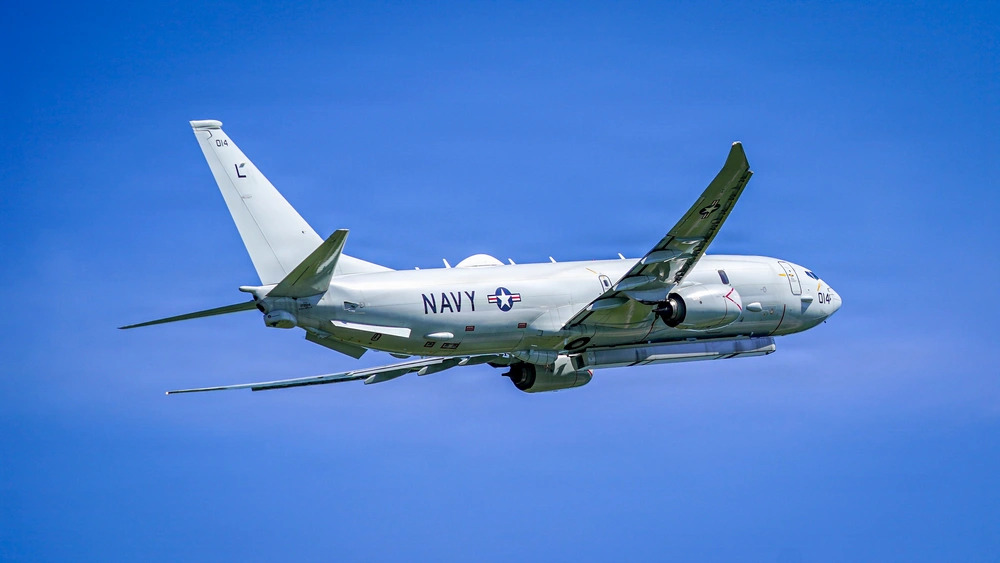
On Tuesday, Bulgarian Prime Minister Rumen Radev disclosed that a US Navy P-8A Poseidon maritime patrol and reconnaissance aircraft, tasked to NATO, had begun patrols over the Black Sea.
Bulgaria, which joined NATO in 2004, the EU in 2007 and the “Eurozone” this year, requested NATO assistance following escalating drone attacks on merchant ships in the Black Sea. Last week, the cargo ship Dignity, a Guinea-Bissau-flagged vessel, was sunk and the Ukrainian-operated coastal freighter Chelsea, a Malta-flagged vessel, was disabled. Both ships were struck by drones approximately 20 miles off the coast of Bulgaria.
According to Stars and Stripes, NATO’s top decision-making body, the North Atlantic Council, held a meeting on Tuesday to discuss Black Sea security concerns. In a press statement, US Army Col. Martin O’Donnell, Supreme Headquarters Allied Powers Europe spokesman, said, “Allies have or will send additional maritime patrol aircraft, radar systems, explosive exploitation teams, intelligence personnel, drones, and more to the Black Sea.”
According to the Kyiv Independent, in a press statement, NATO spokesperson Allison Hart said, “NATO has already strengthened our posture along the eastern flank, including with counter-drone capabilities…We will continue to stand united and ensure that we are ready and able to address any threat and to keep our one billion people safe.”
Neither NATO nor the national governments of any of its 32 member nations have directly accused Russia of the recent drone attacks, while Ukraine has. Two weeks ago, Ukrainian President Volodymyr Zelensky blamed Russia for sinking the Alfa Watan, a Togo-flagged cargo ship. Last week, Ukrainian Foreign Minister Andrii Sybiha directly blamed Russia for the attacks on the Dignity and Chelsea.
It remains unclear whether Russia conducted those specific attacks, but both Russia and Ukraine have conducted confirmed attacks on each other’s interests in the Black Sea. Two weeks ago, Ukraine struck an oil tanker with drones off the Russian coast near Sochi.
Black Sea shipping is vital to global food and energy security, and the recent escalation of attacks comes at a time when the American and Israeli war against Iran has critically degraded Middle East energy production. Experts have warned that a global famine could be brought about if these conflicts are not resolved.
The United Nations’ “Black Sea Initiative” of 2022 sought to stabilize agricultural shipping during the war but was abandoned during the summer of 2023. With no end in sight to the war that has raged for almost five years, the deployment of NATO assets to the Black Sea signals the potential for even more escalation.