Drone attacks on commercial shipping in the Black Sea on Tuesday sank one ship and damaged another. The cargo ship Dignity, a Guinea-Bissau-flagged vessel, was sunk. The Ukrainian-operated coastal freighter Chelsea, a Malta-flagged vessel, was disabled. Both ships were attacked approximately 20 miles off the coast of Bulgaria.
Officials in Bulgaria, which joined NATO in 2004, the EU in 2007 and the “Eurozone” this year, said five crew members were rescued from the Dignity, while 11 crew members remain missing as search efforts continue. All 15 crew members from the Chelsea were rescued, including 7 Ukrainian citizens.
The attacks are the latest in a spiral of escalation that has been building since the summer. Last week, drones sank the Alfa Watan, a Togo-flagged cargo ship. All 10 of its crew members are missing and presumed dead. On Oct. 7, Bulgarian President Iliana Yotova blamed Russia for the deteriorating security conditions in the Black Sea but did not formally accuse it of sinking the Alfa Watan.
On Tuesday, Bulgarian officials again refrained from blaming Russia for the attacks, but the Bulgarian Prime Minister Rumen Radev made a point of “summoning” the Russian Ambassador, Eleonora Mitrofanova, and telling her, “it makes no sense for Ukraine to destroy its own ships in the Black Sea, and the results of these strikes favor Russia’s interests.” Mitrofanova countered that a “third party” could have conducted Tuesday’s attacks.
Ukraine, which is at war with Russia, has been willing to lay blame. Last week, Ukrainian President Volodymyr Zelensky blamed Russia for sinking the Alfa Watan.
On Tuesday, Ukrainian Foreign Minister Andrii Sybiha directly blamed Russia for the attacks on the Dignity and Chelsea. In a post on X, he said:
“Russia’s latest attack on commercial vessels near Bulgaria’s territorial waters, which injured Ukrainian and Azerbaijani citizens, once again demonstrates Moscow’s deliberate disregard for civilian lives and maritime security in the Black Sea. We urge our partners to step up pressure on Russia, strengthen sanctions, and take decisive action to hold it accountable and protect freedom of navigation. The Black Sea is a lifeline for global food security. Russia is attacking it to weaponize hunger and hold the world hostage. This must be met with strength.”
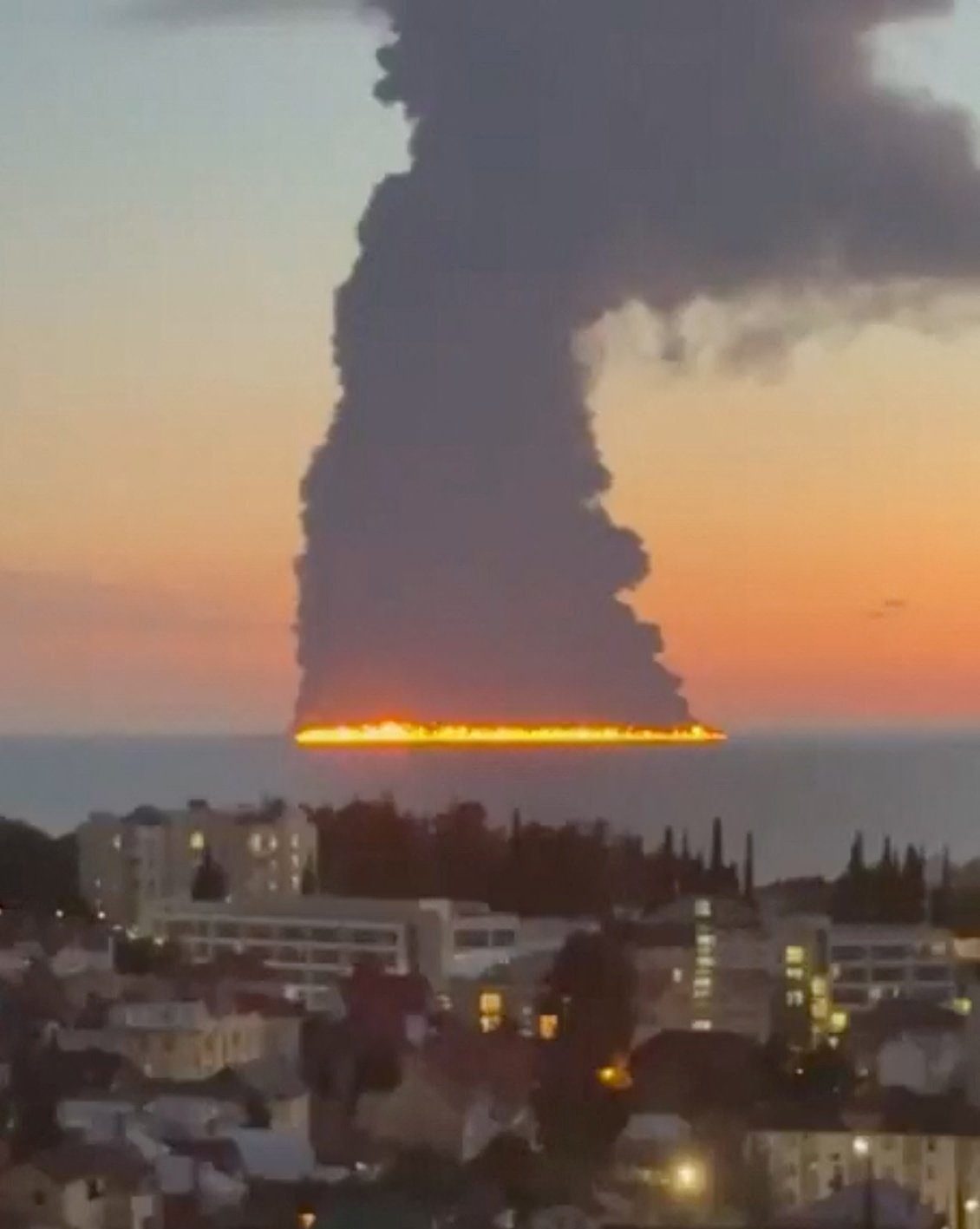
It remains unclear whether Russia conducted these attacks, but both Russia and Ukraine have conducted confirmed attacks on each other’s interests in the Black Sea. Last week, Ukraine struck an oil tanker with drones off the Russian coast near Sochi. Fire raged and thick black smoke blanketed the resort city where Russia hosted the Olympic Winter Games in 2014.
Sybiha was correct about how crucial Black Sea shipping is to global food security; it is also crucial to global energy security. The United Nations’ “Black Sea Initiative” of 2022 sought to stabilize agricultural shipping during the war. It was abandoned during the summer of 2023. As Russia and Ukraine escalate toward total war, the prospect of global famine is increasing. Meanwhile, the war in the Black Sea’s impact on energy security has been exacerbated by the U.S. and Israeli war on Iran.