Since October 2023, no nation’s military has killed nearly as many journalists as Israel, a fact that often opens them up to considerable criticism. The IDF, aims to quell those concerns with a new round of official narrative that portrays nearly all the journalists they’ve killed as covert terrorists.
The narrative includes a new webpage published by the military, which claims some 170 of the journalists killed were actually not only members of terrorist organizations, but of their militant wings. The webpage claims they came by such information through found documents and “interrogations.”
Internal to Israel, such a reframing is quick and easy, and the Israeli media are all faithfully reporting the “alleged journalists” to be terrorists. In practice, of course, convincing the Israeli media of the efficacy of killing a Palestinian wearing a vest that says “press” on it was never all that hard. The incidents of wholesale targeting of journalists, however, aren’t merely based on wild allegations that were readily dismissed with a quick webpage.
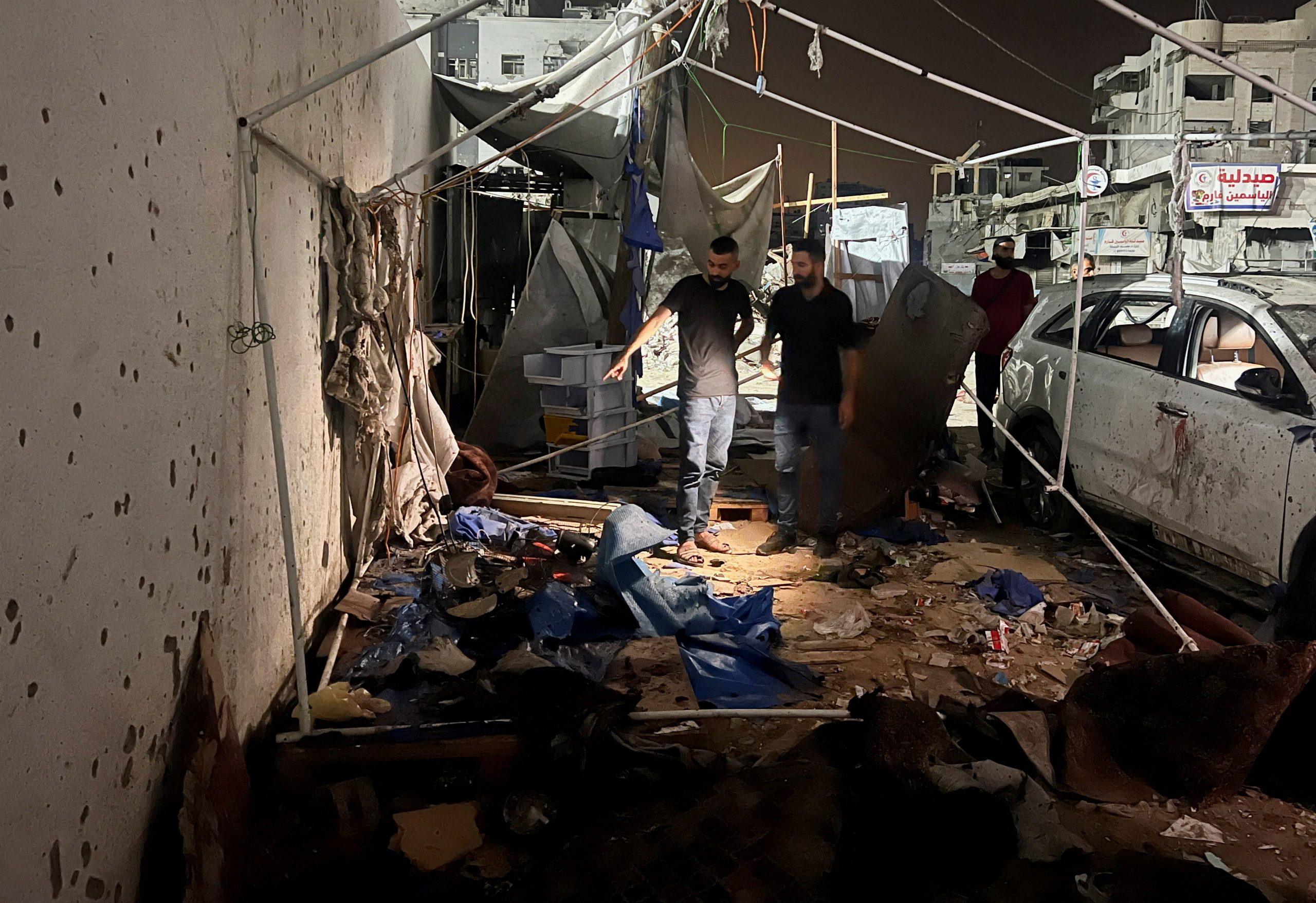
Palestinians inspect the site of an Israeli strike where Al Jazeera says its journalists Anas Al Sharif, Mohammed Qreiqeh and three photojournalists were killed, in Gaza City, August 11, 2025. REUTERS/Ebrahim Hajjaj TPX IMAGES OF THE DAY
Media watchdog groups have been following this problem for years, and groups like the Committee to Protect Journalists (CPJ) have routinely conducted reviews of the evidence, at times removing a handful from their list for being perceived as engaging in combat in the active warzone.
The CPJ’s revisions of their list, however, take the number down from 209 to 191 actual journalists killed, for instance. While the IDF’s report eliminated 170 of them outright in one fell swoop and promised to publish the information exonerating them for killing yet more in the future.
Even then, the 170 journalists’ denunciations seem, in many cases, dubious at best. The website begins with a mere handful of side-by-side images of journalists, first in apprpropriate outfits, then in clothing that resembles combatant attire. After a few dozen of those, however, the site later shows pictures only of the journalists, with their names, and a link to a page that claims the determination was “based on multiple intelligence sources.”
There’s no attempt made by the IDF or anyone else to reconcile their narrative with those of international press watchdogs, and it’s left to the reader to draw the conclusion that CPJ’s lack of enhanced interrogations of detainees must surely be the reason they haven’t discredited the whole of Gaza’s media.
How effectively this website will ultimately prove in convincing anyone that the IDF isn’t disproportionately killing journalists remains to be seen, but those looking for an easy justification will likely be mollified more easily than those for whom the mounting death toll within Gaza has already spoken volumes about the military’s intentions.