Israeli forces continued to carry out strikes across southern Lebanon on Thursday, shelling villages, destroying homes, and spraying the surrounding area with machine gun fire. The main attacks were reported, as usual of late, in Nabatieh and Tyre Districts, and other incidents were reported in Sidon and Bint Jbeil Districts.
Airstrikes were reported in Mansouri and several homes were also rigged with explosives and detonated, continuing the destruction of that town. Another major explosion was reported in Majdal Zoun, though what was destroyed there is at this point unclear.
Artillery strikes in Nabatieh continued to focus on Ali al-Taher Ridge, despite Israeli officials having claimed victory there over a week ago. Troops also sprayed the town of Hadatha, in Bint Jbeil District, with machine gun fire as they advanced through it.
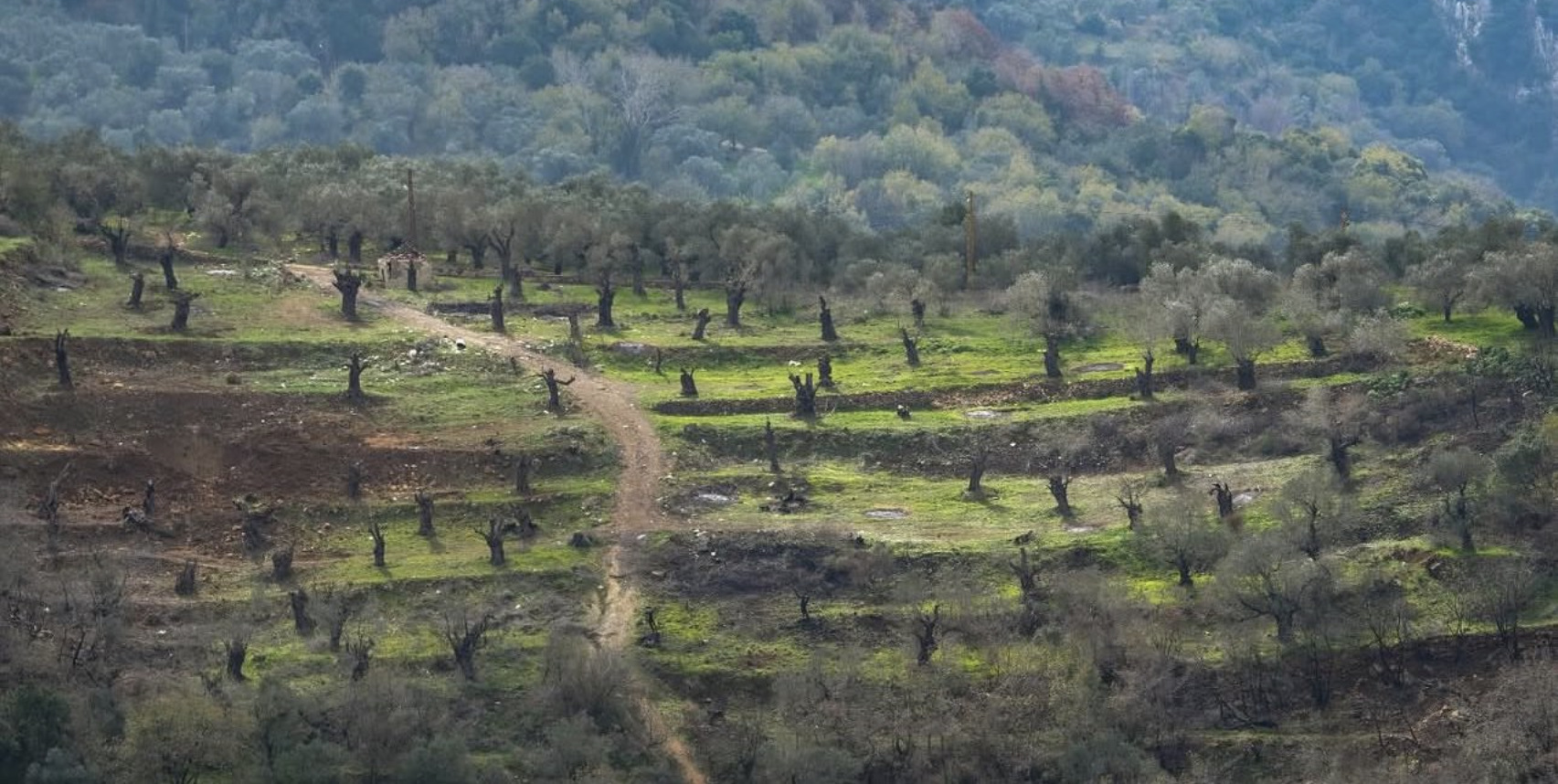
Olive trees in Marjayoun District were destroyed in white phosphorous strikes | Image from X
This being the first of the month, Israel issued a statement regarding their September attacks, claiming the Israeli Air Force had hit “more than 370 Hezbollah targets” in Lebanon in the month. Hezbollah infrastructure, in the context of Israeli statements, often includes civilian targets including apartment buildings full of civilians. Wiping out towns and villages outright is often presented as denying Hezbollah a place to operate, even if in practice, most of what was destroyed had nothing to do with them.
The destruction isn’t confined to municipalities, either. It’s been reported for awhile that Israel is conducting substantial damage to agricultural sites and farmland in southern Lebanon, where the agriculture industry is overwhelmingly how locals make a living.
The latest report from the UN Food and Agriculture Organization (FAO) was that some 22% of Lebanon’s agricultural land, some 56,000 hectares, has been burned or otherwise damaged in the course of the Israeli invasion. The farmers who work much of that land are displaced or otherwise being prevented from working the land.
FOA Deputy Director Beth Bechdol warned that the workers had been cut off from the area, and also that soil contamination and unexploded ordinances will remain a problem with Lebanon’s agriculture industry even after the conflict. While an economic problem, Bechdol also warned it was a potential food security issue for Lebanon going forward.