This weekend marked the two-year anniversary of the Israeli killing of Hezbollah leader Hassan Nasrallah. He was killed in an Israeli attack during the previous Israeli war on Lebanon, a fact which is particularly relevant this year as Israel is in the midst of an ongoing invasion and occupation of southern Lebanon.
His successor, Naim Qassem, gave a speech laying out his faction’s intention to continue resisting, saying resistance was the only way to ever liberate the land from invading Israeli forces.
Qassem also promised that Hezbollah would support sheltering the displaced from the conflict, and that they would aid in the repair and reconstruction of southern Lebanon after the war using “our own resources and donations.”
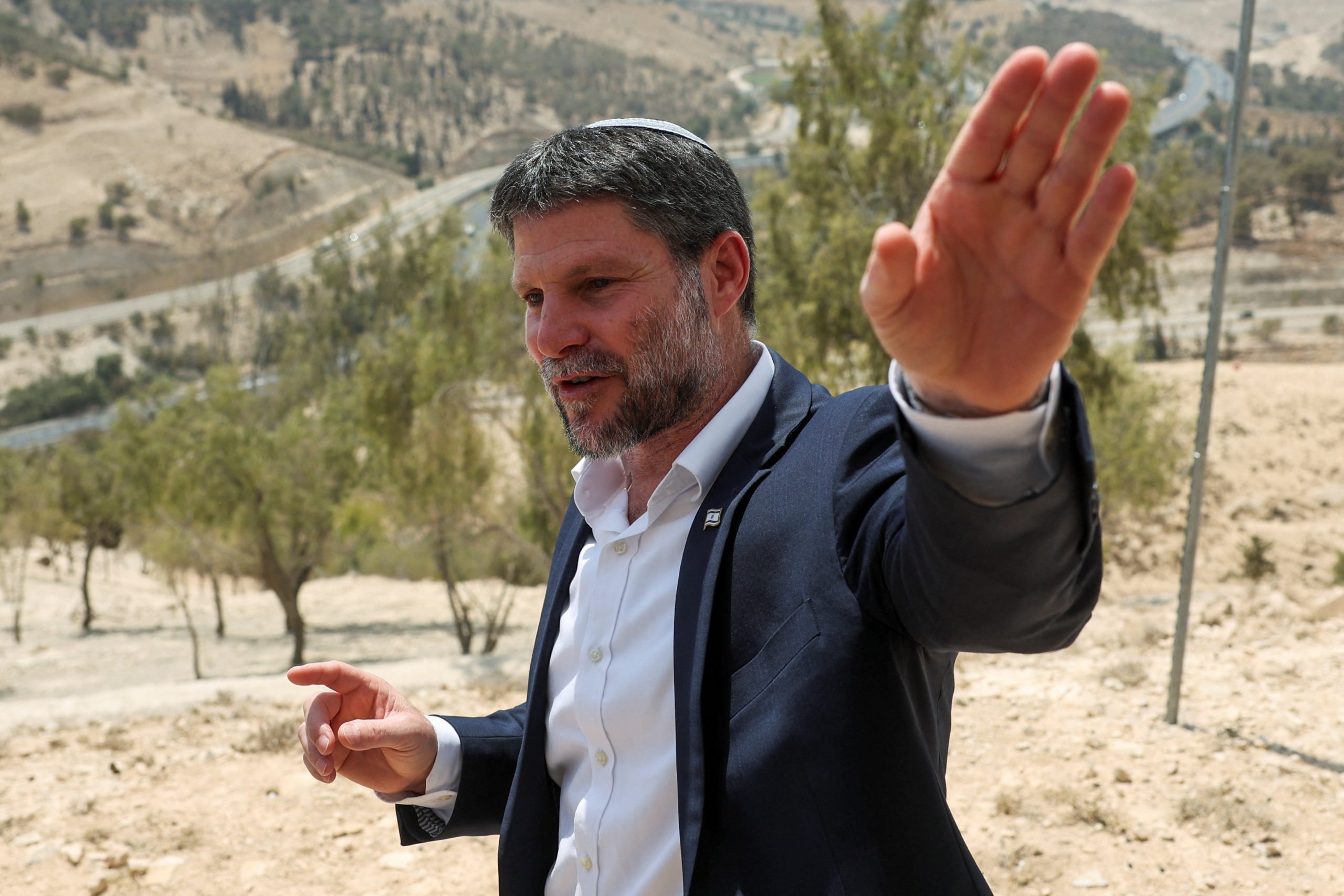
Israeli Finance Minister Bezalel Smotrich gestures, on the day of a press conference regarding settlements expansion for the long-frozen E1 settlement, that would split East Jerusalem from the occupied West Bank, near the Israeli settlement of Maale Adumim in the Israeli-occupied West Bank, August 14, 2025. REUTERS/Ronen Zvulun
On the Israeli side of the issue we have Finance Minister Bezalel Smotrich, an enthusiastic supporter of the war, who, in the course of a speech laying out a plan for a Gaza-style invasion of the West Bank, also called on Israel to annex Lebanon “at least” up to the Litani River.
Israel has invaded and occupied much of southern Lebanon, establishing a “yellow line” zone of occupation during the March invasion, that has been steadily expanding northward. In many places that occupation is now north of the Litani River, which at the beginning of the invasion was meant to be as far as Israel was going.
Smotrich is one of a few far-right MPs calling for annexation of Lebanon in the course of this war, while most seem to prefer the idea of a new open-ended occupation. With Israeli election season approaching, it is likely that such calls will grow as politicians pander to hawkish, far-right voters.