Israel continues to carry out airstrikes against southern and eastern Lebanon in spite of the ongoing 10-day ceasefire today, killing at least five people in airstrikes and wounding several others so far on Wednesday.
The first strike was in western Bekaa Valley, in Jabbour, which killed one person and wounded two others. Later, two people were killed in an Israeli strike against a car in the village of al-Tiri. The al-Tiri toll rose, as Israeli subsequently attacked a building, trapping journalists within who were covering the first strike. Two were found dead in that building, including a reporter, and another was then hospitalized, in “very serious condition.”
The Lebanese Health Ministry said the Israeli troops had “pursued” the journalists trying to cover the initial strike, not only deliberately targeting the building they took shelter in, but preventing ambulances from reaching the building and the journalists. The IDF suggested that the initial men in al-Tiri were “Hezbollah” and were killed because they crossed the Yellow Line. They did not address the targeting of the journalists. This comes just a day before the second round of talks between Israel and Lebanon, at which Lebanon is believed to want a one-month extension of a “truce.”
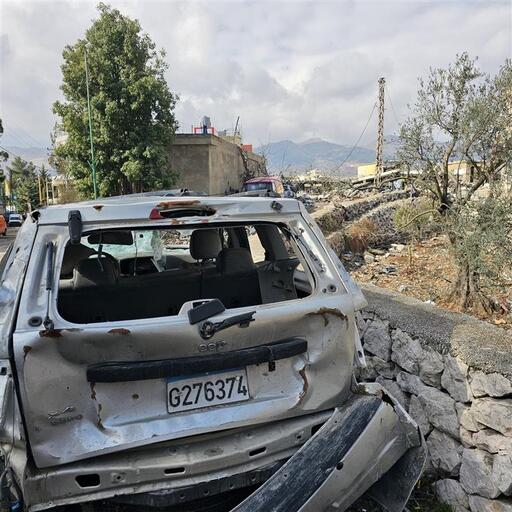
Southern Lebanon’s Nabatieh Governorate during the ceasefire ©MSF
There is increasing pessimism about the prospects of actual peace in southern Lebanon, since even in the current ceasefire Israel is occupying territory and killing people in airstrikes, which is in keeping with Israel openly flouting the November 2024 ceasefire. While Hezbollah didn’t fire rockets under the November 2024 deal, they have been firing on northern Israel in response to Israeli attacks during this ceasefire, suggesting it may be even less durable on the ground.
Israel has been systematically demolishing villages in southern Lebanon in the course of creating a “buffer zone” and has forbidden displaced locals from trying to return to their homes in those areas. The destruction is going beyond homes and buildings though with attacks on water infrastructure a growing concern.
A report last month from Oxfam cautioned that Israel was using a “Gaza playbook” in attacking Lebanon, destroying water and sanitation infrastructure in the areas they were invading. That problem has only compounded in the following weeks, and seemingly continues apace during the ceasefire, part of the concerted strategy to render those parts of Lebanon uninhabitable.
The IDF denied using attacks on water as a weapon of war, and that they only attacked them as an operational necessity for national security. Since Israel has seemingly been arguing that destroying villages en masse and depopulating southern Lebanon as a similar necessity, this may ultimately be a distinction without a difference.