As demolitions continue at scale south of the new “Yellow Line” Israel established in Lebanon’s south, their operations have been more limited north of that area, given the present ceasefire. They have not, however, actually ceased.
In Haret Saida, which is near the southern coastal city of Sidon, itself well outside of the Yellow Line zone, the IDF issued an evacuation notice to the local pharmacist, citing the imminent demolition of the municipal building across the street. In Khiam, which is within the area, large scale demolition of homes was still ongoing.
Israel also reported having killed non-specific “militants” in the village of Qusayr, also in the south, over what they claimed was “violating the ceasefire understandings.” There are as yet no details about what that entailed, nor how many were killed. Hezbollah similarly reported firing rockets at northern Israel, saying that was retaliation for Israeli violations of the ceasefire.
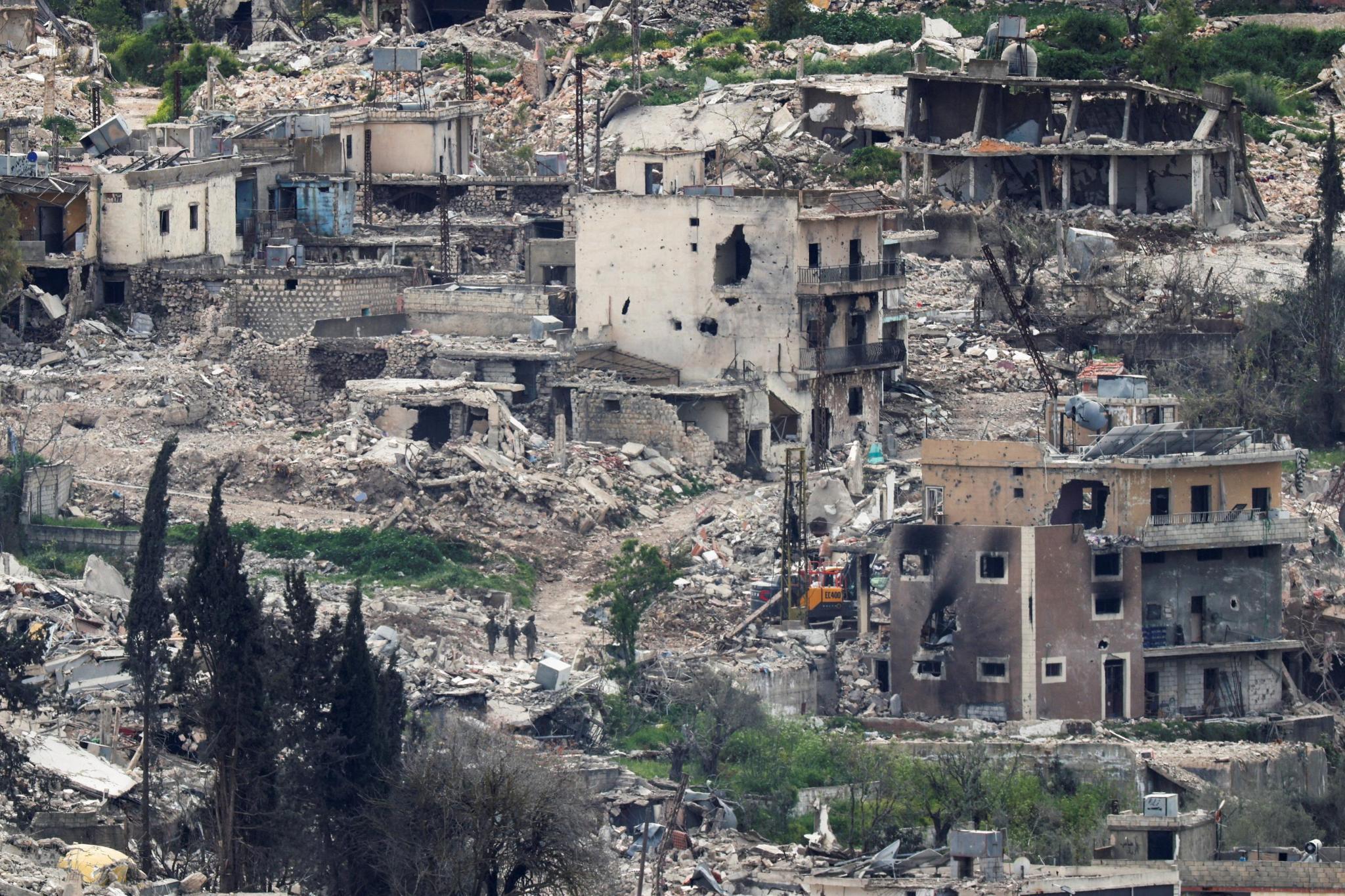
Israeli soldiers stand among destroyed buildings in southern Lebanon, near the Israel-Lebanon border, as seen from the Israeli side of the border in northern Israel, April 14, 2026. REUTERS/Florion Goga
Locals within Nabatieh reported fearing that the 10-day ceasefire was only a brief pause in what would ultimately be an ongoing Israeli war against them, and with Israeli Defense Minister Israel Katz threatening to scrap the ceasefire if Lebanon doesn’t meet commitments, that seems increasingly likely.
Talks are planned for Thursday, and Lebanese officials are expected to push for an extension of the ceasefire. That may give us the first real indication if this 10-day pause is the start of a broader process, or indeed if it’s even liable to last the whole 10 days.
Lebanese Parliament Speaker Nabih Berri issued a statement warning that Israel would face ongoing resistance if a final peace deal didn’t result in them withdrawing occupation troops from Lebanese soil.
That could be a sticking point for any real peace deal between the two nations, as the 2024 ceasefire already mandated that Israel was to withdraw its troops from Lebanon, and they ultimately refused to, retaining multiple more or less “permanent” hilltop bases in the far south. Israeli strikes similarly continued, right up until March 3 of this year, when Israel formally reinvaded.
All this adds up to a ceasefire that doesn’t entirely feel like a ceasefire, and an increasingly uncertain future, particularly for the 1.2 million Lebanese who have been displaced by the current conflict.