While the Saudis and their allies in the self-proclaimed Yemeni “government” are treating the disputed dissolution of the separatist STC as a fait accompli, the reality of the situation continues to elude their diktats, and STC officials are rejecting calls for their forces to come under the direct control of Saudi Arabia.
STC Vice President Faraj al-Bahsani said Sunday that the notion of unifying everyone under a single coalition would be “difficult” in general, and that the STC would absolutely not accept this plan, as announced by that putative government.
Maj. Gen. Ibrahim Haidan, from the Saudi-backed forces, announced his intention to unite the forces loyal to the STC and all other militias outside their control under a single coalition, which Saudi officials made clear Sunday would be directly under their command.
Rashad al-Alimi, nominally the head of the “government” faction’s Presidential Council, reiterated those intentions and said any support for any militia remaining outside the government’s control would only “fuel terrorism.”
This plan rests on the idea that the STC, which seeks to establish Southern Yemen as a separate country, no longer effectively exists, because the Saudi state media announced their dissolution by way of negotiators the STC dispatched to Riyadh last week, who promptly went incommunicado.
The STC, for their part, insists they’ve still not been able to talk to any of their negotiating team in Riyadh, nor have any of their family members been able to contact them. The Saudis appear to be holding that team, and are using that to advance the narrative that the group has disbanded, despite it still very much existing within Yemen itself.
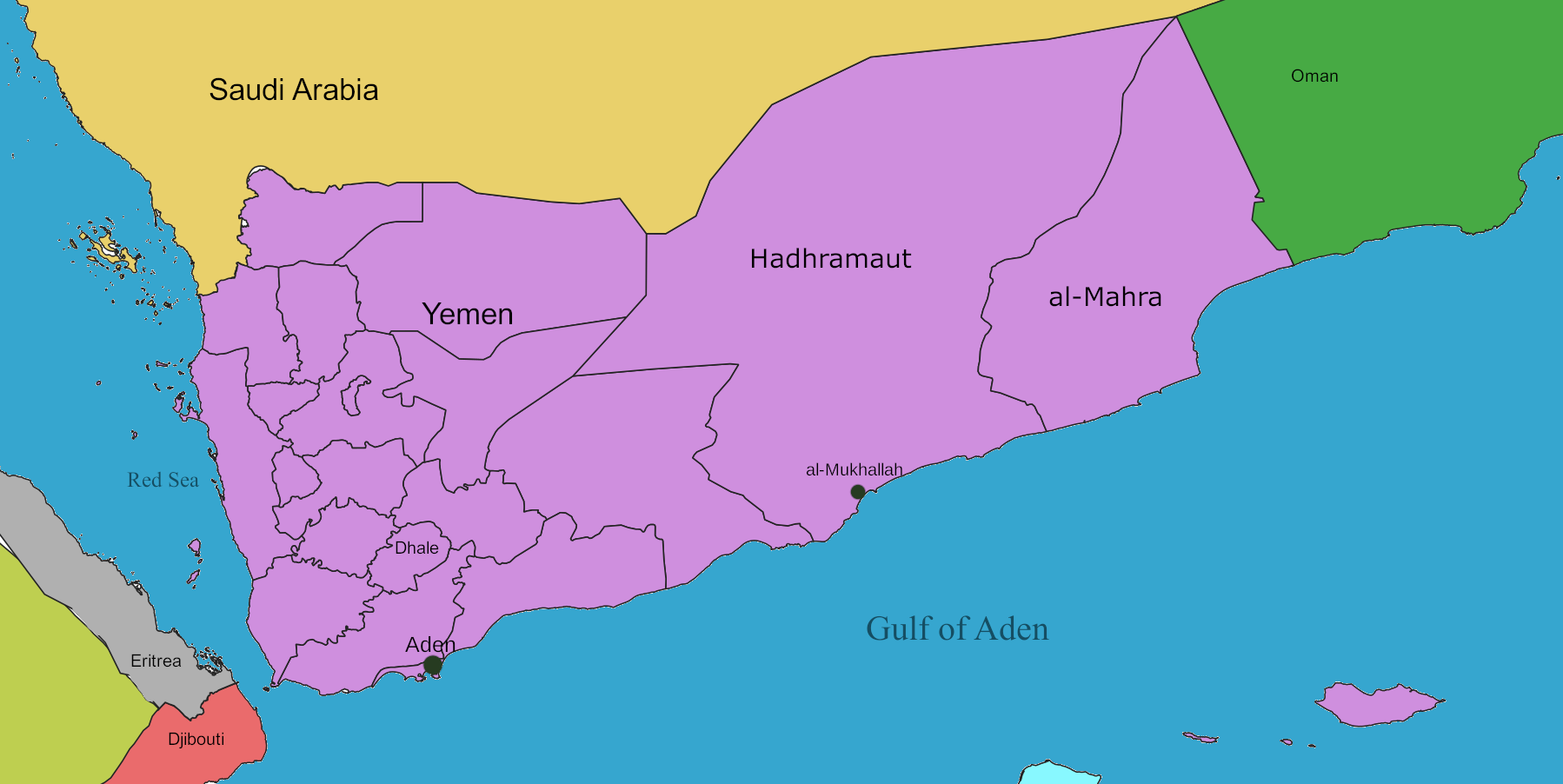
Though the Saudis attacked the STC while the negotiating team was en route, and their allies claim to control the historic South Yemen capital of Aden, major pro-STC protests continue to erupt in Aden.
In practice, the pro-Saudi government of Yemen is a government in exile. Yemen’s capital of Sanaa is under the control of the Houthis, officially known as Ansar Allah, and Aden, which the Saudis declared the “temporary capital of Yemen,” isn’t really under their control either. Maj. Gen. Haidan confirmed as much, saying “additional time” was needed before the government could actually establish a permanent presence within Aden.
Saudi Arabia invaded Yemen in 2015 to try to reinstall the ousted former government of Abd’Rabbu Mansour Hadi, a president who tried, and failed, to unilaterally extend his term in office. The Saudis temporarily took Aden, failed to take Sanaa, and agreed to a ceasefire with the Houthis in 2022, which has held relatively well.