Major explosions were reported in the southern Lebanese town of Kounine as Israeli forces continued to carry out demolitions and artillery strikes across the region. An IDF drone also reportedly dropped a pair of sonic bombs on farmers in the area near Kfar Chouba.
The attacks have been doing substantial damage to the farmland and surrounding areas of southern Lebanon since early spring, when the IDF launched an invasion. At a climate summit in Turkey, Lebanese PM Nawaf Salam estimated enormous environmental damage.
Salam estimated that the Israeli attacks in 2023 and 2024 did over $512 million in environmental damage on their own. That number is substantially higher now, with the ongoing invasion and occupation destroying scores of villages outright, burning orchards and devastating farmland.
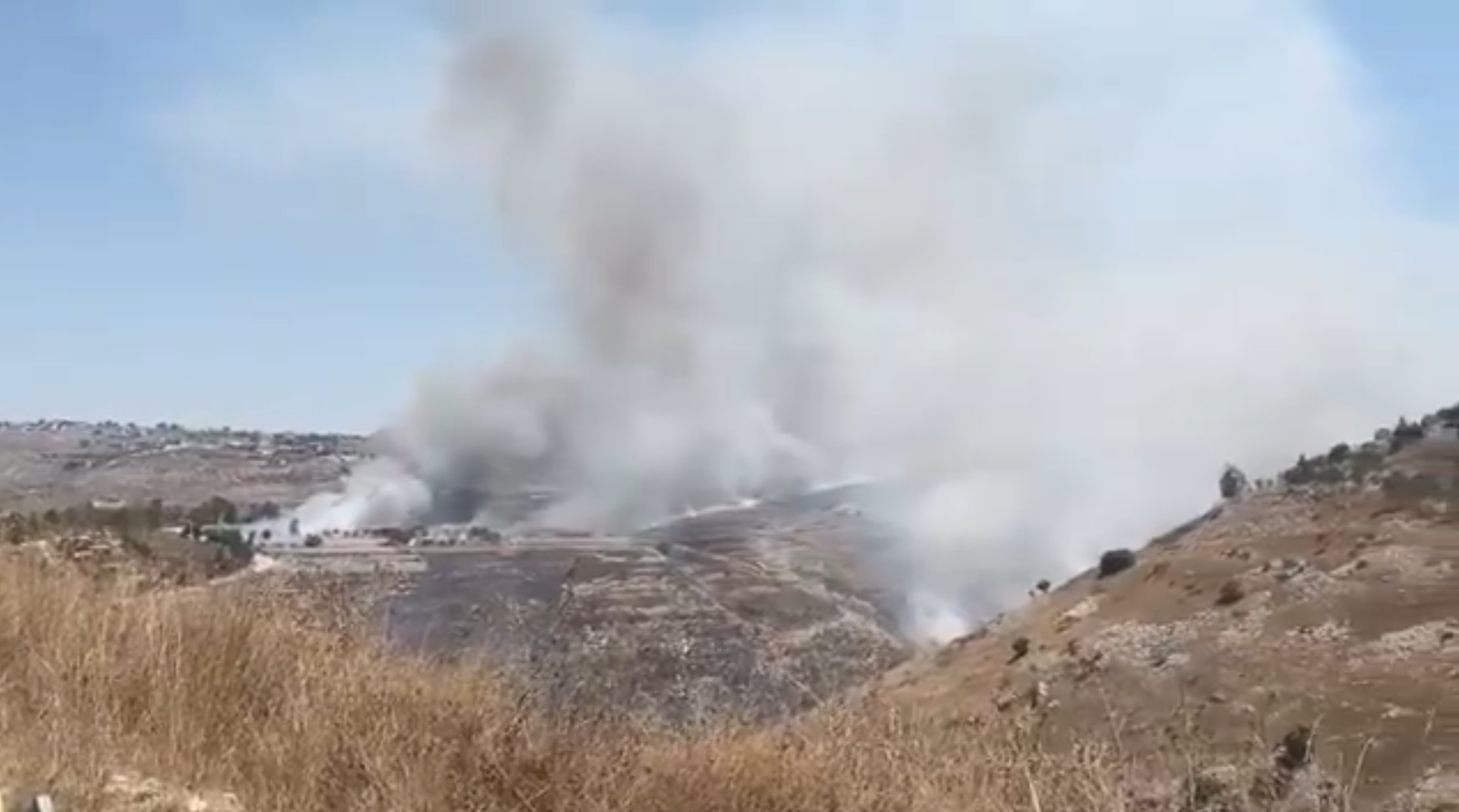
South Lebanese farmland burns after hit with incendiaries | image from X
It puts in context yesterday’s Agricultural Ministry announcement of $7 million being set aside to compensate farmers. Even with some $40 million in planned World Bank aid, the cost of Lebanon’s reconstruction after the Israeli wars is astronomically higher.
Environmental Minister Tamara El-Zein warned that a number of Lebanon’s climate goals wouldn’t be met because of the war, and urged the community to take environment recovery into consideration while helping them rebuild.
As all this goes on the UNIFIL peacekeepers’ mandate is quickly reaching an end, with the expectation that they will have to withdraw at the end of the year. France and the US are offering competing plans for what to do about the impending vacuum in peacekeepers on a border that’s almost constantly seeing war.
France has proposed replacing the UNIFIL with a rather similar peacekeeping force with UN approval and under the auspices of the European Union. The US opposes this plan, however, and wants the “peacekeepers” to not have a mandate to keep any sort of peace, but rather to just be a civilian presence at the border, chiefly to document Hezbollah as an observer force.