Last week it was reported that Iran had provided Hezbollah with some $200 million to help provide for those Lebanese civilians who lost homes so far during the Israeli invasion. Today, Hezbollah began to provide details about how the program would work.
The plan is to provide $14,000 to families that lost homes in Beirut and Dahiye, and $12,000 for those who lost their homes elsewhere in the country. The payments will be made in four installments over the course of the year, intended to compensate $8,000 for furniture and the rest for rent.
The program is quite broad, intended to compensate people for fully or partially destroyed homes, as well as making provisions for people who lost homes during the 2024 war, and people who are still living in homes slated for demolition because of the damage done to them.
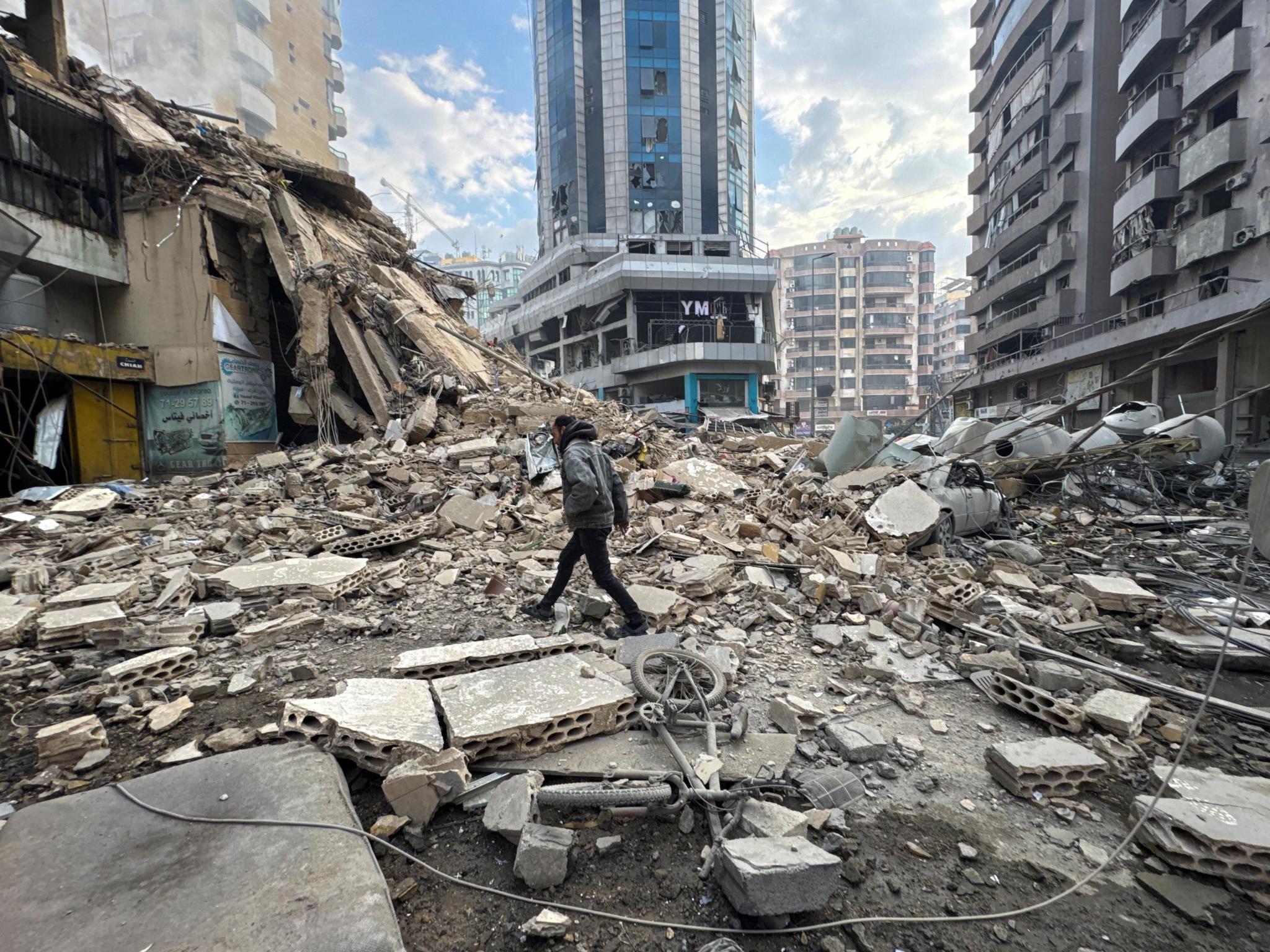
A man inspects damage buildings after an Israeli strike on Beirut’s southern suburbs, following an escalation between Hezbollah and Israel amid the U.S.-Israeli conflict with Iran, Lebanon, March 7, 2026. Picture taken with a mobile phone. REUTERS/Stringer
Not everyone is happy about the compensation, of course, with Lebanese MP Fouad Makhzoumi expressing opposition because of the uncertainty of how the money was brought into the country, and insisting that, like the government’s aim for a monopoly on arms, it must also “assert its authority over the movement of money.”
The US State Department similarly dismissed the program, claiming the money hadn’t reached Hezbollah yet and that US sanctions would ensure that Hezbollah was never able to get ahold of the money at all.
While this program stands to be a public relations coup for Hezbollah, it is also more or less exclusively humanitarian aid for civilians impacted by the ongoing war. Given that context, the efforts to foil those civilians from receiving the aid is likely to prove hugely unpopular, particularly since neither the US nor Lebanese government officials seem to have an alternative plan to help the displaced.
The timing is potentially a problem for the Lebanese government, which has just uncovered explosives smuggling from Syria into Lebanon, which they suspect were bound for Hezbollah. They have tried to spin this as Hezbollah preparing for an assassination campaign.
Others are suggesting the explosives smuggling may point to Hezbollah trying to scale up the ability of their weaponry amid the ongoing war. So far all of this is speculation, and indeed it’s not even certain the explosives were bound for Hezbollah in the first place.
Some are trying to use speculation about the explosives to double-down on their disarmament plans, but efforts by politicians to tie the anti-Hezbollah disarmament campaign to stopping them from helping the displaced may similarly undercut what is already a wildly controversial effort to limit Hezbollah’s ability to resist during an ongoing invasion and occupation.