Israeli forces were active overnight, with the number of airstrikes and artillery strikes against southern Lebanon substantially higher than it has been in recent weeks, raising concern that the war is once again facing imminent escalation.
Not all the attacks were directly targeting municipalities, either. Israel fired phosphorus munitions at the Tyre District, targeting olive groves and citrus orchards, which were set ablaze by the incendiaries.
This has been an ongoing problem throughout the war, with fires set in forests as well as economically important olive groves amounting to what the Lebanese government described as a “scorched earth” policy.
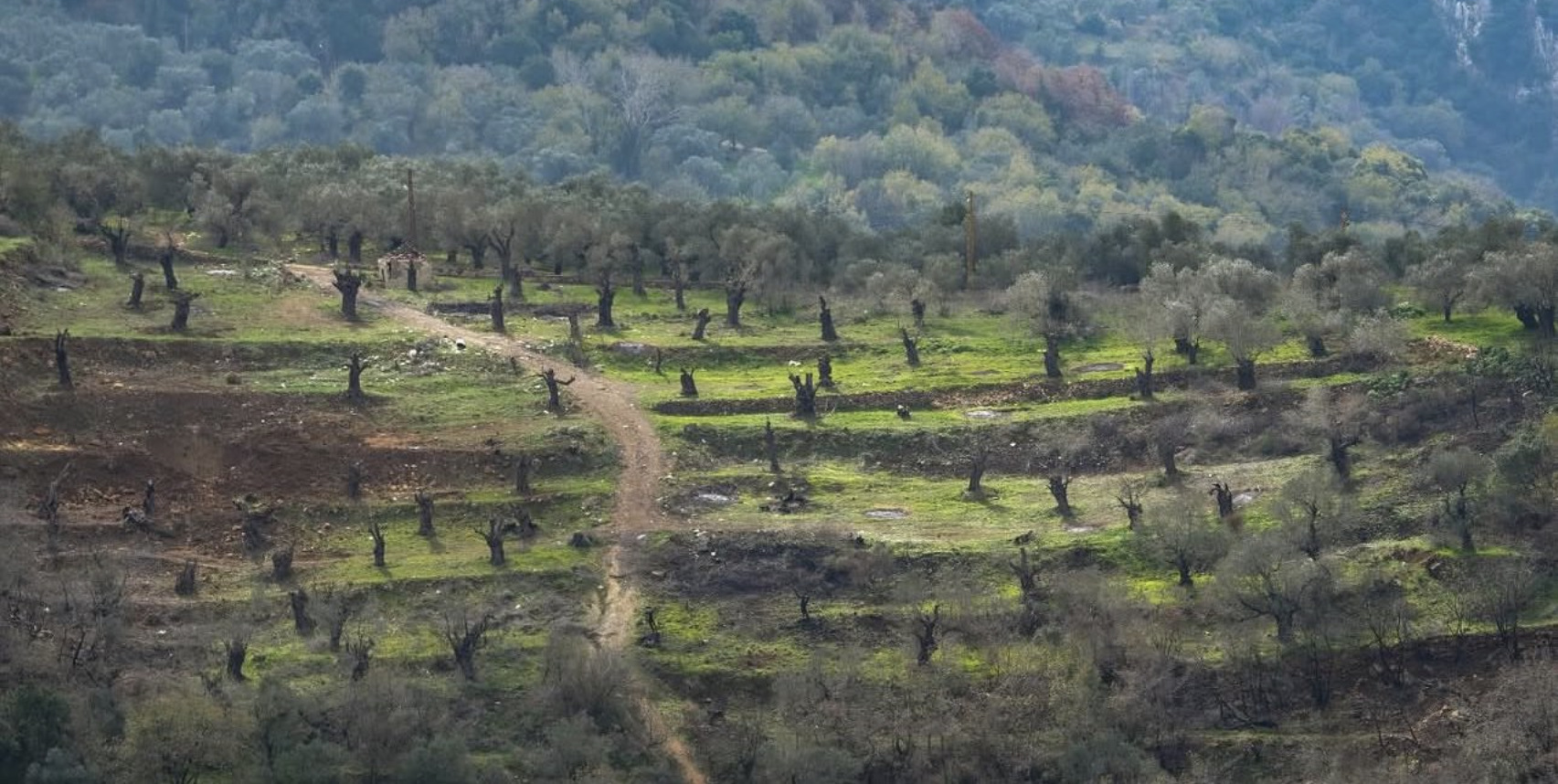
Olive trees in Marjayoun District were destroyed in white phosphorous strikes | Image from X
Historically an agriculture-heavy part of the country, Israeli attacks have done massive damage to southern Lebanon since the March invasion, and between wiping out some villages in their entirety and damaging tens of thousands of acres of agriculture land, the future structure of south Lebanon looks very uncertain.
And while attacks were reported all across the south, the area around Ali al-Taher Ridge appears to have seen the most strikes, with Nabatieh al-Fawqa and Zawtar al-Sharqiya hit with a number of artillery strikes. Homes were reportedly detonated in Mansouri.
One injury was reported in the Christian village of Debel, when a child was wounded by an explosion of an unidentified object. Debel has been a particular target for the Israeli military since the start of the war.