Closed-door meetings this weekend among UN Security Council members showed strong support for extending the mandate for the UN Interim Force in Lebanon (UNIFIL) peacekeepers, whose mandate is scheduled to expire at the end of the year.
Initially established in 1978, the mandates for the UNIFIL have been extended repeatedly since then, despite objections from Israel that the peacekeepers are getting in the way of their operations. At Israel’s behest, the US insisted in 2025 that the extension be the “final” one, and while there was sufficient support for that at the time, the 2026 Israeli invasion and occupation has changed matters.
The UNIFIL’s presence allows them to be a key part of international documentation of the situation in the Israeli occupied south of Lebanon. This week, for instance, they issued a report that Israel had launched 1,030 distinct projectiles against Lebanese territory in the past seven days, predominantly targeting civilian sites and infrastructure.
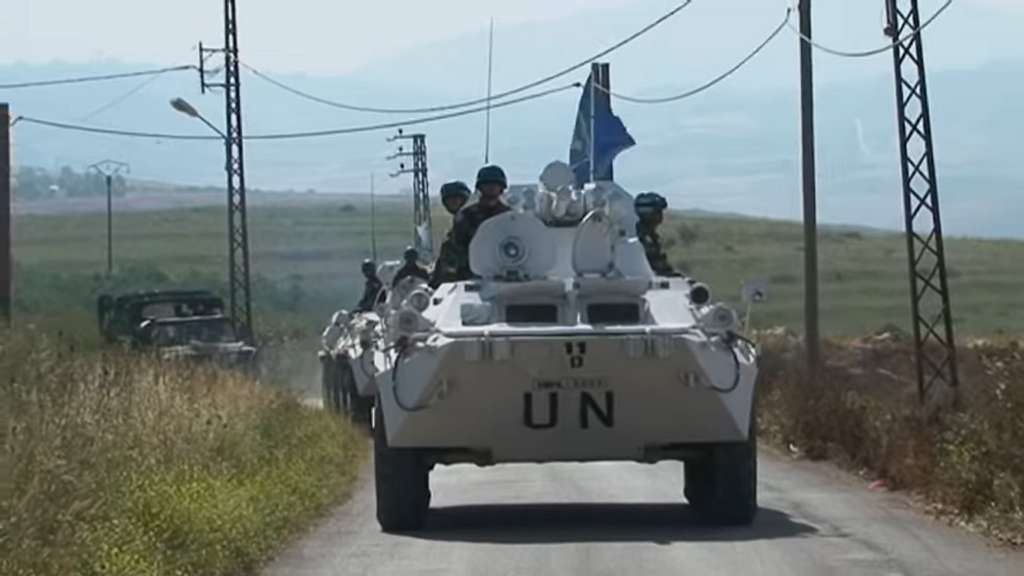
UNIFIL personnel patrol southern Lebanon | Image is Public Domain
US Ambassador Mike Waltz was reportedly the primary holdout for extending the mandate within the Security Council, though he reportedly neither took a US position in favor or against the extension of the mandate. Lebanon favors extension but Israel, as usual, opposes the idea.
In recent weeks, the prospect of the expiration has led to international discussion on creating a post-UNIFIL force, which would itself potentially have a UN mandate and fill roughly the same role. Italy had suggested the European Union could establish such a force.
Israeli Ambassador Danny Danon made it clear Israel similarly opposed any post-UNIFIL alternative, declaring that none of them would do anything to “contribute to regional stability.” In practice, however, Israeli objection to the presence of peacekeepers in Lebanon isn’t automatically a veto, and only becomes such if they can convince the US to block them from having any UN mandate.
Since Israel is occupying the part of Lebanon in question, and intends to be there for the long term, the concern is that the presence of peacekeepers will in some way preclude Israel from imposing Gaza-style levels of destruction on the region, though how much it’s actually limited them so far remains unclear, as villages are being wiped out and the population is being expelled.