in recent weeks, the Israeli military is using a growing number of incendiary munitions in its attacks on southern Lebanon, including the use of white phosphorus in and around populated areas, which is potentially in violation of international law.
Israel has been confirmed to be using white phosphorus in southern Lebanon since the invasion began in March, and indeed there was evidence of such munitions being used against Lebanese territory in prior conflicts.
Legally speaking, white phosphorus munitions are permitted if they’re being used to generate smoke screens or to illuminate an area. It is not, however, permitted to be used against populated areas, and that’s where Israel is increasingly running afoul of the rules.
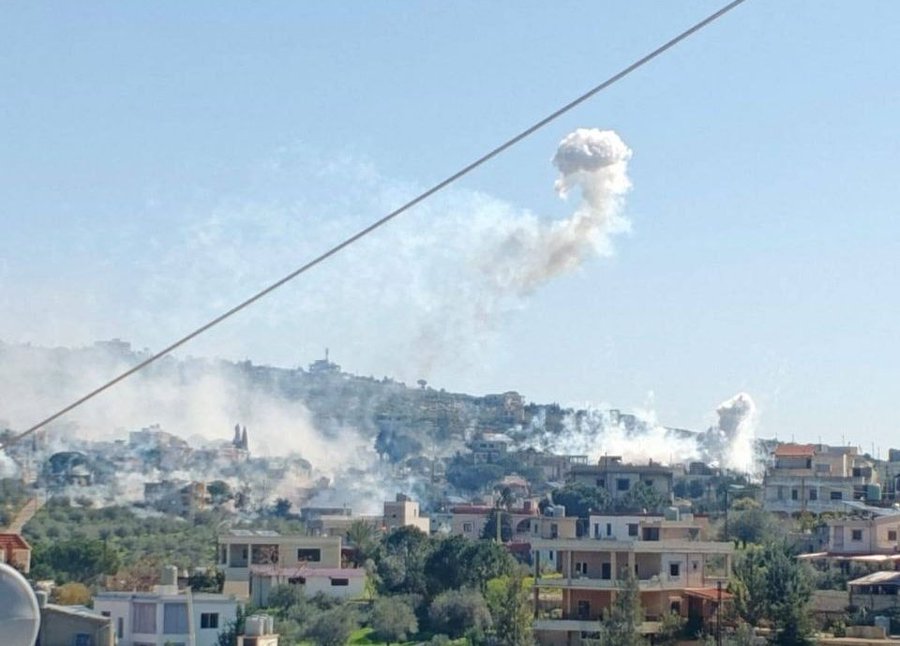
White phosphorous munitions deployed over Khiam | Image from X
For months, there’ve been reports of its deployment adjacent to populated areas, and it is one of several incendiaries which have been pointed to as the cause of massive forest fires that have devastated the Lebanese countryside in recent weeks.
Israel has long maintained it is using the white phosphorus only in the legally permitted ways, but as more and more such munitions are being used inside towns and villages and in areas seemingly unrelated to troop deployments, the evidence suggests otherwise.
Israel is not a party to Protocol III of the United Nations Convention on Certain Conventional Weapons, which explicitly forbids the use of incendiary weapons against populated areas or in any way which could be expected to cause loss of life, injury to civilians, or damage to civilian property. Lebanon is a party to this convention, however, and that Israeli officials so often try to spin violations of Protocol III as technically permissible under some interpretation suggests they are indeed aware that violation of the convention is a potential problem for them.