Last updated 4:40 PM EST
This is a rapidly changing story. For the most up-to-date information, readers may wish to consult al-Jazeera’s Liveblog
Reports Friday afternoon from senior US officials claim that a ceasefire between Israel and Hezbollah has been agreed upon. The deal was brokered with the help of Qatar, and was scheduled to begin at 4 p.m. local time, though Israeli strikes continued apace, suggesting this deal may be no more successful than countless others. Indeed, Lebanese officials had reported two killed in a drone strike hours after the ceasefire began, and Israeli officials insisted they retain “full operational freedom” despite the deal.
This ceasefire deal, such as it is, was rapidly negotiated after the planned peace deal signing between the US and Iran in Geneva was derailed by intense Israeli attacks across southern and eastern Lebanon overnight, killing at least 47 people and wounding 93 others. The signing was postponed, and a new date has not been set.
Early overnight attacks were reported to have centered primarily around towns and villages in the Nabatieh District, though other nearby districts and the city of Tyre were hit as well and Israeli strikes also later struck further to the east, around northern Baalbek. The town of Jezzine was also confirmed struck with at least one killed there as well. At least seven women and two children are reported among the slain.
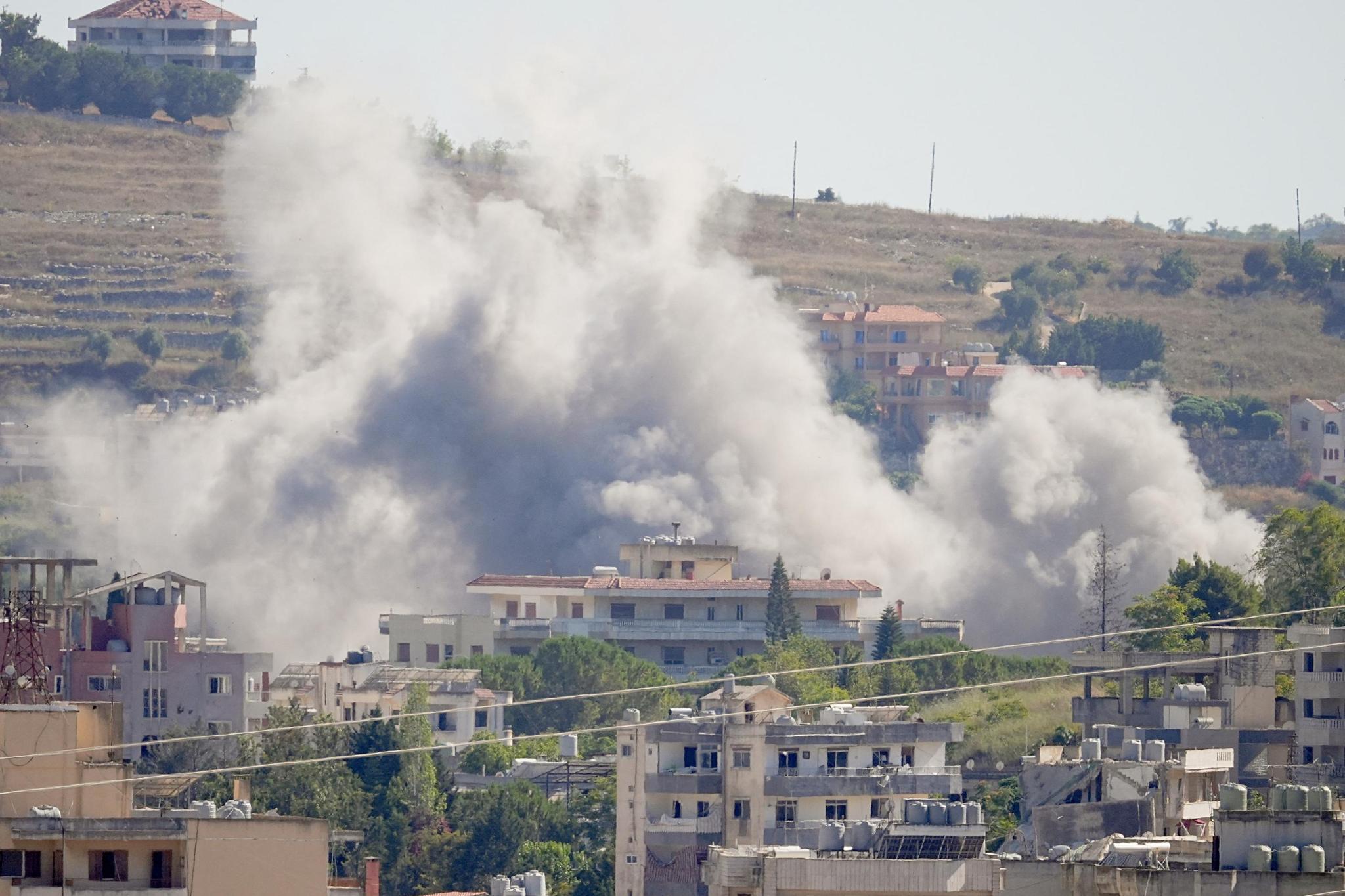
Smoke billows from southern Lebanon following an Israeli strike, as seen from Nabatieh, southern Lebanon, June 19, 2026. REUTERS/Stringer
Panic was reported across southern Lebanon during the attacks, with locals fleeing from towns and villages across Nabatieh and Sidon, anticipating further attacks.
Last weekend’s preliminary US-Iran deal was meant to end the Israeli invasion of Lebanon, though Israel never really stopped attacking and persistently has reiterated that they had no intention of withdrawing. The process dramatically escalated overnight and Israel is reporting that since last night they’ve carried out 150 strikes on “Hezbollah targets,” though as always the Hezbollah nature of those targets doesn’t involve any evidence provided to the public. Israel similarly purported to have hit at least 80 Hezbollah “command centers.”
Hezbollah, for its part, attacked advancing Israeli Merkava battle tanks near Kfar Tebnit, further north in Nabatieh, killing at least four Israeli soldiers and wounding others. A brigade commander was reportedly among the slain, and Hezbollah said three tanks were destroyed.
Following that incident, Israeli National Security Minister Itamar Ben-Gvir demanded that “all Lebanon must burn.” Though presented as the result of the tank destruction and deaths, this is not out of keeping with his stance on Lebanon beforehand, and may just amount to a reiteration of his desire for further escalation.