Much has been made by Lebanese officials of the number of hectares of land that have been damaged and how much reconstruction is going to cost when the Israeli military finally withdraws, assuming they actually do. For thousands in southern Lebanon’s agriculture industry though, the reality on the ground is a series of every-day inconvenience, lost crops and general military harassment. There’s less concern about years of reconstruction than about making due with what remains in the near-term.
The olive harvest is a huge annual event in southern Lebanon, and that’s as true this year as any other. The war meant that farmers couldn’t access some of their groves, and of course still others had been burned by the Israeli military, but those who can have no real recourse but to try to harvest what they can.
Restrictions have been as inconsistent as they are troubling. Farmers used to hiring Syrian and Druze migrant workers were told they weren’t allowed to hire any Syrians for the harvest, then that they weren’t allowed to hire anybody, then finally that only the owners of the grove themselves were allowed on the site, and there inconsistently.
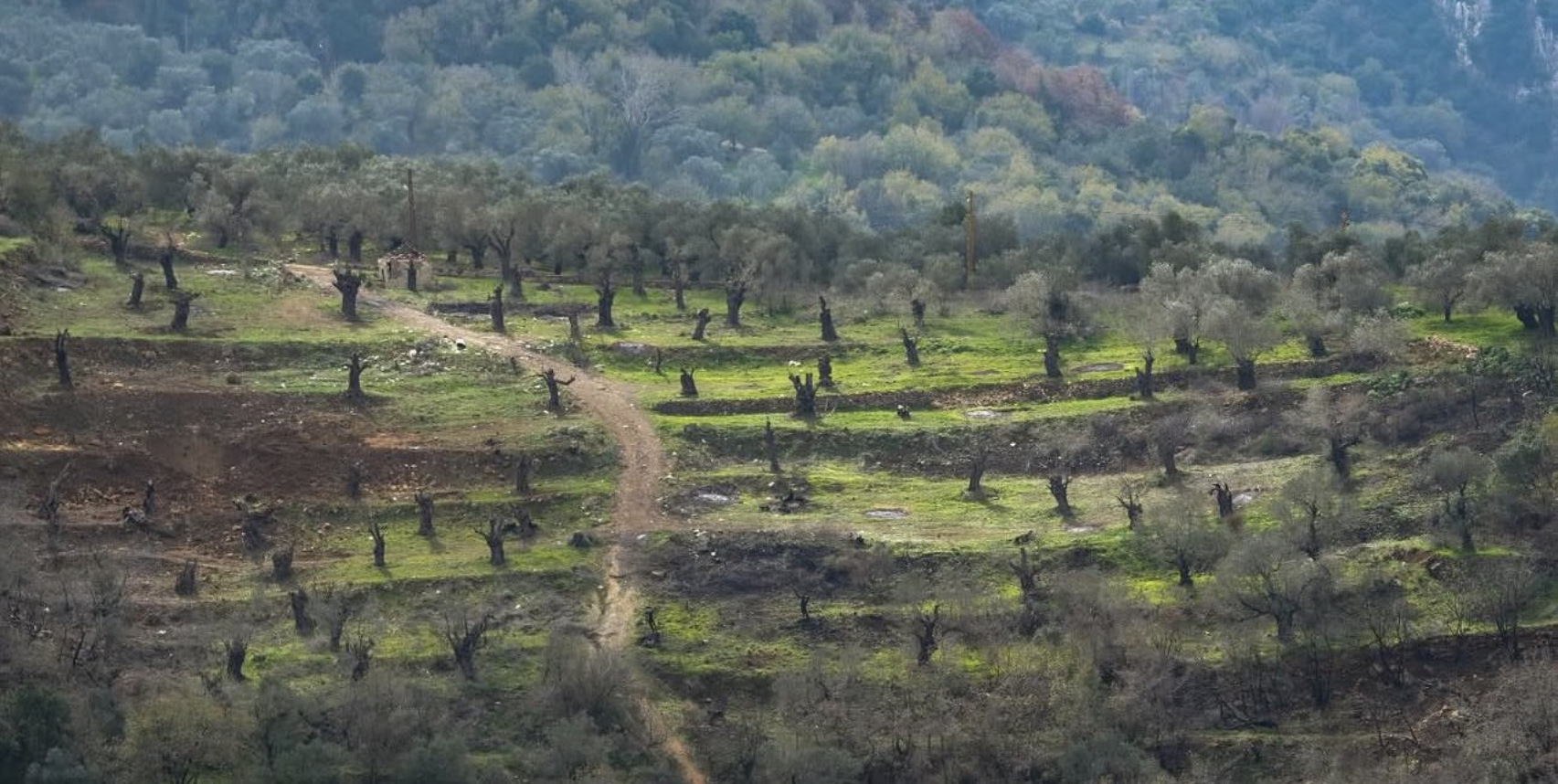
Olive trees in Marjayoun District were destroyed in white phosphorous strikes | Image from X
The farther south you go, the worse it gets, and near the Israeli border leaving the village at all requires a whole litany of different permits. In Kfar Chouba, 250 farmers sought access to their trees, but they were told only 25 could leave at any given time. They estimated that it would take them 850 days to harvest all the trees with this restriction.
The problem for farmers is immediate. The Israeli occupation is creating yet more problems for the long-term rehabilitation of the area. That include a systematic attack on water infrastructure which is cutting more and more municipalities off from clean drinking water.
Reservoirs have been damaged, along with chlorination systems and the generation systems that power them. Even many wells have been damaged or rendered otherwise inaccessible in the course of the war.
This is a long-term concern, because those water systems were meant to support hundreds of thousands of people who are still displaced by the far, and they’re not going to be able to safely return to their homes if there’s no water.
Meanwhile, artillery strikes were reported against Baraachit and Haddatha, while explosions were reported in Qantara. Airstrikes were also said to have occurred outside of Kfar Tebnit, though no casualties were reported. The damage continues to mount, however.