Starting in late September, the annual olive harvest is an economically important part of life for residents of many southern Lebanese towns and villages in the Autumn. This year, however, they’re finding themselves under serious limitations by the new Israeli military occupation.
Though the IDF made much of the idea that they’re allowing workers to harvest their olives as normal, at least on Army Radio, the reality on the ground in many areas is quite a bit different, with some localities told they only have a single day to do what is generally weeks and weeks of harvests, and that substantial limitations will be placed on them.
The villagers of Arqoub were told their harvest would be limited to a single day and a maximum of 100 people, who would also have to turn over their ID cards and phones during the harvest. They further added that no Lebanese Army or UNIFIL observers would be allowed at the harvest scene. The villagers, ultimately decided not to go at all.
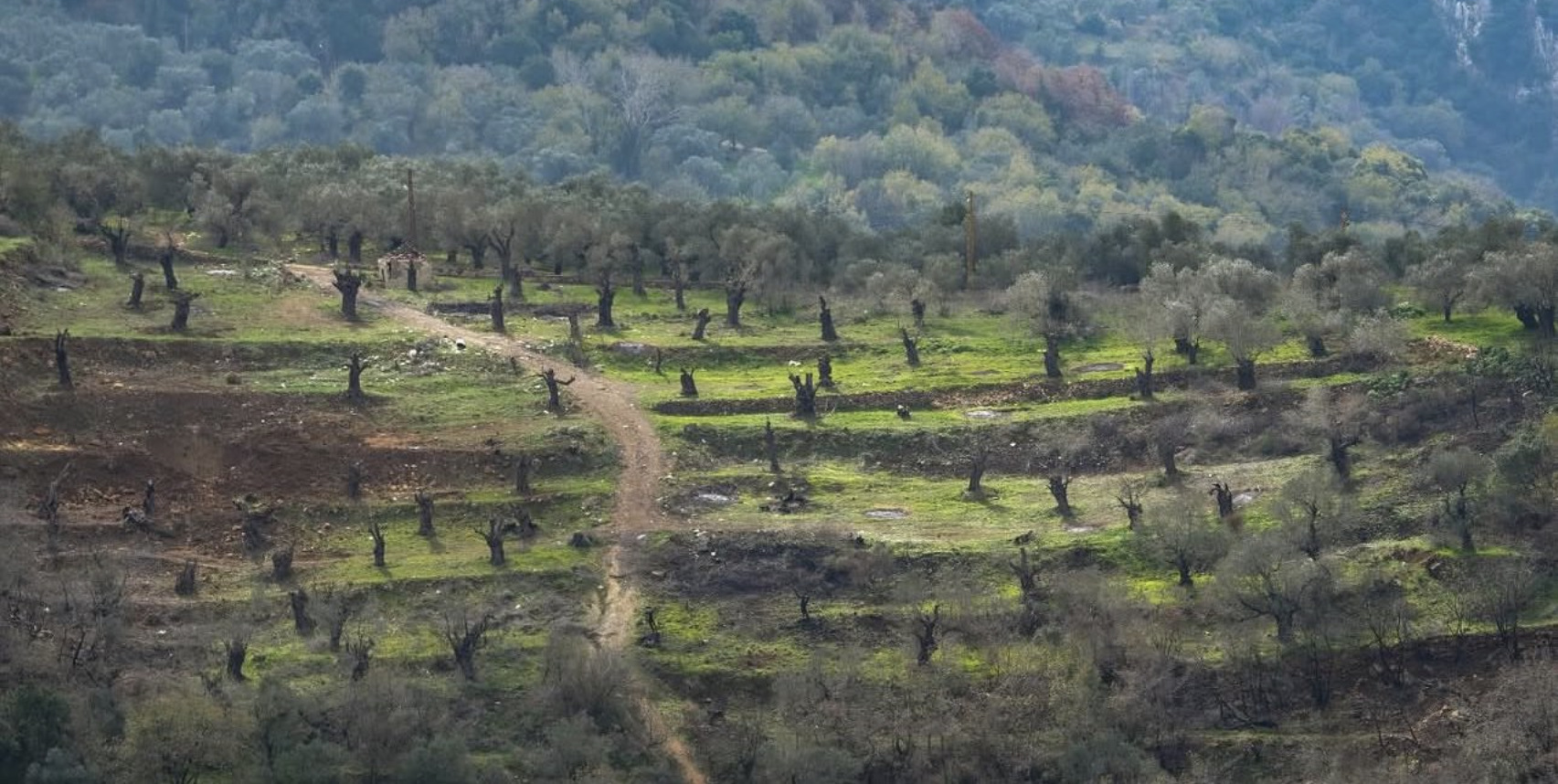
Olive trees in Marjayoun District were destroyed in white phosphorous strikes | Image from X
Locals from Kfar Shouba did go out to the groves for their day of harvest earlier in the weekend, but it was cut short when an IDF patrol showed up unexpectedly, expelled them from the area, and told them not to return.
Israeli Army officials can’t seem to agree on the narrative, either. While some insisted the harvest was being allowed under operational security considerations, others suggested only Christian villages would be allowed to harvest at all, though Sunni villages have seemingly been allowed to participate, albeit under very strict limitations.
Unclear from the conflicting statements is if Shi’ites were allowed to participate at all, as the Israeli government has treated Shi’ites as an overt enemy throughout this war, publicly expelled them from their homes and made it formal policy to outright eliminate Shi’ite villages.
None of this makes sense in the context of agriculture work, of course, but it is seemingly the new reality for southern Lebanon, which is under what the Israeli defense minister now calls a “Permanent Security Zone” but which would more accurately be called military occupation, and indeed an occupation that doesn’t seem entirely certain what they’re meant to be accomplishing.