Seven months into the latest Israeli invasion of southern Lebanon, the extent of the damage is nothing short of staggering. Israeli officials have been open about using the Gaza model in Lebanon, and about a desire to make certain villages, particularly Shi’ite villages “disappear.”
Prime Minister Nawaf Salam is warning that post war reconstruction, which is on hold at any rate because the war isn’t over, “exceeds the capacities of the Lebanese state and its ability to bear these burdens alone,” seeking more international aid for trying to repair the devastated south.
This stood in contrast to last week’s visit by President Aoun and Lebanese Army Commander Haykal to the city of Nabatieh, where they insisted the state’s institutions remained steadfast and committed to the support of the south.
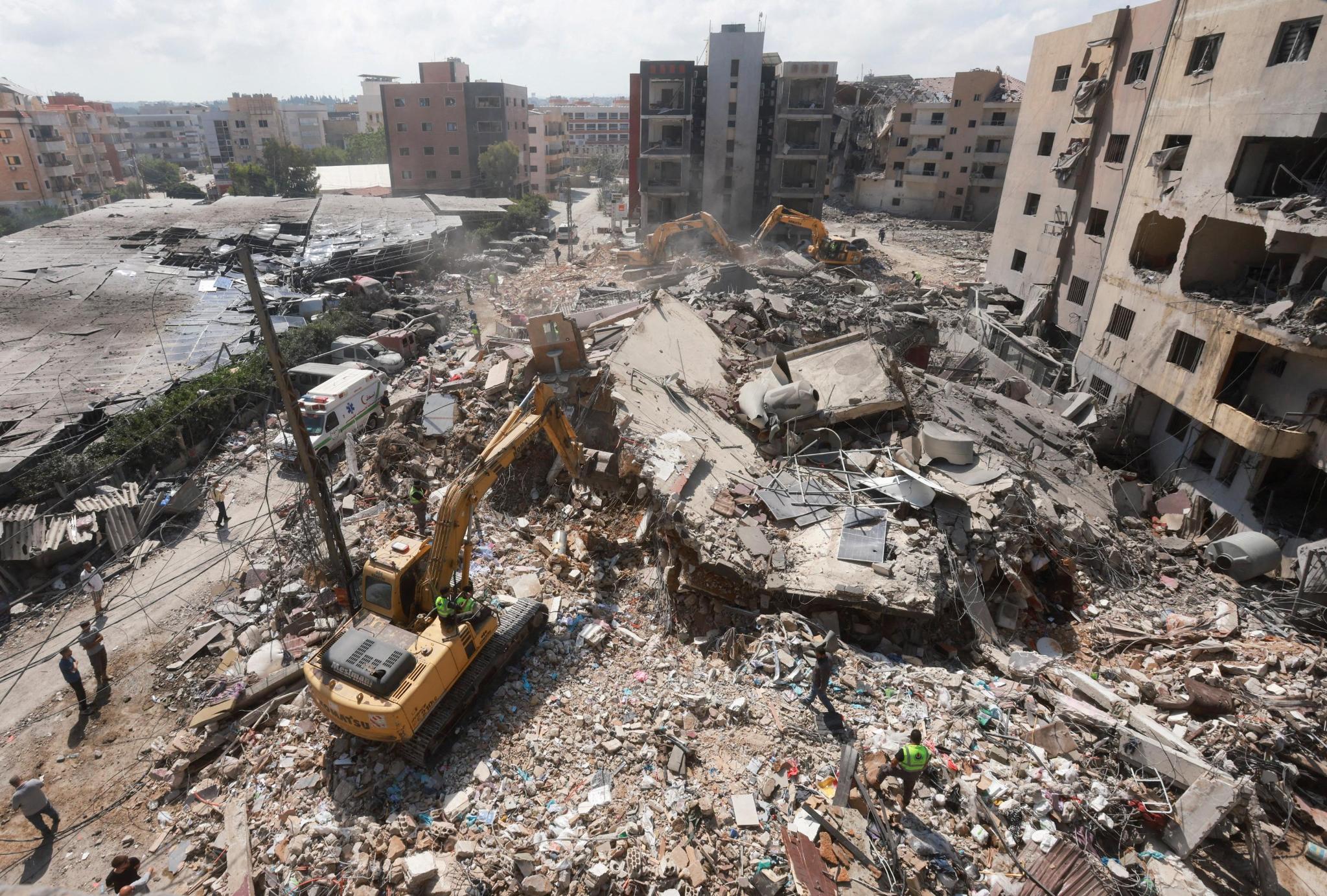
People inspect the damage in the aftermath of an Israeli strike that hit near Jabal Amel Hospital on Monday, in Tyre, Lebanon, June 2, 2026. REUTERS/Aziz Taher
Salam’s stance is likely more realistic, as the scale of damage across southern Lebanon, the economic problems and the heavy damage to southern Lebanon’s agricultural base are war-imposed catastrophes that the relatively small nation is ill-equipped to handle on its own without substantial international aid.
That aid need is clear, it’s availability less so. Lebanon struggled to get the necessary aid for reconstruction after Israel’s 2024 invasion, and hadn’t even fully recovered from that when the 2026 invasion began. There have been some efforts to raise funds for them, which haven’t been for naught but fell short of their goals. Likely, with the war still ongoing, nations are still reluctant to commit a donation to repair towns that are still actively being destroyed by the IDF.
The extent of the damage of civilian infrastructure is likely a war crime, and indeed just one of many committed during this war. The New Arab described having seeing an internal document of the Lebanese government detailing some 200 pages of potential war crimes committed by Israeli forces during the war.
Trilateral talks with Israel and the US have Lebanon mostly waiving their pursuit of legal action regarding those crimes, though some in Lebanon say the country has not formally ruled out future action with respect to the crimes, and thus the massive dossier could serve as a basis for such action in the future.