Southern Lebanon had a substantial population before the March Israeli invasion and occupation, but it wasn’t a heavily urbanized area. Rather, the economy is, or at least was, heavily built around agriculture, and the extent of the damage to the farmland over the course of the war is shaping up to be a long-term problem for them.
Agriculture Minister Nazir Hani reported that over 56,000 hectares (about 216 square miles) of agricultural land has sustained serious damage over the course of the war, amounting to at least 22.5% of the agricultural land in the south.
The cost of fixing the land and compensating farmers for the damage is nothing short of staggering, and Lebanon isn’t in a financial position to cover it by themselves, with Hani reportedly seeking international assistance. Indeed, the World Bank only recently established a $40 million project with Lebanon just to assess the overall damage. The actual cost of repairing the damage has been put in excess of $3.6 billion.
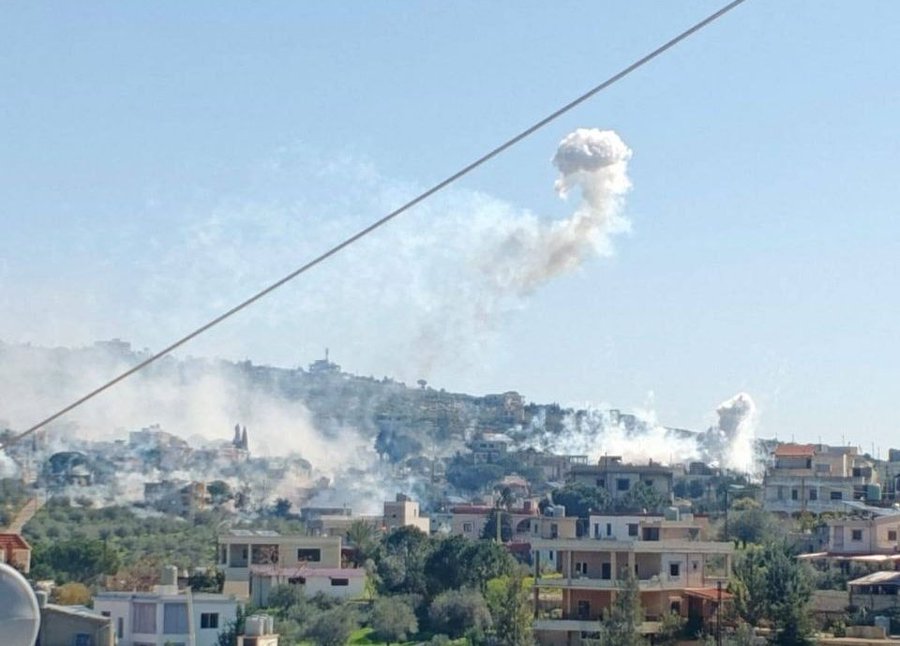
White phosphorous munitions deployed over Khiam | Image from X
And that’s just an estimate of the cost before the war is even over. Israel continues carrying out attacks daily, destroying villages wholesale in addition to wrecking the vast amounts of farmland that support the region in peacetime.
Further airstrikes were reported in Nabatieh al-Fawqa as well as against Zibqin. The extent of the damage caused by those strikes is as yet unknown. Nabatieh al-Fawqa in particular has been on of several towns to be the subject of repeated strikes.
The damage to the farmland often isn’t simply incidental to the airstrikes against towns. A new report from Human Rights Watch documented Israeli use of white phosphorus incendiaries early in the war. Those incidents have continued and were often cited as the cause of substantial fires burning across forests and farmland in the south.
White phosphorus use is only permitted under international law in very particular circumstances, and never when it could cause indiscriminate harm to civilians. Despite this prohibition, Israel’s use often happens in or near populated areas, and while the IDF claims legal pretexts for doing so, many NGOs have questioned this and suggested the deployment of the weapon could amount to a war crime, one of many committed in the ongoing war.