Whether you consider it a town or a village, Kfar Roumine was a modest place before the Israeli invasion in March. Some 1,400 people lived there at the time. Forced displacement and persistent attacks, including Monday’s airstrike that killed over a dozen people, have substantially reduced that population.
Today, Kfar Roumine buries the slain from Monday’s attack on civilian homes, which according to the municipalities’ deputy mayor left at least 13 dead, mostly members of a single family, killed in their sleep when the IDF struck their home in the middle of the night.
Understandably, there’s substantial resentment on display at the funerals, and many were complaining about the Lebanese government continuing to participate in direct negotiations with Israel as Israel continues to carry out attacks on Lebanese territory with apparent impunity.
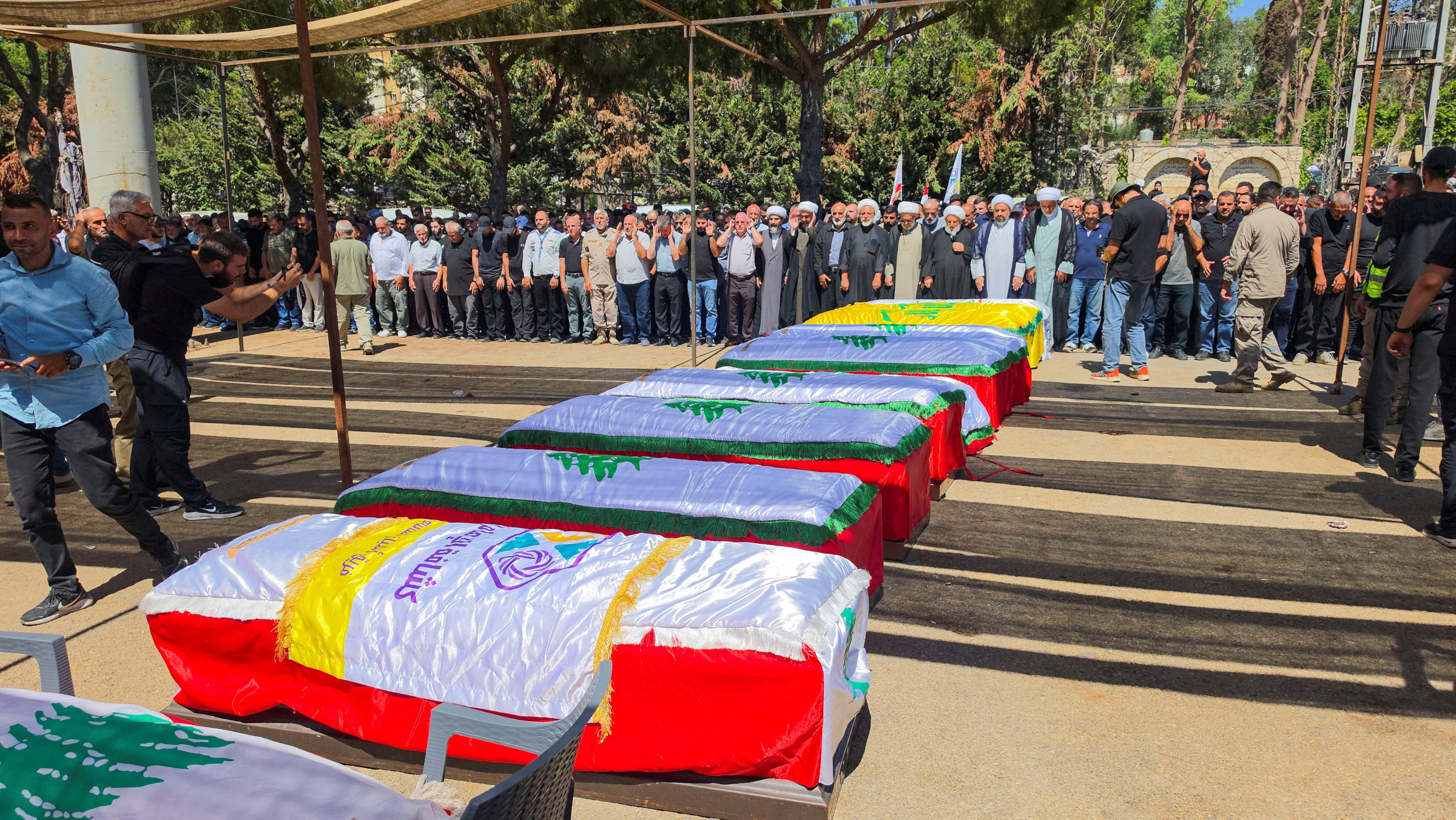
People attend the funeral of twelve people killed in Israeli strikes on Kfar Roumine, southern Lebanon, September 8, 2026. REUTERS/Ali Hankir
The IDF, for it’s part, is defiant, continuing to insist that the homes full of civilians they attacked were actually “Hezbollah terrorist infrastructure.” The perception in the region is that for all the direct, US-brokered negotiations, the Israeli occupation is decidedly not a topic of discussion.
The attacks on the Kfar Roumine homes weren’t even the lone incident that day. Israel also attacked and killed a paramedic in Kfar Roumine independent of those attacks, and in Nabatieh, they attacked and wounded a pair of journalists.
But Kfar Roumine, with its house full of civilians, including infant children, was particularly shocking for locals, and came without any evacuation orders until after the fact. After the home was hit, the IDF issued a statement advising that a “Hezbollah terrorist facility” was being targeted and everyone in the area should flee, though of course the home was already in ruins.