“Systematic not selective.” That’s how UNIFIL spokesperson Kandice Ardiel described the Israeli operations to destroy civilian infrastructure and residences across southern Lebanon, during her interview Monday evening on UN Radio.
Ardiel said the UNIFIL peacekeepers were documenting the extent of destruction in southern towns like Naqoura, Khiam and Kfar Kila. The destruction began March 2 with the Israeli invasion, but it continues to this day.
“It’s hard to overstate the devastation that some communities have seen. Entire neighborhoods have been wiped out,” Ardiel noted, adding that “Homes and businesses, schools and hospitals and other critical infrastructure like roads, electricity and water networks” are being targeted in the Israeli campaign.
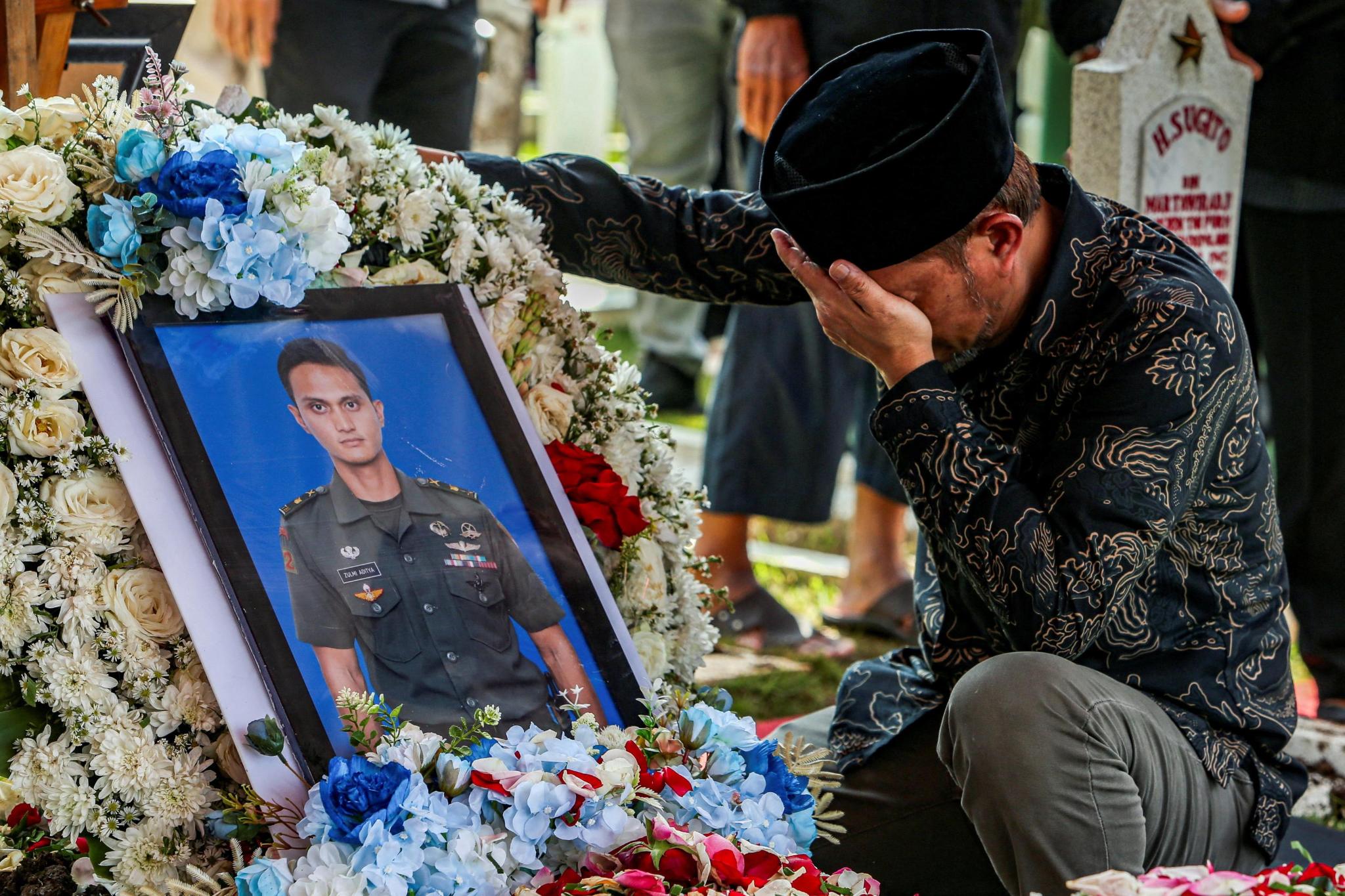
A relative reacts next to the grave of Zulmi Aditya Iskandar, a United Nations Interim Force in Lebanon (UNIFIL) peacekeeper killed in Lebanon, after the funeral ceremony at Cikutra Heroes Cemetery in Bandung, West Java province, Indonesia, April 5, 2026. REUTERS/Claudio Pramana
This is not incidental damage done in the course of an invasion. Rather there is substantial evidence that this destruction is broadly the point of the invasion and occupation, with Israel displacing well over a million civilians from southern Lebanon and Defense Minister Israel Katz saying in June that certain villages, which Israeli troops were actively burning to the ground at the time, “must disappear.”
How much of Lebanon is being made to “disappear” remains a matter of substantial contention rhetorically, but Israeli forces persistently are attacking civilian targets across Lebanon’s south and setting fires in towns and even forests in the area.
A more substantial concern is that occupied southern Lebanon seems to be facing a more or less permanent Israeli occupation, and the Israeli Foreign Ministry published a map earlier this month, on a totally unrelated issue, which showed Lebanon as a substantially smaller country and much of the south as effectively Israeli territory.
Demolitions continued today, and the Israeli military set fire to olive groves in the area of Bint Jbeil. That area, like much of southern Lebanon, is heavily dependent on an agriculture economy, and the invasion has focused its attention in part on destroying farmlands and orchards.
The UNIFIL mandate is currently scheduled to expire this year. Israel is keen to see them removed from the area, though other nations are suggesting either extending that mandate or replacing them with some other multinational forces. Italy was the most recent to propose such a force, which would monitor and facilitate the ceasefire. Lebanese officials made clear they prefer to extend UNIFIL’s mandate, but said they could also support the EU-centric multinational force. Israel has broadly opposed any force in the area.