The seventh round of US-mediated Israel-Lebanon talks are about to begin in Rome, and despite how little has actually been accomplished Lebanese officials are reportedly optimistic that Tuesday’s talks will yield something meaningful.
The expectation is that Lebanon will demand a full ceasefire and a meaningful Israeli withdrawal, and the end of Israeli demolition of civilian homes in Lebanese territory. Israel is expected to reject those terms, and will instead insist that these talks feature an agreement for Hezbollah to cede Ali al-Taher Ridge to the IDF.
Hezbollah of course is not involved in the talks, but to the extent any obligations have been agreed to in the previous six rounds of talks, they were commitments by other factions that Hezbollah stop resisting the Israeli invasion and occupation. That never actually happened, but the fact that other sides agreed Hezbollah was supposed to do that allowed Israel to spin the narrative as Hezbollah “violating” the deal.
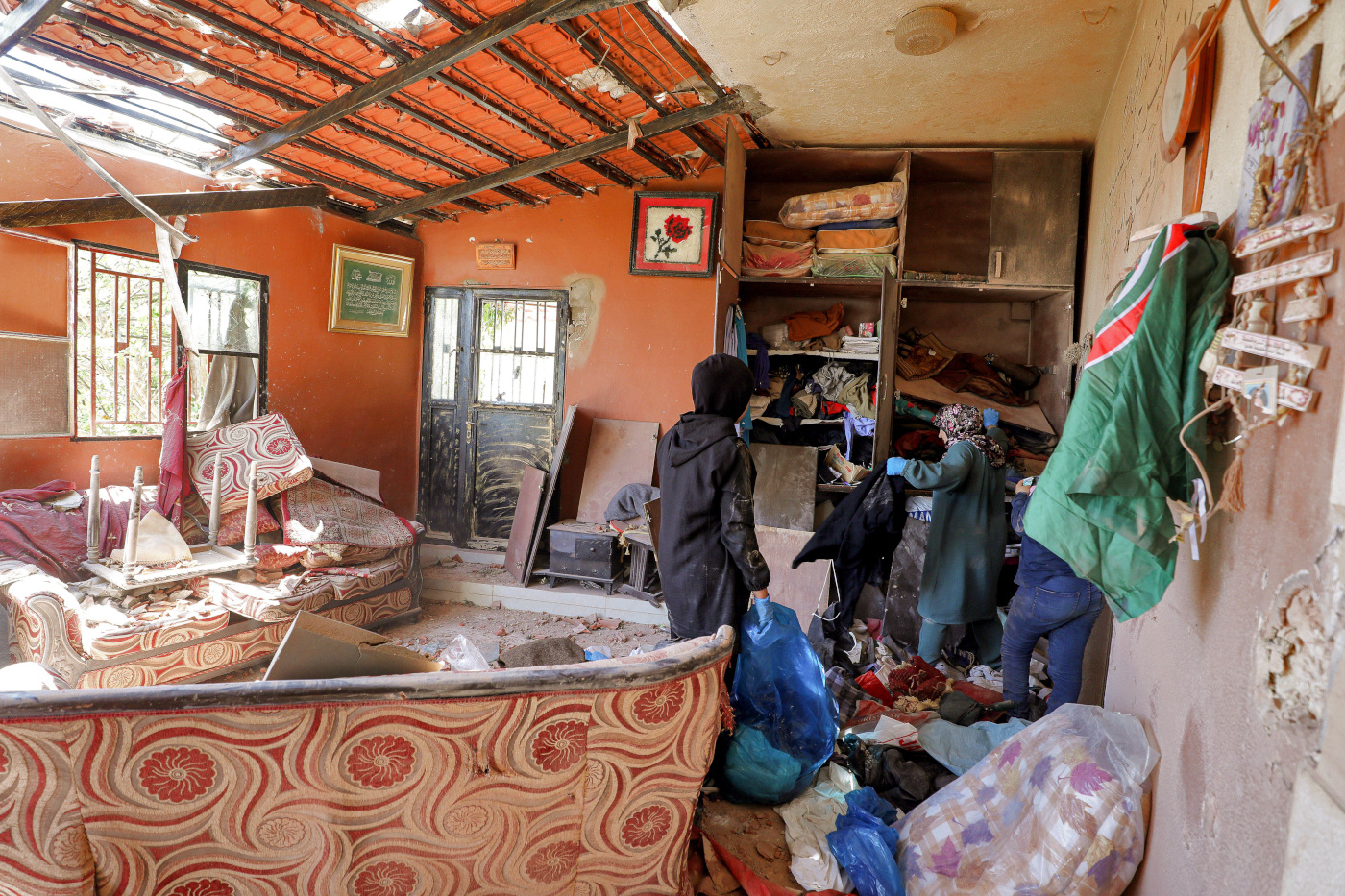
A Lebanese family salvages some belongings from their devastated home in the southern Lebanese village of Zawatar al-Gharbieh. Civilians started returning slowly to the devastated hamlet after the army deployed inside the village following an Israeli withdrawal from several points inside it. (Credit Image: © Marwan Naamani/ZUMA Press Wire)
Israel never stopped attacking Lebanon in practice, nor indeed did the last six agreements ever require them to do so. Missile attacks were reported across southern Lebanon again Monday morning, and phosphorous bombs were reportedly dropped on key olive groves in the south, setting them on fire.
The centerpiece agreement in the fifth round of the talks, and materially the entire discussion of the sixth round of talks was the “pilot zones,” symbolic withdrawals of Israeli forces from a handful of villages, including some they weren’t occupying in the first place, on the condition the Lebanese military would occupy them.
To the extent the deals were ever even attempted, they amounted to relatively little, with the handful of locals allowed to return home under occupation say that the villages were mostly destroyed, there is no longer any running water or electricity, and the homes are damaged or destroyed outright.
It is believed that among the discussions on Tuesday, Lebanese officials will propose an additional pilot zone in Bint Jbeil, though since reports have Israel leveling that particular village even more than the previous pilot zones, its not clear the extent to which this will accomplish anything either.