On the second day of Lebanon’s Army deploying into the “pilot zone” villages in the country’s south, officials are trying to make much of this being the beginning of an end to the Israeli military occupation of the entire country, while from Israel’s perspective, the signs are that very little has changed.
Israeli artillery attacks and drone strikes continued apace, and in Borj al-Mlouk, another village near the frontier in Nabatieh District, Israeli troops raided a home, confiscated a man’s passport, and searched his phone.
The pilot zones are most of what’s being reported internationally, however, with Lebanese PM Nawaf Salam making a high profile visit to Zawtar al-Gharbiya, surveying the rubble and touting the beginning of the Israeli withdrawal.
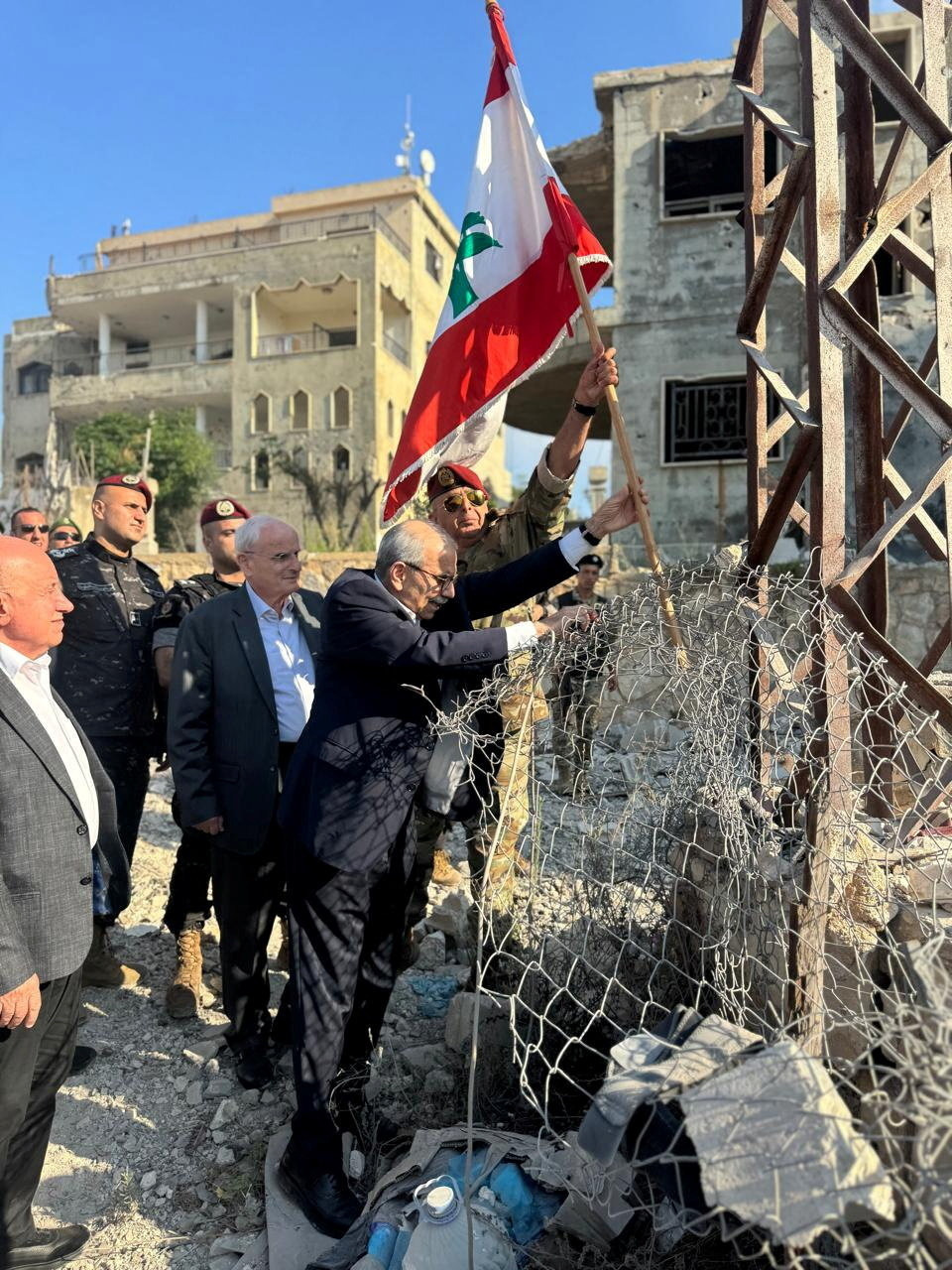
Lebanese Prime Minister Nawaf Salam plants a Lebanese flag in the ground, during a visit to Zawtar al-Gharbiyeh, southern Lebanon, following the withdrawal of Israeli forces under a U.S.-brokered plan, July 22, 2026. Lebanese Prime Minister’s Press Office/Handout via REUTERS.
Notably, there’s still no indication of a withdrawal even being contemplated. President Aoun visited the White House and got no commitment from President Trump that a withdrawal was happening, with the American president only mentioning “redeployments” while continue to raise the possibility of replacing an Israeli occupation with a Syrian one, despite Syria repeatedly rejecting that notion.
The pilot zones indeed were always intended to be more symbol than substance, and when they began to be implemented on Tuesday, the reality was that very few Israeli troops were in those villages in the first place. The destruction was substantial, but the occupation was largely not.
At least that was true before the pilot zones. Now those villages are meant to be occupied by the Lebanese military, at least the parts of the military that Israel finds tolerable, and substantial international pressure exists for the military to exert its control over those villages to prove they can be trusted to do so.
There is some hope that the replacement occupation will allow displaced villagers to return and rebuild, but at this point that’s entirely speculative, and indeed the Lebanese military aren’t even letting everyone back into those villages, citing security concerns.