Friday’s announcement of a new “trilateral deal” between Israel, Lebanon and the United States quickly proved controversial, and major protests erupted in the Lebanese capital of Beirut. Centering around the Shi’ite suburbs of southern Beirut, which have been repeatedly attacked by Israel during the war, the protesters complained it did little to nothing to actually end the war. Since it was also the important Shi’ite religious holiday of Ashoura, the religious processions tended to overlap in Shi’ite areas with protests, with many waving flags and holding banners during Ashoura processions.
Though some media presented the protests as a Hezbollah-fueled event, the unrest may well span beyond that group itself, including a lot of the displaced people from across southern Lebanon, calling the language of the deal “shameful” and primarily a capitulation to Israel. They also faulted the government for saying the “end goal” of the deal was to ensure a withdrawal of Israeli troops from Lebanon, when in practice there was neither a timeline to that effect nor any guarantee the occupation would ever actually end.
Israeli Prime Minister Benjamin Netanyahu confirmed as much in his presentation of the deal, saying it allows the IDF to remain in Lebanon as long as they want. Rather, he says, the deal is primarily about restraining Hezbollah and Iran within Lebanon.
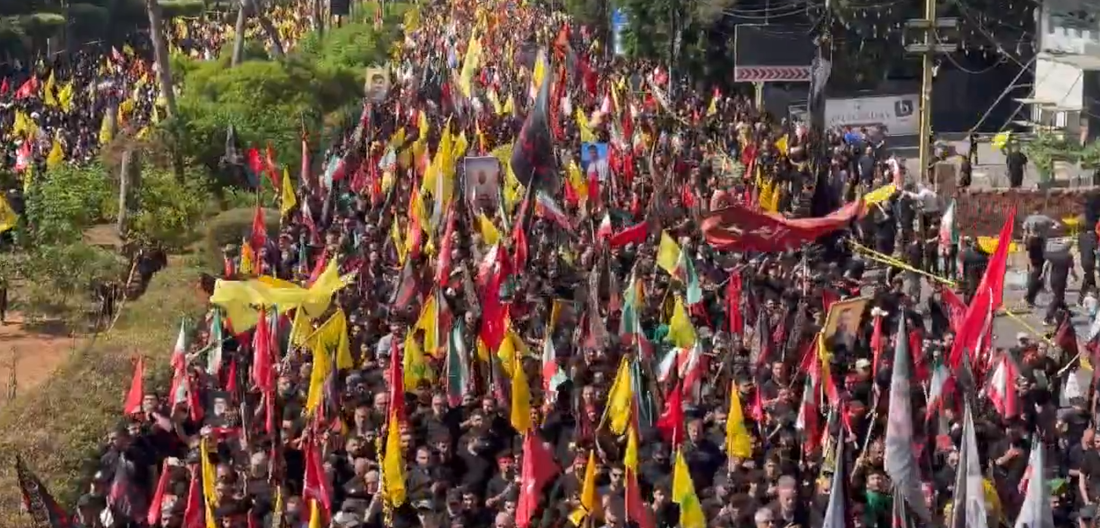
A rally in the Beirut suburb of Dahiyeh | Image from X
Notably, neither Iran nor Hezbollah were parties to negotiations in the first place, nor were they signatories to the deal. The deal aims to set up a “pilot program” requiring the Lebanese government to fully disarm Hezbollah, which Hezbollah officials have warned could lead to internal conflict.
That’s been a concern for some time, as Hezbollah has long refused to disarm without assurances that Israeli invasions and occupations were no longer a threat. Since this deal comes amid an active invasion and occupation, the opposition is likely to be even greater.
The Lebanese Army issued a statement warning protesters against blocking traffic or conducting any “threat to civil peace.” Though they conceded the army would respect the right to peaceful freedom of expression, they cautioned protesters to behave responsibly.
The Lebanese judiciary issued a decree Saturday calling on security forces to employ all means necessary to deter “civil disobedience.” What that’s going to amount to remains to be seen, but the Army’s statement suggests they prefer not to be directly involved unless the situation turns violent.