Updated on April 12, 2026, at 8:49 pm EST
President Trump declared on Sunday that he was ordering the US Navy to impose a blockade on the Strait of Hormuz, and the US military announced it would begin blocking all ships leaving or traveling to Iranian ports starting at 10:00 am Eastern Time on Monday morning.
Trump’s declaration came after US and Iranian officials held about 20 hours of talks in Pakistan that didn’t result in a deal. He said that the US and Iran were at an impasse on the nuclear issue, as Washington is still demanding that Tehran commit to zero nuclear enrichment. Another major sticking point is the fact that Israel has refused to enact a ceasefire in Lebanon and has continued major airstrikes on the country that have massacred hundreds of civilians since the US-Iran truce started.
“So, there you have it, the meeting went well, most points were agreed to, but the only point that really mattered, NUCLEAR, was not. Effective immediately, the United States Navy, the Finest in the World, will begin the process of BLOCKADING any and all Ships trying to enter, or leave, the Strait of Hormuz,” Trump wrote on Truth Social.
“At some point, we will reach an ‘ALL BEING ALLOWED TO GO IN, ALL BEING ALLOWED TO GO OUT’ basis, but Iran has not allowed that to happen by merely saying, ‘There may be a mine out there somewhere,’ that nobody knows about but them. THIS IS WORLD EXTORTION, and Leaders of Countries, especially the United States of America, will never be extorted,” he added.
Trump also said that he ordered the Navy to “seek and interdict every vessel in International Waters that has paid a toll to Iran.” He issued a warning to the Iranian military, saying that any “Iranian who fires at us, or at peaceful vessels, will be BLOWN TO HELL!”
Later in the day, US Central Command announced that its forces would begin enforcing a blockade of “all maritime traffic entering and exiting Iranian ports” at 10:00 am EST on Monday. The command said the “blockade will be enforced impartially against vessels of all nations entering or departing Iranian ports and coastal areas, including all Iranian ports on the Arabian Gulf and Gulf of Oman,” but that it will not impede “freedom of navigation for vessels transiting the Strait of Hormuz to and from non-Iranian ports.”
In another post on Truth Social, Trump accused the Iranians of being “dishonorable” for not opening the Strait of Hormuz as part of the ceasefire agreement. But a major part of the deal was also for a ceasefire in Lebanon, something the US officials initially agreed to but later rejected after Israel escalated its bombing campaign in the country.
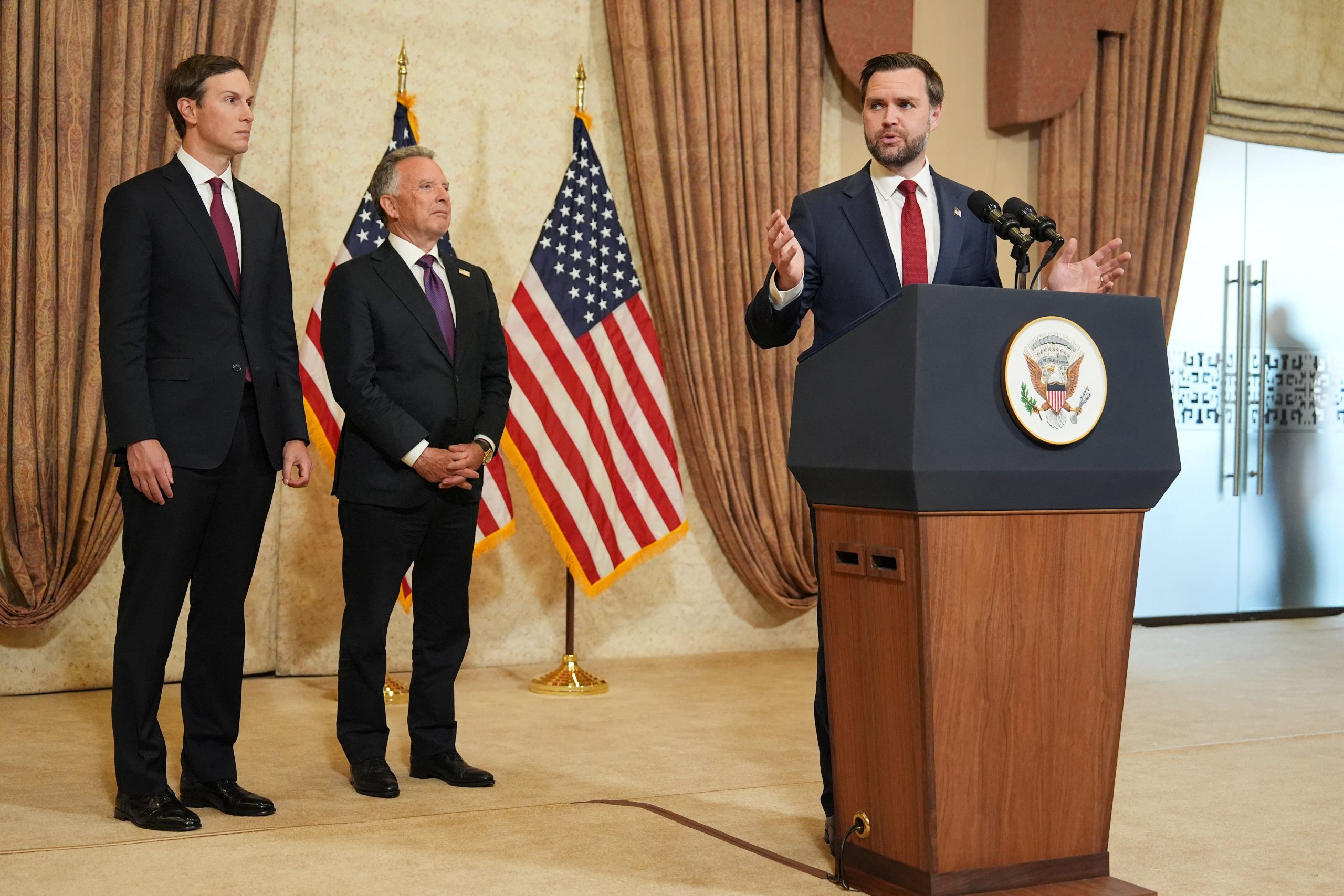
In brief remarks to the press following the negotiations with Iran, Vice President JD Vance also framed the nuclear issue as being the main impediment to a deal, though, since before the US and Israel launched the war, Tehran has been willing to re-commit to never developing a weapon and keeping uranium enrichment at very low levels.
“We’ve been at it now for 21 hours. We’ve had a number of discussions with the Iranians, that’s the good news. The bad news is that we have not reached an agreement, and I think that’s bad news for Iran much more than it is bad news for the United States of America,” Vance said.
“We go back to the United States having not come to an agreement. We’ve made it very clear what our redlines are, what we are willing to accommodate them on, and what things we are not willing to accommodate them on. We’ve made that as clear as we possibly could, and they’ve chosen not to accept our terms,” the vice president added.
Mohammad Bagher Ghalibaf, the speaker of Iran’s parliament, said that the US failed to gain Iran’s trust. “Before the negotiations, I emphasized that we have the necessary good faith and will, but due to the experiences of the two previous wars, we have no trust in the opposing side,” Ghalibaf wrote on X.
“My colleagues on the Iranian delegation, Minab-168, raised forward-looking initiatives, but the opposing side ultimately failed to gain the trust of the Iranian delegation in this round of negotiations,” he added.
Iranian officials named the flight to Pakistan “Minab-168,” a reference to the 168 people, mostly school girls and boys, who were killed by the February 28 US missile strikes on an elementary school in Minab, southern Iran. The Iranian delegation traveled with photos of some of the children on the plane.