With the fighting continue to rage and north and northeast Syria between central government forces and the nation’s Kurdish minority, the US government appears to have decided that they are backing the former, and that US military support for the Syrian Kurds is over.
US envoy Tom Barrack declared the Kurds to have a “great opportunity” to be taken over by the Islamist central government of Syria, led by the Hayat Tahrir al-Sham (HTS). He assured that the Kurds would definitely be offered “equal rights” under the law in this scenario.
In many ways, Barrack’s comments were less about why they are no longer backing the Kurds than why they did in the past, saying at one point in the fight against ISIS, the US didn’t consider the Assad government a “viable partner” so they backed the Kurds instead. Now, with the US seeing the HTS as aligned with their interest, that’s no longer the case, so they’ll be backing the HTS instead.
Syrian Kurdish officials and locals have expressed disappointment with this turn of events, saying that after more than a decade of being aligned with the US they are being effectively “abandoned” at the exact moment the HTS has begun launching military offensives against Kurdish-controlled territory that the US helped the Kurds gain in the first place.
Though the US has broadly supported the Kurds through the Syrian Civil War and after, it has not been uniform. In 2019, Turkey launched an offensive against the Syrian Kurds and the Trump Administration at the time similarly (and controversially) withdrew backing for the Kurds, with President Trump famously claiming it was because he had just learned that the Kurds were not present at the Normandy Invasion during WW2.
This move may similarly be controversial, even if Normandy isn’t invoked as a justification this time. Sen. Lindsey Graham (R – SC) had warned the HTS against continuing attacks on the Kurds and had warned that the US might reimpose sanctions against Syria if the attacks continued.
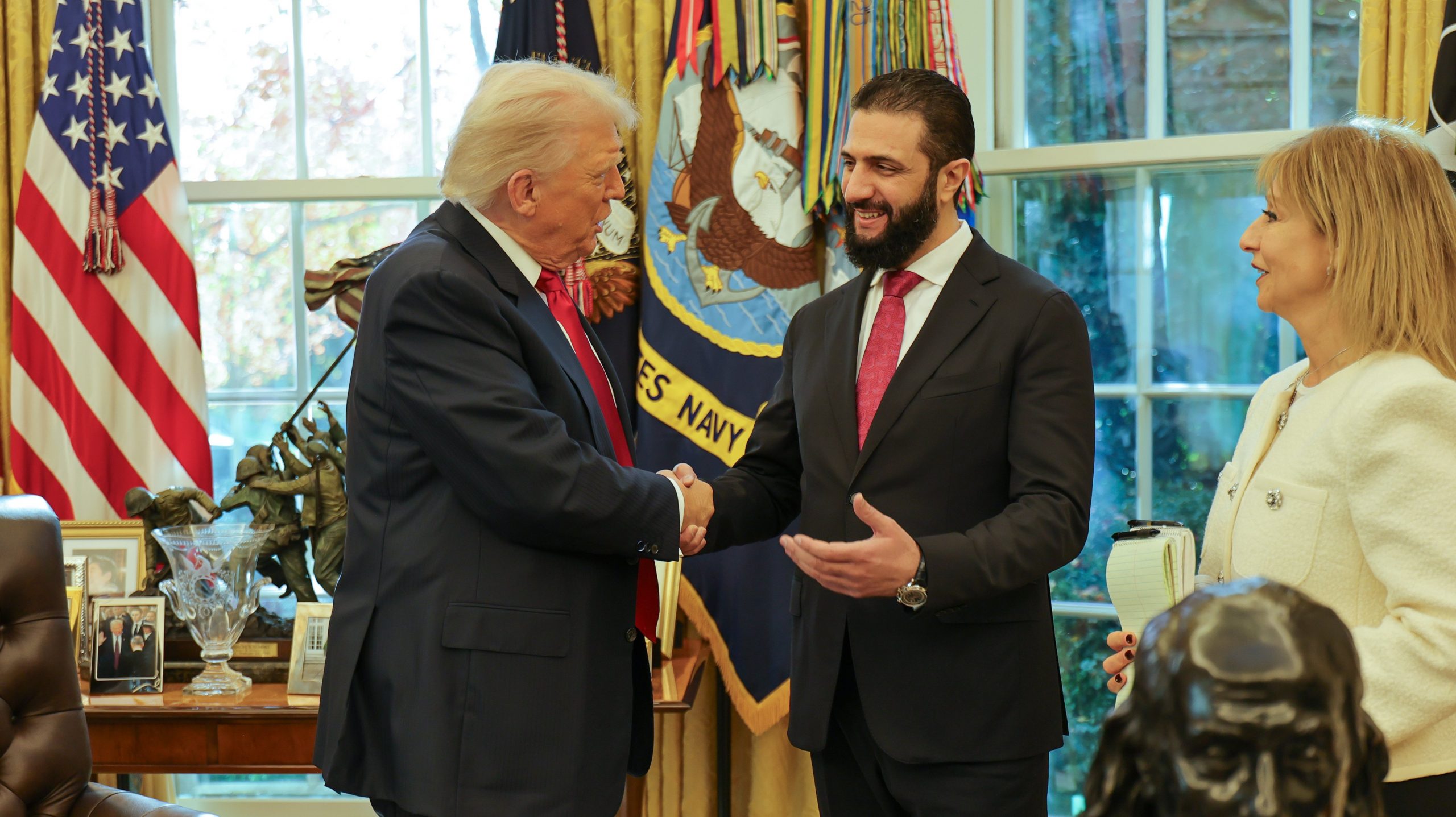
That position may have some support in the Senate, though it plainly does not within the White House, as President Trump has been loudly enamored with HTS leader and former al-Qaeda in Iraq figure Ahmed al-Sharaa, praising him as “young, attractive tough guy.” When push came to shove, it was perhaps unsurprising that the administration chose Sharaa over the Kurds when the two sides were at odds.
The US has been expressing annoyance with the Kurds for not quietly submitting to Sharaa’s rule for months now, with Barrack, as the representative of the US Federal Government, declaring that they had learned “federalism doesn’t work” and that the Kurds should abandon any hope of autonomy within Syria.
Sharaa, for his part, has given the Kurds a four-day ultimatum to accept his terms for integration into the Syrian state. Since Sharaa had previously denied the Kurds a single spot in his cabinet and postponed parliamentary elections in Kurdish parts of the country, what if any representation that will actually entail remains unclear.
Whatever it is, however, the US clearly views it as sufficient.