As 2025 came to an end and 2026 began, Syria’s first full year under the Islamist Hayat Tahrir al-Sham’s (HTS) rule is now in the books. Though the year saw Syria go from an international pariah to a welcomed member of the global community, internally, violence still defined the year.
Despite its al-Qaeda affiliate origins, the HTS promised a unified Syria irrespective of sectarian differences, along with an intensely centralized government which would naturally be under their control. This involved fighting against minority calls for decentralization to ensure they would retain at least some rights.
What that unity looked like in practice, however, was violent purges against religious minorities across the country, with the two largest such minorities, the Alawites and the Druze, each facing large-scale massacres in which HTS forces from the Interior and Defense Ministry participated.
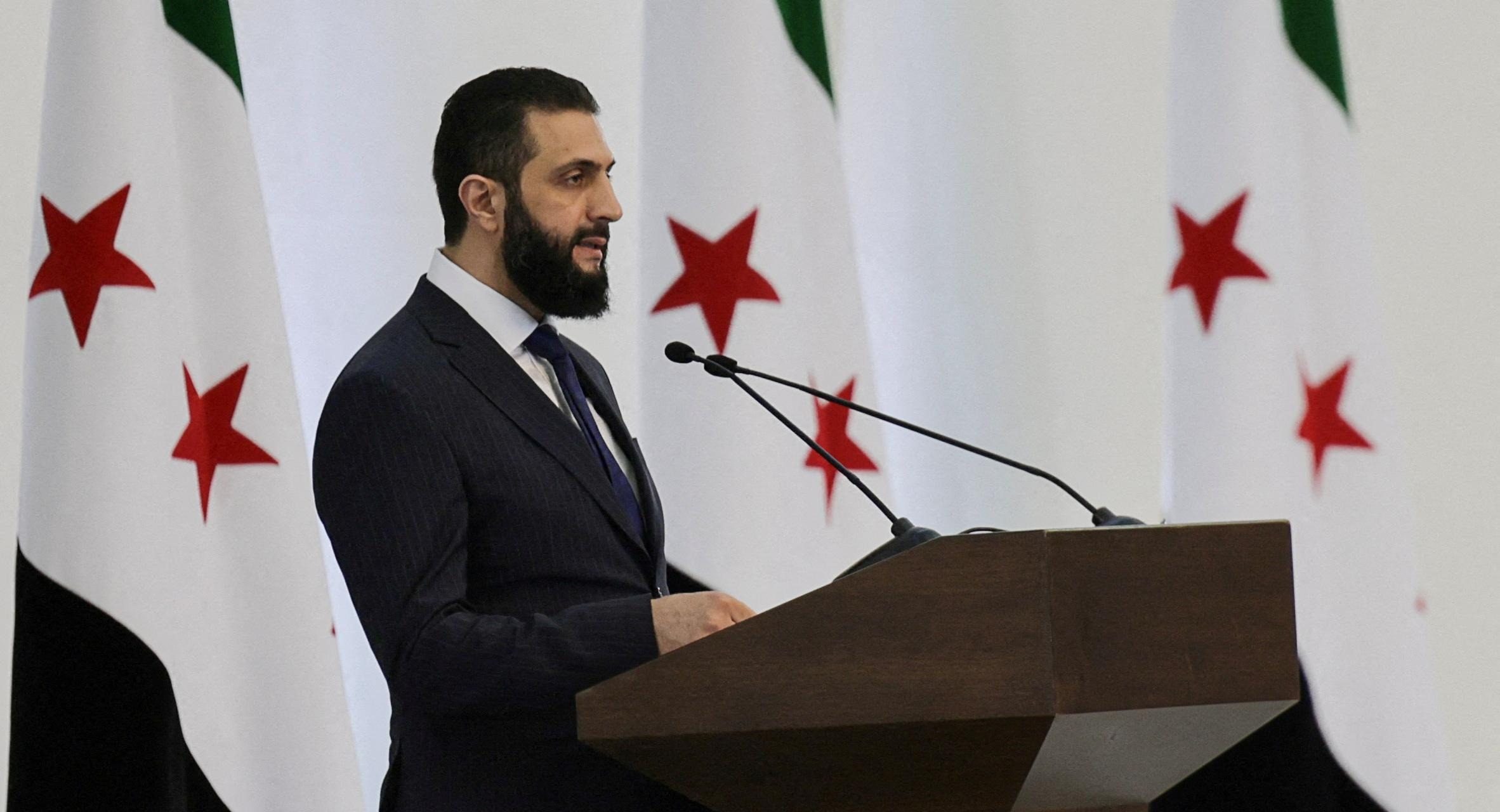
HTS leader Ahmed al-Sharaa | Image from Reuters
And while the HTS has tried to present the massacres as partially fighting against “Assad remnants” which only occasionally got out of hand, the Syrian Observatory for Human Rights (SOHR) has documented the reality, that an enormous number of civilians were killed. SOHR recorded 2,691 civilians documented by name as having been killed in 2025.
With summary executions of Druze and Alawite civilians constituting a large number of these deaths, HTS forces and their allies participated in a large number of these killings. That’s not even to say the 2,691 civilians is all-encompassing, but only the ones for which the SOHR was able to come up with names to document. The overall civilian toll may well be substantially higher.
The violence targeting religious minorities like the Druze, Alawites and Christians was definitely what 2025 will be remembered for, but as we enter 2026 the focus may shift to ethnic minorities like the Kurds, as the goal for centralization clashes with historical Kurdish bids for autonomy, and Syria’s closest ally, Turkey, pushes hard to eliminate the Kurdish SDF, offering assistance if the HTS ultimately decides to do it militarily.
The situation with the religious groups, the Alawites in particular, remain precarious, but the Kurds seem like a near-term focus because of international pressure and the SDF seeking to retain some control even once they are integrated into the defense ministry. Either way, 2025 didn’t look particularly unified for Syria, and 2026 doesn’t have the appearance of a year when everything will be quietly resolved either.