Israeli officials seemingly everywhere and always are talking about new wars against the various nations they’re already effectively at war with. In the case of Lebanon though, officials have been calling a new war inevitable, and the situation on the ground suggests Israel is advancing that position.
Satellite imagery is showing that the five temporary bases Israel constructed within Lebanese territory have been expanding and fortifying. This suggests there’s an intention to put these bases to further use, or at the very least an expectation that Israel is going to escalate the situation on the ground until those bases become targets for retaliation.
Israel scrambled to build those five hilltop sites after the ceasefire was reached in November 2024. Though the ceasefire terms required Israel to withdraw from Lebanese territory, they ultimately announced they would keep troops at the hilltop sites “temporarily.”
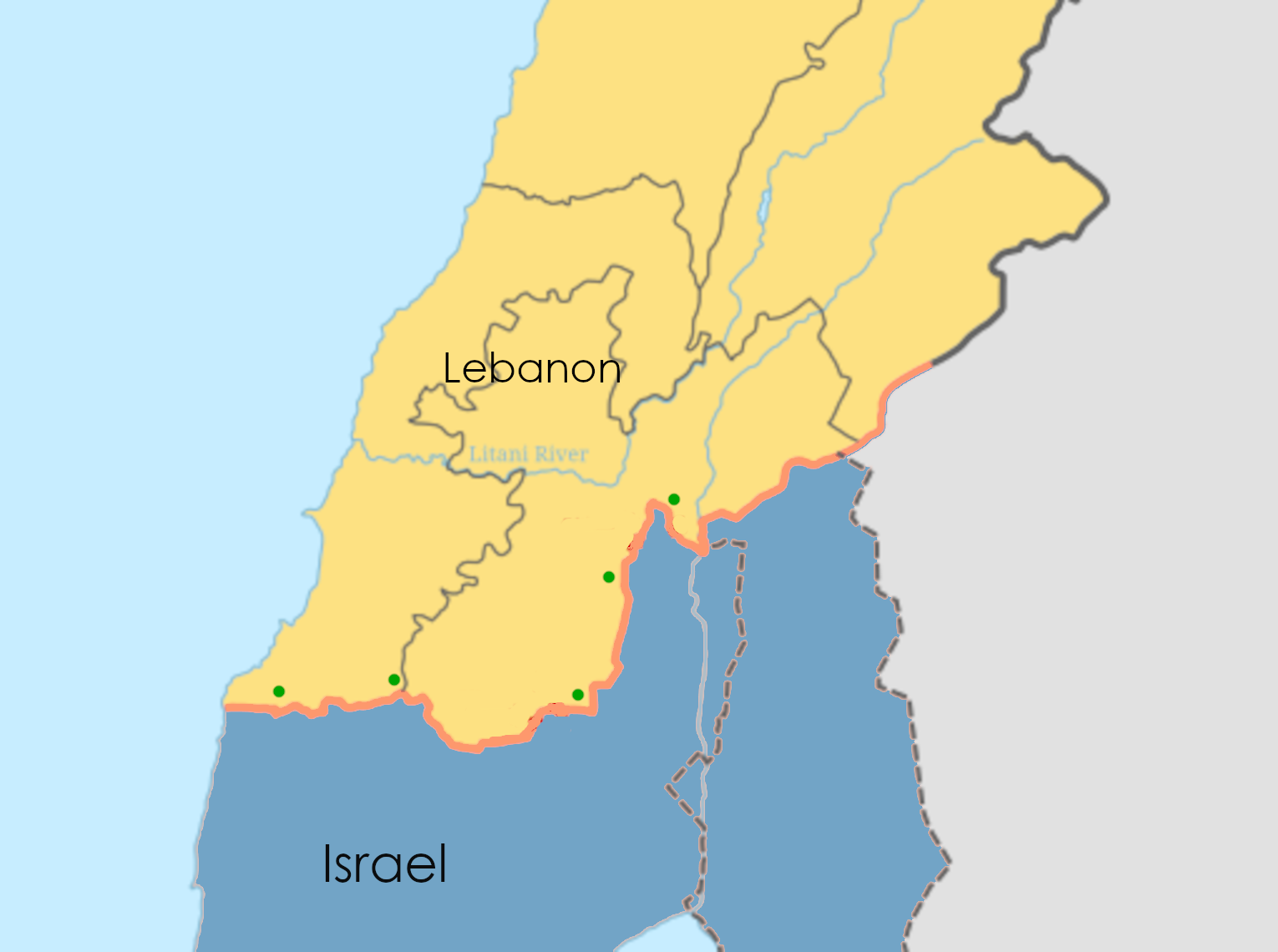
Map of Israel Lebanon border. Green circles indicate the five outposts Israel continues to occupy.
Those sites overlook border areas, and it is often the case that the border towns and villages, heavily damaged by the last Israeli invasion, become targets for Israeli troops today, both from across the border and from the hilltop sites within Lebanon. The temporary sites seem increasingly a permanently aspect in southern Lebanon, just another angle from which Israel can and will attack.
Though there is talk about the Israeli escalations are drawing concern from the US, former Israeli Ambassador Michael Oren says he doesn’t believe there is substantial room for disagreement on the issue of Lebanon, and that the US would “understand” if Israel invaded to disarm Hezbollah totally.
That is a stark contrast to US envoy Tom Barrack’s statement earlier this month, which is that he doesn’t believe Israel is even capable of destroying Hezbollah militarily, and that a diplomatic solution would be preferable. Barrack’s stance on Lebanon varies wildly at any given time, however, so it’s not clear if he would strongly object to a new Israeli invasion or not.
While Hezbollah appears to have removed themselves from south of the Litani River, as the ceasefire required, they remain opposed to the idea of being fully disarmed nationwide, saying they don’t believe such a disarmament as in Lebanon’s national interest.
The argument against disarming Hezbollah is that they’ve historically served as the primary resistance to Israeli invasions and occupations, and while the Lebanese Army is being expanded, they’re not really being expanded in a way to defend the nation so much as expanded to confront Hezbollah internally.
While narratively the Lebanese government still says disarming Hezbollah is the goal, the army is reportedly hesitant to try to disarm north of the Litani River, and is suggesting that they want some positive signs Israel is becoming less of a threat in the south before they do that.
Effectively what they want is for Israel to remove itself from southern Lebanon, specifically those five bases, before they move on with disarming Hezbollah elsewhere in the country. Israel, however, seems unlikely to even consider this, as they have been actively expanding those bases.