NATO’s top military officer has floated the idea of the Western alliance conducting a “pre-emptive” strike on Russia, a comment that drew a sharp rebuke from Moscow.
Adm. Giuseppe Cavo Dragone, the chair of NATO’s Military Committee, made the provocative comment in the context of discussing alleged “Russian hybrid attacks” in Europe. He told the Financial Times that a “pre-emptive strike” could be considered a “defensive action,” but added that “it is further away from our normal way of thinking and behavior.”
“Being more aggressive compared with the aggressivity of our counterpart could be an option. [The issues are] legal framework, jurisdictional framework, who is going to do this?” the Italian admiral said.
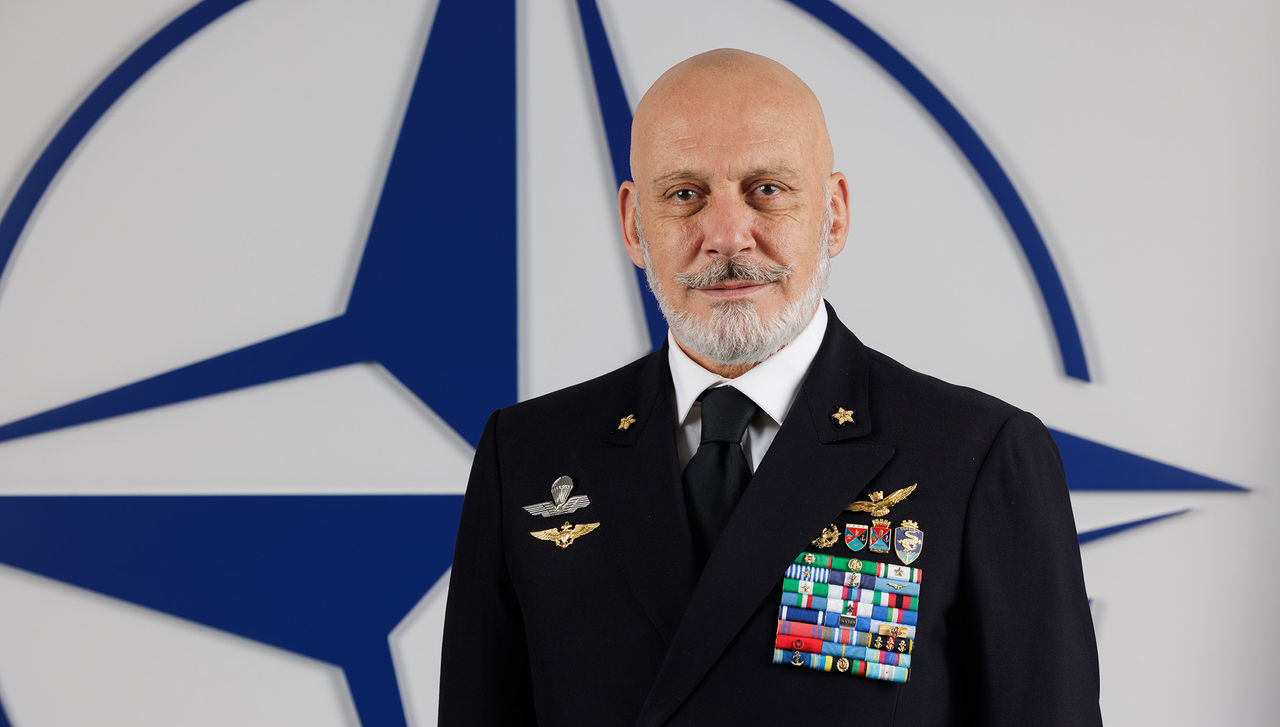
The Russian Foreign Ministry called Dragone’s comments “extremely irresponsible” and said it could be an effort to undermine peace talks around Ukraine. “People who make such statements should be aware of the risks and potential consequences, including for the alliance members themselves,” said Russian spokeswoman Maria Zakharova.
Zakharova also criticized NATO officials for constantly hyping the threat of a Russian attack on Europe, saying that “against the backdrop of the anti-Russian hysteria being whipped up by the alliance and the fearmongering about an ‘inevitable attack’ by Russia on the bloc’s member states, such statements not only add fuel to the fire, but also seriously escalate the already existing confrontation.”
While NATO officials are constantly claiming, without providing evidence, that Russia is involved in sabotage attacks in Europe, the US and NATO are openly supporting drone and missile attacks inside Russian territory. The US recently restarted its support for Ukrainian strikes inside Russia using US and British-provided missiles.