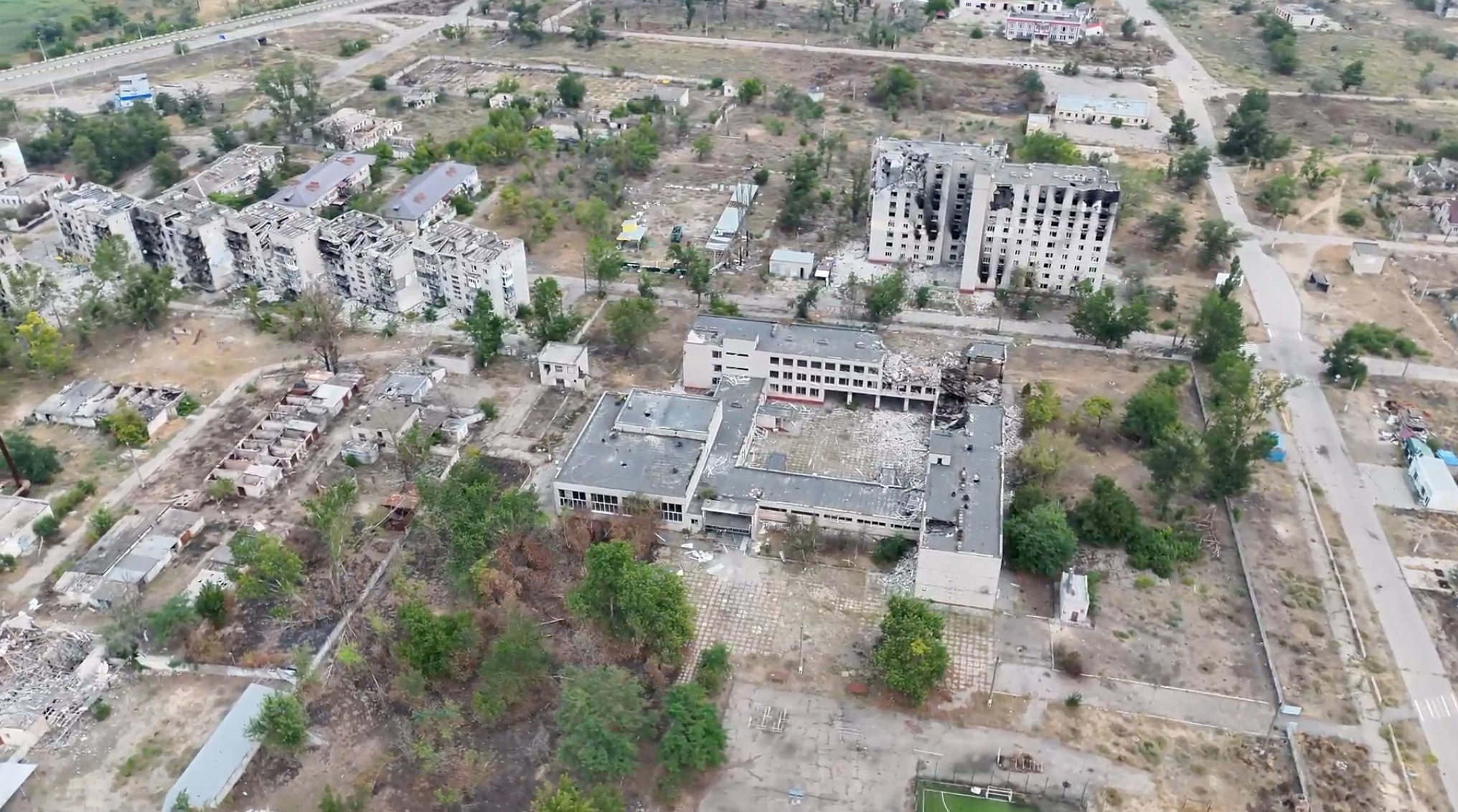
Both Russia and Ukraine on Tuesday confirmed that a humanitarian ceasefire had taken effect around Oleshky, a frontline town in Ukraine’s Kherson region that’s been under Russian control since the first days of the 2022 invasion.
The purpose of the truce is to get humanitarian aid to the 2,000 remaining residents of the town and allow those who want to leave to evacuate. Civilians in the town have faced severe food shortages, with some telling Reuters they’ve been surviving on just a cup of rice or buckwheat a day.
First Lady Melania Trump, who was involved in the negotiations for the truce, said in a post on X that the “geographic area has expanded beyond Oleshky, within the Kherson Region, to provide safe passage for the humanitarian convoys.”
Pope Leo XIV also helped mediate between the two sides, calling Russian President Vladimir Putin and Ukrainian President Volodymyr Zelensky shortly after his recent lung surgery to urge them to agree to a truce that would allow humanitarian aid into the area. The White House released a statement on October 23 announcing the ceasefire, credited Melania Trump with the mediation, and didn’t mention Pope Leo’s role.
The initial announcement said the truce would take effect on October 29, but Melania said on X that the “timing was accelerated two days ahead of schedule to protect the safety of civilians and to facilitate the delivery of critical humanitarian aid.”
The Russian Defense Ministry said in a statement on Tuesday that as “part of preparations for a humanitarian operation near the town of Alyoshki (Oleshky) in the Kherson Region, the Russian Armed Forces ceased fire in the Kherson direction at 4:00 a.m. Moscow time on October 27.”
The General Staff of the Armed Forces of Ukraine said that starting at 3:00 am local time, it was “implementing a ceasefire in a designated area to conduct a humanitarian operation in the temporarily occupied town of Oleshky in the Kherson region.”