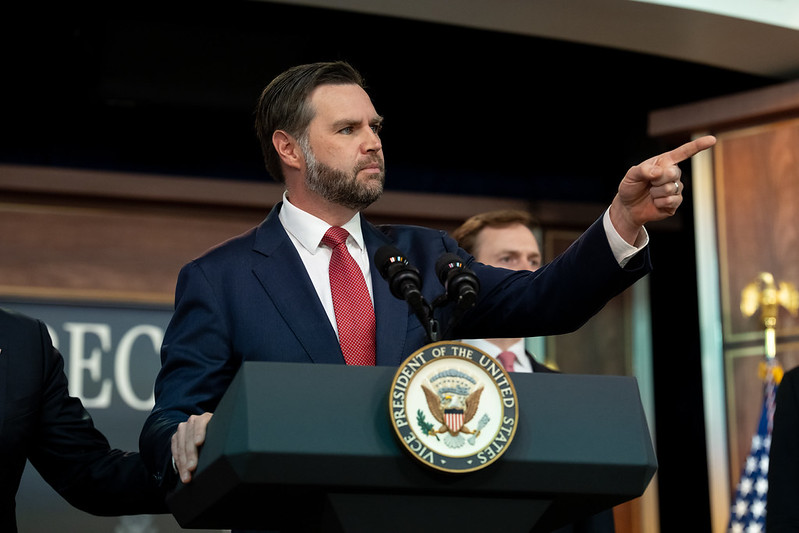
Vice President JD Vance suggested in an interview with Reuters that the Trump administration could accept a deal with Iran that would see the country reduce its nuclear enrichment levels, not end its enrichment program altogether, something Tehran was offering to do before the war.
“If you don’t want a nuclear weapon, then why do you need 60% enriched fuel? And if you want to show commitment to not building a nuclear weapon, don’t build highly enriched fuel. That’s a very basic threshold issue,” Vance said.
“I think if they want to show a commitment to not building a nuclear weapon, they would do something meaningful on their enrichment capacity,” the US vice president added.
Before the war, Iran said it was willing to reduce enrichment levels, and media reports said it was willing to bring them back down to 3.67%, the levels agreed upon under the 2015 nuclear deal, known as the JCPOA. Iran was also reportedly willing to pause its enrichment program for a number of years and had said publicly it would dilute its stockpile of uranium enriched at 60%, but the US was demanding a permanent end to its enrichment program.
The two sides were still engaged in negotiations when the US and Israel launched a surprise attack on Iran on February 28. The opening attacks included the bombing of an elementary school, which killed at least 120 children, and the assassination of Supreme Leader Ayatollah Ali Khamenei, who was killed alongside several members of his family, including his 14-month-old granddaughter.
An unnamed Iranian official told Reuters that there have been no recent negotiations regarding Iran’s nuclear program, and that Washington must meet Tehran’s other conditions before they start. Iranian officials have maintained that the US must end its blockade of Iranian ports, lift some sanctions on Iran, and release frozen Iranian funds before the Strait of Hormuz is fully opened, conditions the US previously agreed to under the Memorandum of Understanding (MoU) signed in June.
The Iranian official said that key to any nuclear deal will be the US recognizing Iran’s right to enrich uranium, something he said Iran will not show “flexibility on in any way.” But the official said details of enrichment can be discussed later, suggesting Tehran is still willing to negotiate a deal that would reduce its enrichment levels.