The UK Maritime Trade Operations (UKMTO) said on Wednesday that three ships had been struck by projectiles in the Strait of Hormuz a day earlier, as Iran’s Islamic Revolutionary Guard Corps (IRGC) suggested it has been continuing daily attacks on vessels in the strategic waterway.
Hossein Mohebbi, a spokesman for the IRGC, said the US has “not been responding” to the attacks. Several weeks ago, the US began what was called a “tanker for tanker” policy where it would bomb Iranian tankers in response to attacks on US ships, but it appears to have backed down on the strategy.
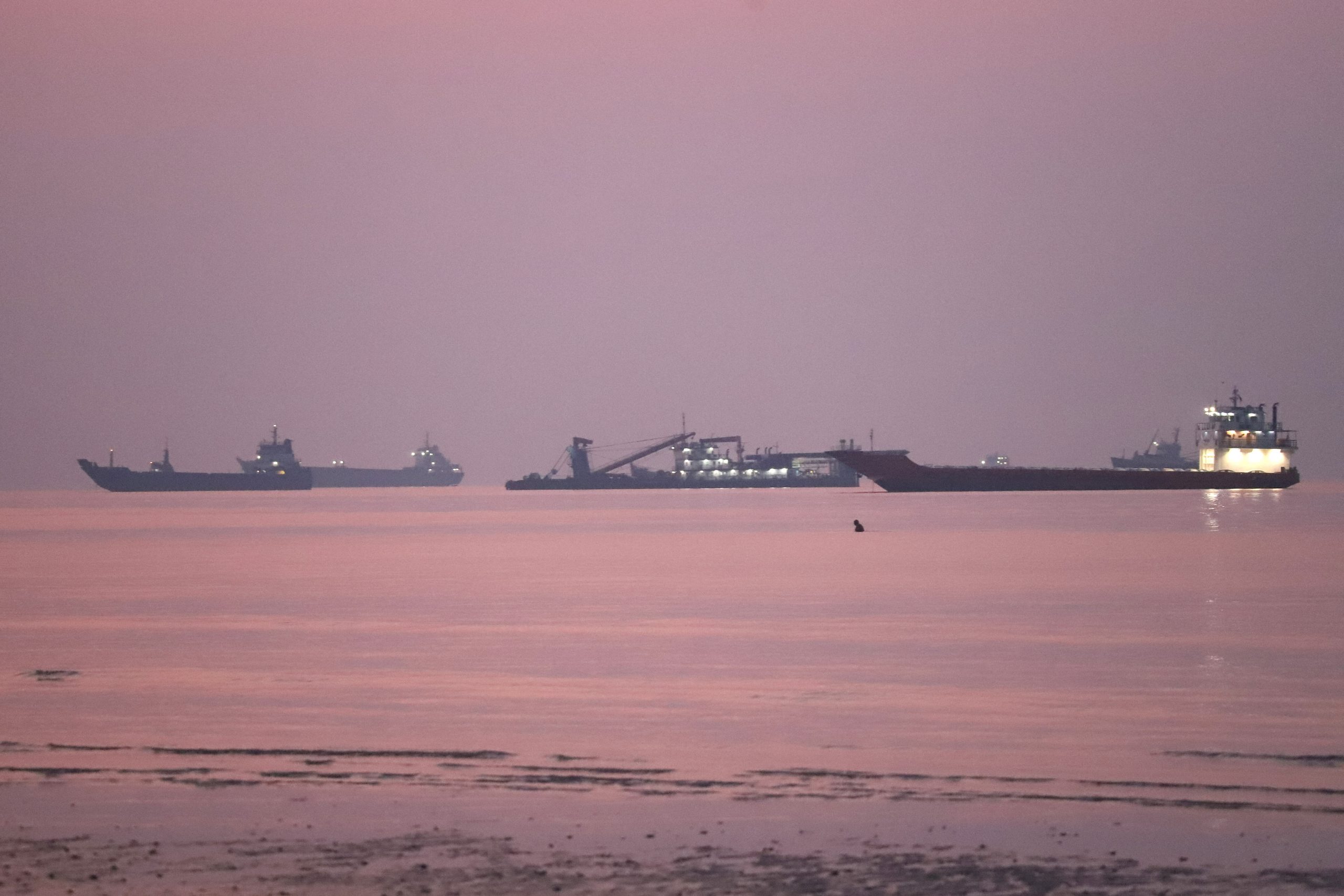
“We have been hitting small ships and preventing them from passing for a long time, but America does not respond,” Mohebbi said, according to The Cradle. “There is a military confrontation in the Strait of Hormuz every 24 hours. For some time now, the US has not been responding.”
Also on Wednesday, energy data firm Kpler said crude exports from the Gulf nations, except Iran, have reached pre-war levels, with 40% of shipments bypassing the Strait of Hormuz through pipelines, up from 17% before the war.
Oil has been exiting the strait mainly by smaller tankers conducting ship-to-ship transfers from larger tankers inside the Gulf to others in the Arabian Sea, as well as by supertankers escorted by the US Navy. At least one of the ships that was struck on Tuesday was one of the smaller tankers, which shut off their AIS while transiting the Strait of Hormuz to avoid detection.
Iranian officials said Wednesday that they received an official response from the US in the Qatar-mediated negotiations. But the chances of a breakthrough still appear unlikely as the two sides remain far apart, and US officials reportedly expect President Trump to resume bombing Iran after the midterm elections.