The Pentagon has admitted in its annual report on civilian casualties to Congress that it committed two large-scale massacres of civilians in Yemen during its bombing campaign against the Houthis, officially known as Ansar Allah, last year, which War Secretary Pete Hegseth dubbed “Operation Rough Rider.”
In the report, the Pentagon acknowledged that the bombing campaign killed at least 153 civilians and injured 243, numbers that are a significant undercount. According to the Yemen Data Project, at least 238 civilians, including 24 children, were killed, and 467 civilians were injured.
The Pentagon acknowledged that civilians were killed in three strikes, including two that were among the deadliest US attacks on civilians in recent decades: the April 16, 2025, bombing of the Ras Isa fuel port in Hodeidah, and the April 25, 2025, strike on a migrant detention facility in the northern Saada province.
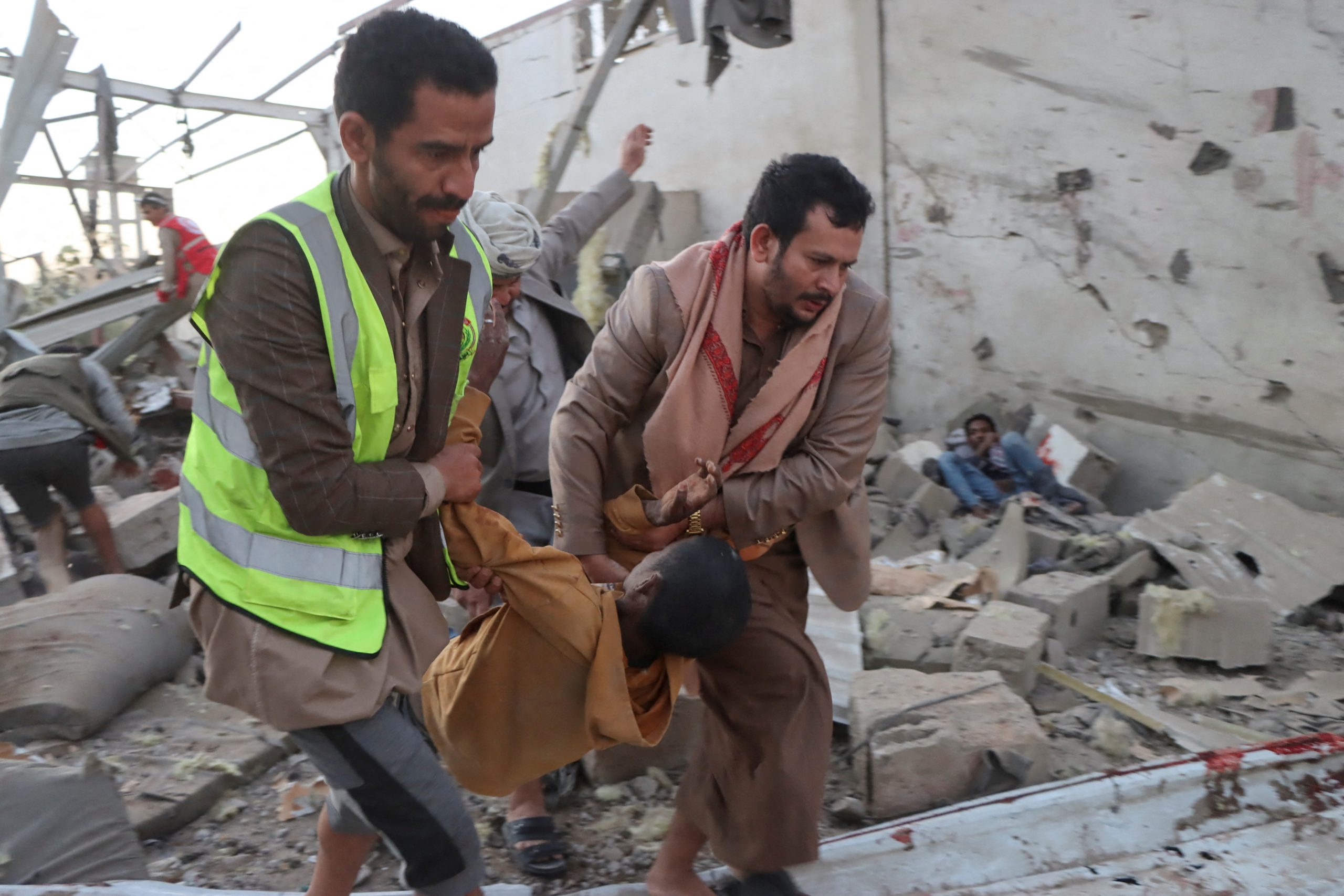
At the time of the bombing on Ras Isa, Yemeni media reported that it involved a double-tap strike that killed rescue workers, and it was clear that a large number of civilians were killed, though the strike received virtually no media coverage in the US. The Pentagon report acknowledged the strike killed 80 civilians, though the Yemen Data Project and Airwars put the number at 84. The Pentagon also said 171 civilians were wounded in the strike, which aligns with Airwars’ numbers.
Airwars identified the 84 Yemenis who were killed and said they were all civilians. The majority were workers at the port, though two rescue workers and three children were among the dead. At the time of the strike, the US military didn’t even claim it was hitting a military target and justified the strike by saying the fuel that came into the port was a source of revenue for the Houthis.
Regarding the April 25 strike in Saada, the Pentagon admitted 68 civilians were killed, the same number reported by local media in Yemen and rights groups that have investigated the strike. All of those killed were African migrants being detained in the facility, and Amnesty International said in a report on the attack that it found no evidence of any military targets at the facility.
The same detention facility was targeted by Saudi Arabia in a January 2022 airstrike, which killed 91 civilians, according to the Yemen Data Project. The US provided intelligence support for Saudi Arabia’s bombing campaign in Yemen, meaning the Pentagon should have been aware that any strike on the facility would result in major civilian casualties.
The Pentagon also assessed that five civilians were killed and 25 were wounded by a strike in the Yemeni capital of Sanaa on April 6, 2026. According to Airwars, a US strike in Sanaa that day hit a residential area and killed at least three people, including one woman and one child.
There were multiple other instances of the US killing civilians during the bombing campaign, and the Pentagon said it’s still assessing 15 other incidents. The report didn’t provide any kind of explanation for why the places were targeted, and there’s no sign of any accountability. Hegseth’s Pentagon has continued to carry out large-scale massacres of civilians, most notably the February 28 bombing of the Shajareh Tayyebeh Primary School in Minab, Iran, which killed at least 156 people, including 120 schoolchildren.
Operation Rough Rider was launched without congressional authorization and against a group that Congress has never provided an Authorization for the Use of Military Force against, making it illegal under the Constitution. The official justification was that it was to secure shipping, but the Houthis weren’t attacking US ships at the time, and Hegseth admitted in a Signal chat the day the bombing campaign started, which was published by The Atlantic, that he could “easily pause” plans to launch the strikes, demonstrating there was no imminent threat facing US forces.
The bombing campaign began on March 15, 2025, a few days after Ansar Allah announced it was renewing its blockade of Israeli-linked shipping in the Red Sea in response to Israel violating the January 2025 Gaza ceasefire deal by imposing a full blockade on the Palestinian territory. It ended on May 6, 2026, with a mutual ceasefire between the US and Ansar Allah, but Ansar Allah continued its blockade on Israeli shipping and its strikes on Israel.