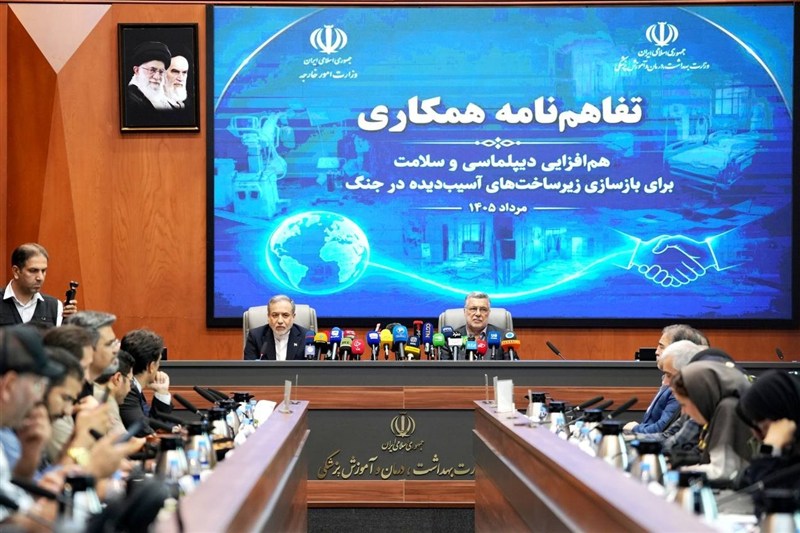
Iranian Foreign Minister Abbas Araghchi said on Tuesday that he heard from diplomats from other countries that no one expected Iran to be able to “resist” the US in the way Iran has done in the war the US and Israel launched on February 28.
“I have heard this many times from foreign ministers and officials from other countries: ‘You Iranians created a miracle; you surprised the whole world,” Araghchi said at a press conference, according to Middle East Eye, which cited Iran’s Tasnim news agency. “No one thought that Iran could resist America like this.”
Araghchi went on to discuss how President Trump’s messaging changed drastically throughout the war. “The US president wrote two words [on social media] at the beginning of the war: ‘Unconditional surrender.’ That was what they wanted from us and, 20 days later, the same enemy was begging for negotiations,” he added.
The Iranian diplomat’s comments come as Trump appears to be settling into the current status quo and is reverting back to focusing on economic pressure against the Islamic Republic. Trump said on Sunday that the US was only “semi-negotiating” with Iran and just “watching Iran with its huge inflation and the fact they have no money.”
Missing from Trump’s recent comments have been threats of further attacks, as, according to media reports, he decided not to escalate strikes against Iran due to the depletion of advanced air defenses and the fact that Iran would escalate its attacks across the region. Though the threat of escalation remains on the table as long as the US maintains its military deployments in the region and its blockade of Iranian ports, which has involved US forces bombing commercial ships.
For their part, Iranian officials have maintained that the Strait of Hormuz will remain largely closed until the US meets several conditions that are essentially the same as those agreed upon under the US-Iran Memorandum of Understanding signed in June. Those conditions include an end to the blockade, the lifting of sanctions on Iran, and a ceasefire in Lebanon, where Israel has continued its war and occupation.