The Pentagon’s Missile Defense Agency has awarded Lockheed Martin a $35 billion contract to dramatically ramp up the production of Terminal High Altitude Area Defense (THAAD) interceptors as the firm and other US arms makers are cashing in on the Iran war.
Lockheed Martin said in a press release about the contract that it will quadruple THAAD interceptor production over the next seven years. According to Breaking Defense, the weapons firm plans to increase annual production from 94 interceptors up to 400.
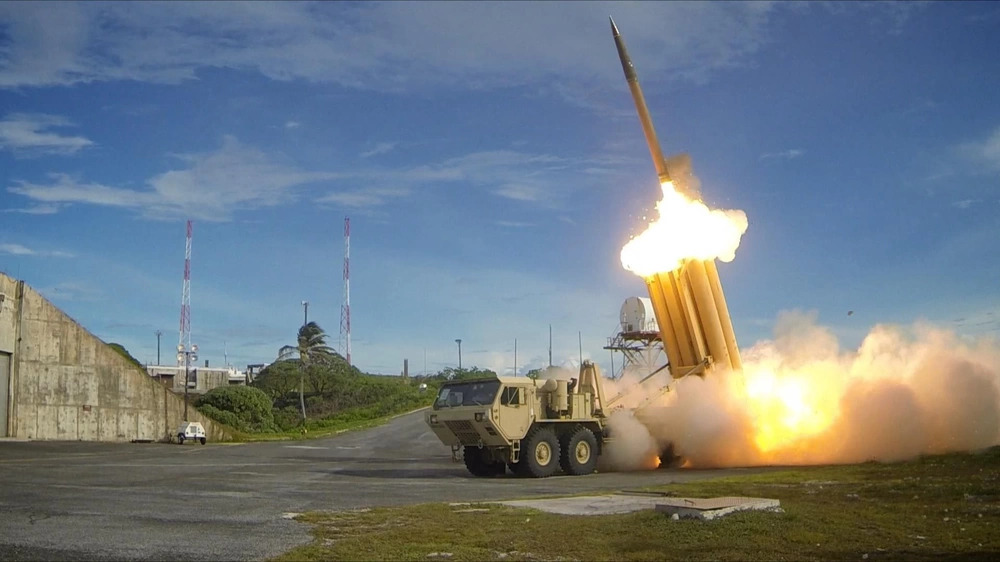
Lockheed initially announced plans to quadruple production in January of this year, before the current war, as the US had already used an enormous number of THAAD interceptors during the June 2025 war with Iran, known as the 12-Day War.
The THAAD system was first used by US forces in combat in late 2024 after the Biden administration deployed a battery to Israel. The purpose of the deployment was to prepare for potential Iranian retaliation for an Israeli attack that occurred in October 2024, but Iran didn’t respond, and the THAAD was later used to fire at missiles fired by Yemen’s Houthis, officially known as Ansar Allah.
During the 12-Day War, the US fired about 150 THAAD interceptors to defend Israel, or about 25% of the total US stockpile of the munitions. Estimates for the use of THAAD interceptors in the current conflict range from 190 to 290, a rate that’s not sustainable at current production levels if the US plans to continue to use the air defense system in combat.
The Breaking Defense report said that Lockheed’s THAAD contract comes after the arms maker reached a deal with the Pentagon to increase production capacity for PAC-3 interceptors used in the Patriot missile defense system, resulting in a $4.7 billion contract.
Lockheed reached another deal to ramp up production of Precision Strike Missiles (PrSM), leading the US Army to award the firm a contract worth more than $13 billion. The PrSM was used by the US military for the first time in the Iran war, and according to an investigation from The New York Times, it struck a sports hall and school on the first day of the bombing campaign, part of an attack on the Iranian city of Lamerd that killed more than 20 civilians, including children.
More money will be going to weapons makers to replenish stockpiles used in the war with Iran, as the White House has asked Congress for roughly $70 billion in additional military spending to cover the costs of the conflict, including at least $21 billion for munitions.