US Treasury Secretary Scott Bessent announced on Monday that the US was issuing a temporary license to allow the sale of Iranian oil amid ongoing talks between the US and Iran in Switzerland in line with the Memorandum of Understanding aimed at ending the conflict between the two nations.
“In line with the ongoing productive talks in Switzerland, Iran has committed to free and open transit in the Strait of Hormuz and to permit International Atomic Energy Agency (IAEA) inspectors into their country,” Bessent wrote on X.
“As part of the framework, Treasury has issued a temporary 60-day general license authorizing the production, delivery, and sale of Iranian oil,” he added. Treasury’s website said the license will be issued through August 21.
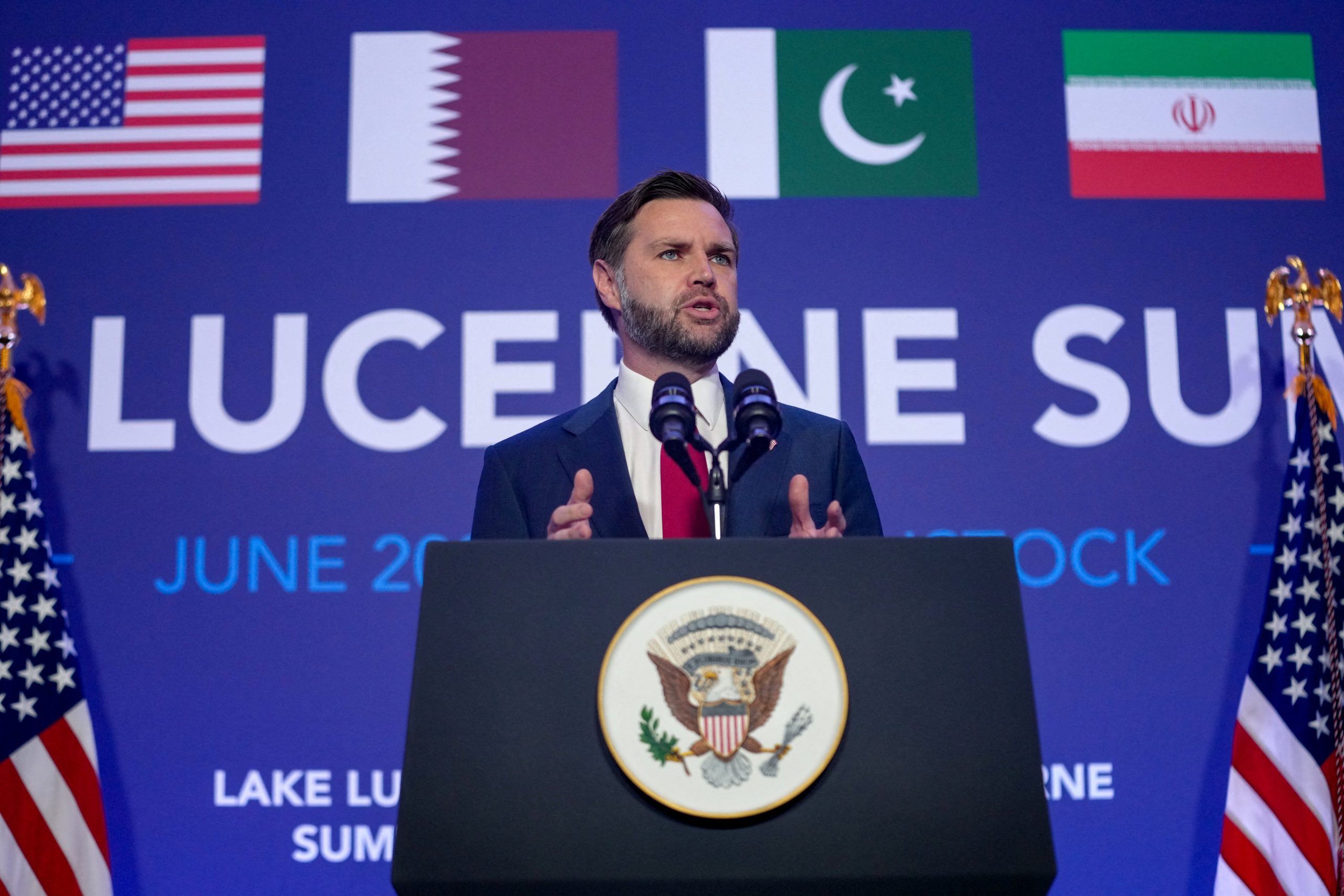
Vice President JD Vance also announced in Switzerland that Iran was willing to allow IAEA inspectors back into the country, though Iranian media denied the issue was discussed. The IAEA was working in Iran before the US and Israel started bombing the country on February 28, then halted its work due to the war. IAEA Director General Rafael Grossi said that some work was done earlier this month during an IAEA inspection of the Bushehr Nuclear Power Plant in southern Iran, suggesting that some inspectors remained in the country.
Iran did suspend the IAEA’s access to the nuclear facilities that the US bombed in June 2025 over what it saw as the agency’s complicity in providing a pretext. The day before Israel launched the 12-Day War, the IAEA’s Board of Governors passed a resolution claiming Iran was no longer living up to its commitments under the Non-Proliferation Treaty, a claim made mainly based on nuclear activity that allegedly took place decades ago.
Threats made by President Trump on Sunday against Iran and its negotiators threatened to blow up the talks in Switzerland, but they ultimately continued, and Vance said they were a “good foundation” for a deal between the two countries to end the conflict.
“The final deal is the house,” the vice president told reporters, according to The Associated Press. “We set the foundation. We haven’t built the house, but we’ve laid a successful foundation to get to a good place for the American people.”
The Iranian delegation, named “Minab 168” in memory of the school children killed by a US strike on the first day of the US-Israeli bombing campaign, was led by Foreign Minister Abbas Araghchi and Parliament Speaker Mohammad Bagher Ghalibaf, who, along with Vance, have since left Switzerland. Iran’s PressTV reported that now, expert-level discussions will continue under a “commitment for commitment” framework.
Israel’s continued war in Lebanon remains a major threat to the work toward a final US-Iran deal since the MoU explicitly states that it must end. Qatar and Pakistan, which mediated the talks, said that a “deconfliction cell” would be established regarding Lebanon, and Araghchi called the mechanism the “first real test” of the MoU.